


Australian fuel distributors are being denied their usual spot-market volumes of petrol and diesel at terminals in Sydney, Brisbane and Newcastle, raising concerns about tighter availability as the Middle East conflict drives up oil prices.
The disruption has affected smaller distributors and other buyers without long-term supply contracts. However, industry sources said overall fuel inventories remained stable and the localised problems had not increased the likelihood of widespread shortages.
Several independent firms have struggled to secure their normal day-to-day supplies from importers over the past week. Spot-market fuel is bought at prevailing prices, unlike supplies secured through longer-term agreements.
Danny Kreutzer, managing director of Westlink Petroleum, said his company had been unable to draw its usual volumes from United Petroleum.
“I am still getting some from United, but not what I would normally get,” he said, while acknowledging that the supplier was entitled to make its own commercial decisions.
Westlink remained adequately supplied by combining spot purchases with long-term contracts from several wholesalers for service stations in Queensland and northern New South Wales.
Mr Kreutzer said distributors dissatisfied with spot-market availability should consider negotiating longer-term supply agreements. “United would be making sure they’ve got plenty for their own service stations,” he said. “All the others on the spot market might just have to sit and wait.”
Petrol supplies temporarily tighter in New South Wales
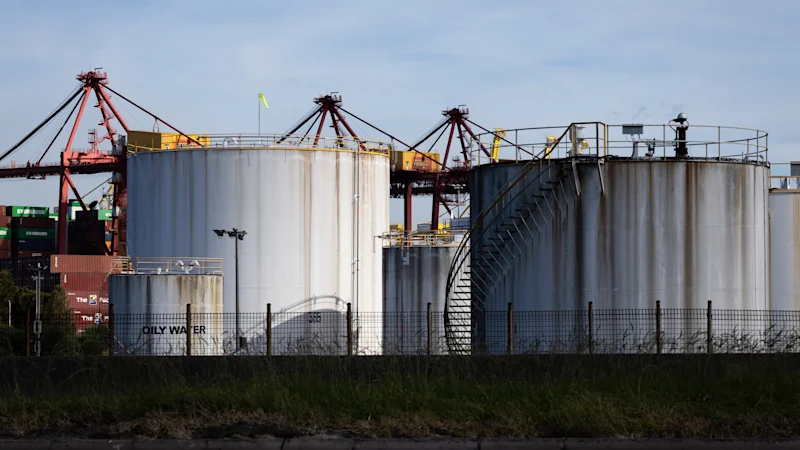
United Petroleum chief executive David Szymczak denied that fuel was being deliberately restricted, but said petrol supplies in New South Wales had temporarily tightened after the closure of a major terminal at Sydney’s Port Botany.
The terminal, operated by infrastructure company Vopak, has been undergoing planned maintenance since Sunday night and was expected to return to service by 5pm on Friday, Mr Szymczak said.
He said United’s wholesale diesel availability had not changed and that there were no disruptions beyond Sydney. “We made sure that we have got supply covering all of our service stations,” he said.
Customers seeking petrol from United at Port Botany would need to obtain it from another terminal, he added.
Independent distributors said the reduced availability of uncontracted fuel risked creating uncertainty and adding a premium to prices at a time when international oil markets were already under pressure.
Global oil prices have risen above 100 US dollars a barrel in the past week as fighting in the Middle East intensified and a major Saudi oil pipeline was taken out of service.
The average Australian price of regular unleaded reached 2.16 Australian dollars a litre on Monday, up 39 per cent since July, according to the National Roads and Motorists’ Association. The average diesel price rose 48 per cent over the same period, from 1.79 to 2.65 Australian dollars a litre.
One small distributor, who did not want to be named, said he had been told that wholesale fuel availability on the spot market was restricted, creating “uncertainty and a risk premium”. Another New South Wales distributor said it had faced difficulties sourcing spot supplies in both Newcastle and Brisbane since late last week.
“We are having to bring in some fuel from Queensland into areas of NSW today that we would normally source from Newcastle, due to availability of supply,” the distributor said.
Ben Clifton, managing director of Tamworth-based Transwest Fuels, said agricultural customers were increasingly concerned about the availability and cost of fuel while the conflict continued.
“We have broad-acre farmers thinking, ‘Do we just sit out this season and not plant a crop?’” he said, arguing that governments should invest in decentralised fuel storage in regional areas as well as coastal hubs.
A spokesperson for Energy Minister Chris Bowen said decisions about spot-market sales were commercial matters for individual companies, while insisting that Australia’s fuel supplies remained secure.
“We continue to have more fuel in Australia than we did at the beginning of the war with 3.3 billion litres locked in to arrive in the next four weeks,” the spokesperson said.
