


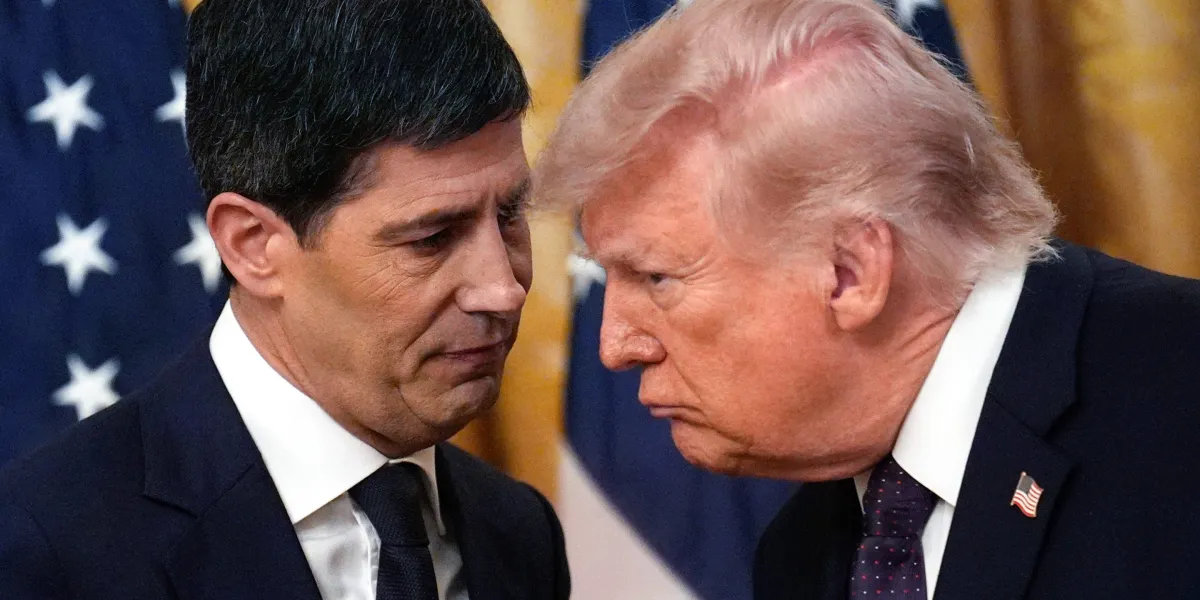
The Federal Reserve has raised its benchmark interest rate by 25 basis points to a range of 3.75% to 4%, marking its first increase since 2023 and the first rate decision taken by Kevin Warsh since he became chair.
The unanimous vote came despite pressure from Donald Trump, who selected Mr Warsh to deliver the “lowest rates” in the world. The president had criticised committee members as “clowns” over their support for a rise.
Officials said persistent inflation, strong jobs reports and wider economic uncertainty left little scope to delay action. Consumer sentiment has remained subdued, while August consumer prices rose 0.4% month on month, four times July’s increase.
Financial markets had largely anticipated the decision, with futures pricing in a 93% probability of a rise by Tuesday.
The Fed’s statement offered no clear forward guidance, but said inflation “remains elevated” and that the latest policy action would support a “timelier” return to its 2% target.
It also said productivity growth was strong and capital investment robust, while adding: “The Committee will deliver price stability.”
Federal Reserve signals further rate rise
The median official forecast now puts the federal funds rate at 4.1% by the end of 2026, up from the 3.8% projection made in June. That implies one further quarter-point increase before the end of the year.
The median forecast for 2027 is also 4.1%, suggesting officials expect no rate cuts next year. The longer-run estimate of the neutral interest rate changed little, with seven officials continuing to place it at about 3%.
Mr Warsh had signalled concern about the breadth of price pressures in a speech at Jackson Hole in August. He said 54% of the 199 components in the personal consumption expenditure price index had risen by more than 3% over the previous 12 months.
He has declined to offer forward guidance, saying he prefers officials to have a “good family fight” over the data.
Trump administration officials have argued that core consumer price inflation was running at an annualised rate of 1.6% over three months, below the Fed’s 2% gauge. However, core personal consumption expenditure inflation remains just above 3%.
They have also said investment in artificial intelligence could expand the economy’s capacity and that productivity gains could help reduce inflation. The source material said the technology build-out was currently increasing the cost of the equipment it requires, with no evidence yet of a long-term productivity boost.
The initial reaction in the Treasury market was muted.
