


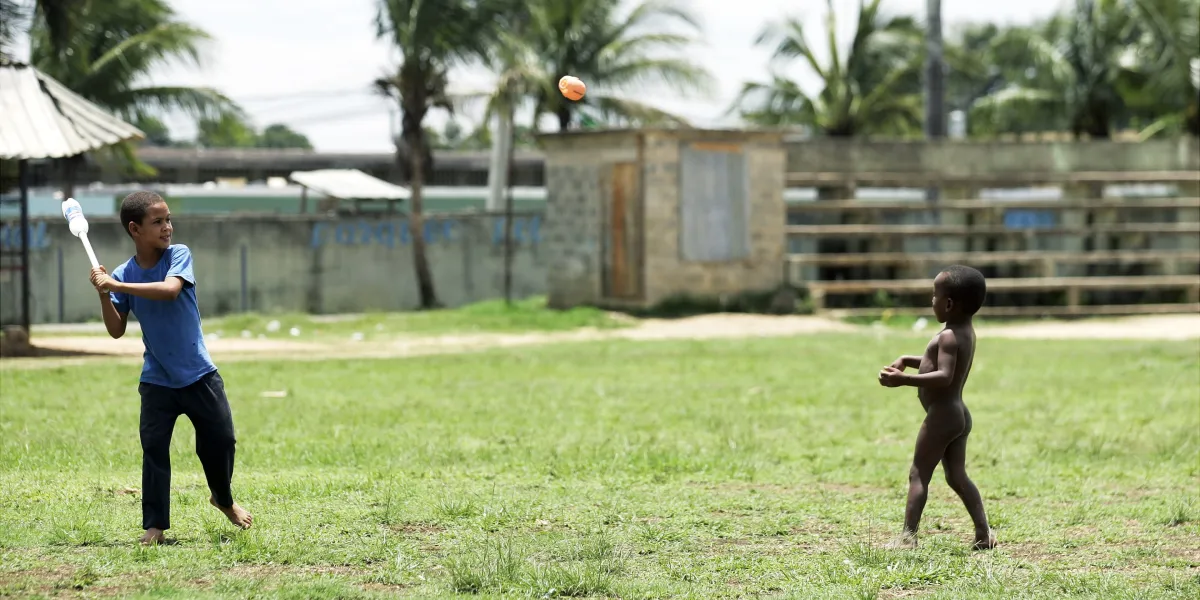
Young Dominican baseball prospects are allegedly being tied to informal financial agreements years before they are legally eligible to sign with Major League Baseball clubs, leaving some vulnerable to high-interest debts and claims on their future earnings.
An investigation by ProPublica alleges that families and children are offered advance payments through handshake deals before official signing bonuses become available. One player was reportedly given about $2,500 at an interest rate of 30% every two weeks.
The agreements can also allegedly entitle lenders to as much as 35% of a player’s signing bonus, while some contracts restrict the young athletes’ ability to walk away from baseball.
The Dominican Republic is MLB’s largest talent pipeline outside the United States. In 2025, 144 Dominican-born players appeared in the major leagues, accounting for about 10% of all MLB players, while they represented 10.5% of plate appearances through September, according to Baseball America.
MLB’s international signing rules generally prevent clubs from signing amateur players until they are 16, provided their birthday falls before September 1 of the signing year. The allegations centre on teams and intermediaries reaching informal agreements with prospects several years earlier.
The Dominican baseball pipeline
About 450 Dominican prospects are signed by MLB clubs each year. Fewer than two-thirds reach the lowest levels of the US minor leagues, and only about 10% of minor leaguers go on to appear in an MLB game.
Many children spend much of their adolescence training at academies and moving between programmes for a professional career that may never materialise. Their education can suffer as a result.
The system has previously attracted scrutiny. A whistleblower made similar claims to the FBI in 2020, while a 2018 Department of Justice investigation found documents involving multiple MLB teams in what was described as a “mafia”-like system.
MLB commissioner Rob Manfred has argued that an international draft could prevent clubs from knowing which prospects they will sign until a formal selection process takes place, potentially removing the incentive for early agreements.
“My own view—and it’s been this view for a long time—is that sooner or later, it would be better if players, no matter from where they hail, enter the game through the same type of system, and that is a draft system,” Mr Manfred said in 2016.
The proposal has faced opposition from both players and clubs. The MLB Players Association has argued that a draft would reduce players’ choice of team and end bidding wars that can increase bonuses, while clubs want to retain flexibility when scouting international talent.
The idea was put back on the negotiating table in June. Francisco Lindor, the New York Mets shortstop and an alternate player representative on the players’ association executive subcommittee, said the issue extended beyond Latin American prospects.
“The discussion of an international draft is about how to divide players,” Lindor wrote. “I’ve been in bargaining sessions for months…This issue is bigger than just Latin players or amateur players. It’s about all players and about the future of the game. We need to get it right.”
Fernando Tatis Jr’s legal dispute
The financial consequences of such arrangements have been illustrated by Fernando Tatis Jr, the Dominican-born San Diego Padres star.
In 2017, when he was 18 and playing in the minor leagues, Tatis agreed to receive $2 million from Big League Advance in exchange for 10% of his future professional baseball earnings.
He later signed a 14-year, $340 million contract with the Padres in 2021. Under the agreement, as much as $34 million could potentially have been payable to Big League Advance.
Tatis stopped making payments in 2024 and sued the company in 2025, alleging that it had used exploitative and predatory practices against young athletes. His filing described the business model as one that “preys on young, financially unsophisticated athletes” by offering lump sums in exchange for substantial portions of future earnings.
In May 2026, a judge rejected Tatis’s attempt to overturn an arbitration decision requiring him to pay Big League Advance $3.74 million in back payments, interest and other costs. He was reported to be planning an appeal.
The allegations sit within wider concerns about the Dominican baseball system, including reports of performance-enhancing drug use among children and the falsification of players’ ages and identities.
ESPN reported that a 14-year-old Dominican prospect died in April after allegedly being injected with performance-enhancing drugs at a baseball academy. Another Dominican prospect was suspended by MLB in August for falsifying a birth certificate to appear two years younger.
More than 52% of all performance-enhancing drug suspensions in MLB history have been imposed on Dominican-born players, according to the Baseball Almanac database.
The FBI and MLB’s Department of Investigation did not immediately respond to requests for comment.
