


The Federal Reserve has raised interest rates for the first time since 2023, responding to renewed inflationary pressure as the war in Iran drives up global energy prices.
The quarter-point increase takes the federal funds rate to a target range of 3.75% to 4%, its highest level since December 2025. The benchmark rate affects borrowing costs across the US economy, including credit cards, car finance and personal loans.
The decision was backed unanimously by the rate-setting committee. Its latest projections indicate that officials expect to raise rates once more this year, although the Federal Reserve is not signalling a further tightening cycle in 2027.
Federal Reserve signals no rate rises in 2027
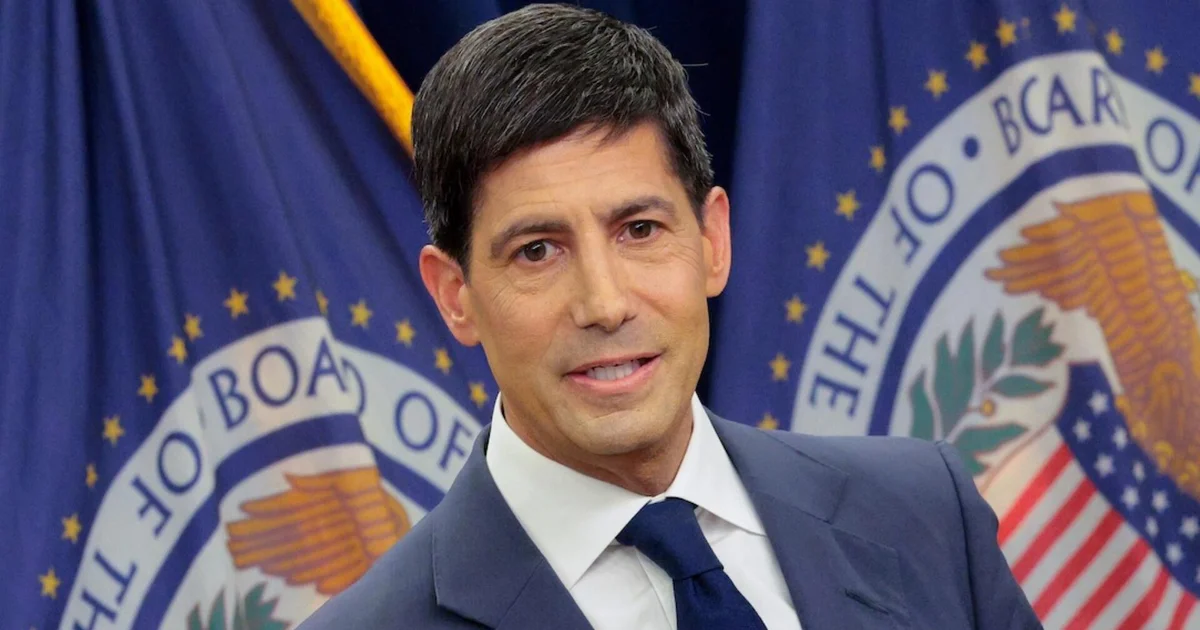
Federal Reserve chairman Kevin Warsh said the Federal Open Market Committee expected to keep rates unchanged throughout next year. About half of committee members predicted that rates would remain steady in 2027.
“We don’t think this is the beginning of another major tightening cycle, and markets have too much tightening priced in over the coming year,” said Michael Pearce, chief US economist at Oxford Economics.
The move represents a reversal from the beginning of the year, when inflation appeared to be easing and many economists expected interest rates to fall during 2026. The central bank had previously raised rates 11 times from 2022 as it sought to contain inflation after the pandemic.
Consumer prices rose by 3.4% in the year to August, well above the Federal Reserve’s 2% annual target. The conflict in the Middle East has disrupted crude oil production and supplies, pushing up fuel prices in the US and increasing costs more broadly.
Rate rise comes as fuel costs climb
Average diesel prices reached a record $6.31 a gallon on Wednesday, up 71% from a year earlier. Petrol averaged $4.37 a gallon, compared with $4.06 a month ago and $2.98 before the war in Iran began in February.
Higher interest rates are intended to cool inflation by encouraging consumers to reduce spending and businesses to cut investment. Slower demand can temper economic growth and reduce pressure on prices.
Heather Long, chief economist at Navy Federal Credit Union, said the increase was the right decision and would help restore confidence that the central bank would act against inflation despite pressure from the White House.
“The big news is that the vote was unanimous and the forecast only signals one more hike in 2026,” she said.
Banks are expected to raise rates on credit cards and other lending products, although financial experts said a single quarter-point increase may not significantly alter borrowing costs. The change comes as households are already paying more for fuel, food and other essentials.
Heather Boushey, a professor of practice at the University of Pennsylvania’s Kleinman Center for Energy Policy, said consumer sentiment was 13% below its level a year earlier. The rate rise, she added, would make borrowing more expensive for families through car loans, credit cards and mortgages.
