


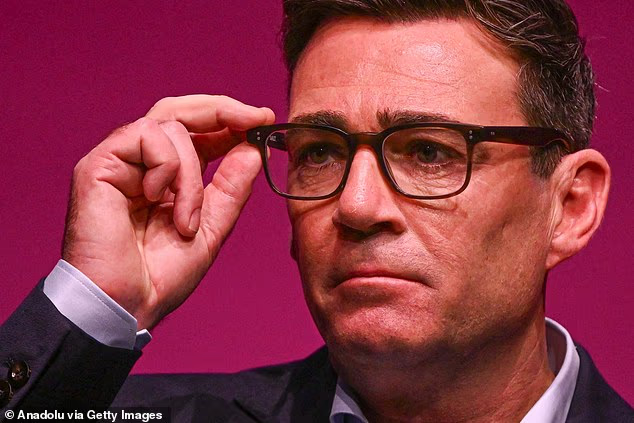
Andy Burnham’s speech at the Labour conference in Liverpool has come under fire for setting out an ambitious programme of reindustrialisation, public ownership and expanded public services without explaining how it would be funded.
Addressing party supporters, the Labour leader said: “Hope comes from honesty.” He also spoke of his ambition to repair what he described as a “broken” country, drawing on his family’s values and his own Northern working-class background.
The speech was warmly received in the conference hall and presented a more polished performance than that of his predecessor. Mr Burnham combined an everyman style with personal references, including an emotional tribute to his recently deceased father.
Among his pledges were the reindustrialisation of Britain, the renationalisation of utilities, stronger regulation, more council homes and improved rights for tenants. He also proposed a second industrial revolution and a new national care service.
However, the speech did not set out how those commitments would be paid for. The main funding measure mentioned was a change to the pensions triple lock, ending the link with earnings and retaining only a double lock.
The Institute for Fiscal Studies was cited as concluding that the change would not come close to financing the proposed care service, let alone the rest of Mr Burnham’s programme.
The speech’s critics argued that taxpayers, including those in Middle England, could face further rises while the financial consequences of the plans remained unclear.
Mr Burnham also portrayed the 1970s, before Margaret Thatcher’s free-market reforms and when major industries were in public ownership, as a period from which lessons could be drawn.
That account was challenged by reference to the economic conditions of the decade, when inflation reached 26.9 per cent, mortgage rates rose into double figures and the top rate of income tax stood at 83 per cent, rising to 98 per cent on investment income.
The criticism of the Labour leader’s message was that honesty about the country’s difficulties would only create hope if voters also believed he had the ability to address them. His opponents said confidence in the government’s economic direction mattered more than political slogans.
Mr Burnham began by saying he would not deliver a “tub-thumping” speech, but went on to make a strongly rhetorical appeal centred on aspiration, public ownership and national renewal.
While allies described the performance as authentic, its detractors questioned whether the promises amounted to a credible plan, particularly in the absence of detailed funding proposals.
