


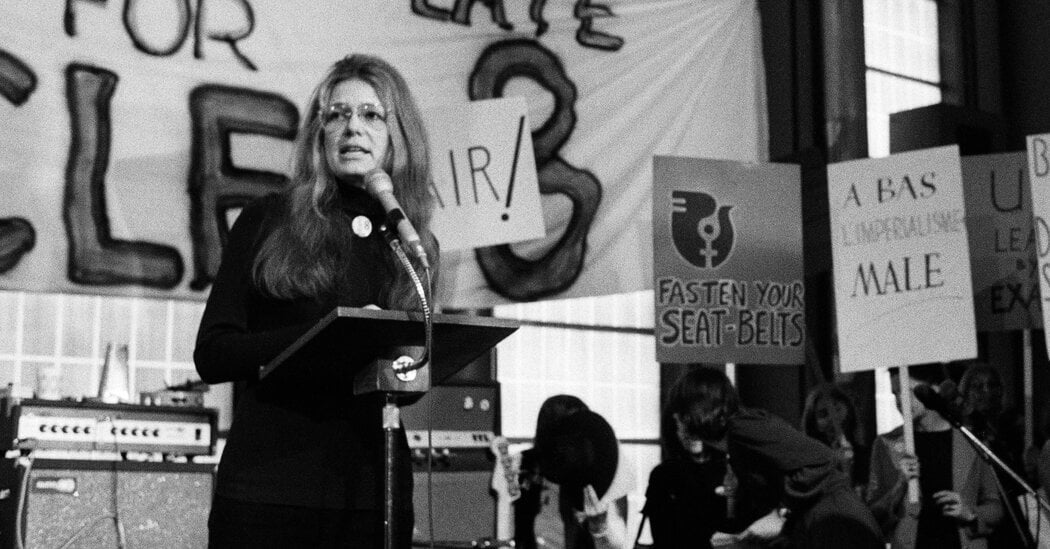
Gloria Steinem, the writer, organiser and defining public face of the modern US women’s movement, has died at her home in New York City aged 92.
Her death on Wednesday, September 2, was announced on social media by her representatives and Gloria’s Foundation. No cause was given, and the statement said she had died peacefully surrounded by loved ones. ([apnews.com](https://apnews.com/article/724836935f6547fda60f361c15238d14?utm_source=openai))
For more than half a century, Steinem campaigned for women’s equality, reproductive rights and greater representation in public life. Her distinctive appearance – large aviator glasses and long, centre-parted hair – made her instantly recognisable, but it was her journalism, political organising and ability to bring feminist arguments to a mass audience that established her influence.
She was a co-founder of Ms. magazine, launched in 1971 as a publication devoted to issues including abortion, domestic violence, equal pay and the treatment of women in the workplace. The magazine’s first full issue sold out within days and became a rallying point for a movement that challenged assumptions about women’s roles in the home, the media and wider society.
Steinem also helped establish the National Women’s Political Caucus, the Ms. Foundation for Women and the Women’s Media Center, among other organisations. Her work earned her the Presidential Medal of Freedom in 2013 and the Princess of Asturias Award for Communication and Humanities in 2021. ([gloriasteinem.com](https://www.gloriasteinem.com/about?utm_source=openai))
Gloria Steinem’s feminist awakening
Born in Toledo, Ohio, on March 25, 1934, Steinem spent much of her childhood travelling across the American Midwest with her father, an antiques dealer. Her formal education was disrupted until she reached sixth grade, but she immersed herself in books and later graduated magna cum laude from Smith College in 1956.
She moved to New York in 1960 and worked as a freelance journalist at a time when women were often steered away from political reporting and towards fashion or celebrity stories. Her breakthrough came with an undercover investigation into working conditions at the Playboy Club, where she posed as a waitress.
But Steinem later identified a 1969 meeting about illegal abortions as the moment that redirected her career. She had undergone an abortion herself in England in 1957, and said hearing women speak about being treated as criminals transformed her understanding of the issue.
“It was the big click,” she recalled. “It transformed me.”
Steinem became a tireless campaigner, travelling across the US to address rallies, university audiences and community groups. She wrote essays and books, raised money for feminist causes and supported rape crisis centres, shelters for women escaping violence and grassroots political campaigns.
Her public prominence made her a target for conservative opponents, who portrayed feminists as hostile to men, marriage and family life. Within the movement, she faced criticism from some radicals and women of colour who believed Ms. magazine and its leadership did not go far enough in addressing differences of race, class and sexuality.
She also endured years of patronising treatment from male editors and colleagues who focused on her appearance. Steinem later recalled being told by one editor that a publication needed “a reporter, not a pretty girl”. Her journalism nevertheless won wide recognition, and she became one of the most sought-after commentators on American politics and social change.
A life devoted to organising
Steinem’s activism extended well beyond writing. She marched with farm workers, supported Angela Davis’s legal defence and worked to increase the number of women in elected office. She was also a prominent advocate for abortion rights and opposed attempts to weaken protections for women.
Her views sometimes placed her at odds with political allies. She was criticised for defending Bill Clinton during the 1990s and apologised after remarks during the 2016 Democratic primaries that appeared to dismiss young women supporting Bernie Sanders.
Steinem wrote openly about insecurity, depression and the effects of a difficult childhood. In 1992, she published Revolution From Within, a book focused on self-esteem which some feminists regarded as a retreat from structural political change.
She largely rejected marriage and motherhood, saying that remaining child-free was a choice she had never regretted. She married social justice activist David Bale in 2000, aged 66; the marriage lasted three years before his death from brain lymphoma.
Steinem survived breast cancer, continued to lecture into her 90s and remained a regular presence in public debate. Her official biography says she was also the author of numerous books and co-founder of organisations including Equality Now and the Women’s Media Center. ([gloriasteinem.com](https://www.gloriasteinem.com/about?utm_source=openai))
In later life, her Manhattan brownstone became a base for activists, writers and organisers. Gloria’s Foundation, created around the home, says it will preserve the building as a place for feminist organising, archives and “talking circles” after her death. ([gloriasfoundation.org](https://www.gloriasfoundation.org/?utm_source=openai))
Steinem’s legacy is reflected in the legal and economic advances won by women during her lifetime, as well as in the continuing disputes over reproductive rights, equal pay and political representation.
She once rejected the idea that she was passing her influence to a new generation. “I’m keeping my torch,” she wrote, “and I’m using it to light the torches of others.”
