


Persian Gulf oil exports have recovered to almost pre-war levels under US military protection, weakening Iran’s leverage over the Strait of Hormuz while leaving open the possibility of a fresh escalation, analysts have warned.
JPMorgan estimated Middle Eastern crude shipments reached about 17.5 million barrels a day last week, equivalent to 98% of pre-war levels. Goldman Sachs put exports from Persian Gulf producers even higher, at 19 million barrels a day.
Shipping data firm Kpler said Gulf crude exports had also returned to pre-war levels, recording at least 16.5 million barrels a day in September.
But the recovery has relied on a substantially altered trading system. About 40% of crude is now leaving the region without passing through Hormuz, compared with 17% before the war, as Saudi Arabia and the United Arab Emirates make greater use of pipelines.
More than 70% of the crude that crossed the strait in August was transferred between tankers offshore, Kpler said, underlining the continuing disruption to regional oil logistics.
Iran retains capacity to disrupt Gulf energy supplies
The increase in oil flows has taken place despite a US naval blockade that has reduced Iran’s own exports to effectively zero. Donald Trump and members of his administration have presented the figures as evidence that Washington now controls the strait and that Iran’s economy could soon collapse.
Yet commercial shipping remains exposed. Attacks on vessels in the Gulf have increased in recent days, with drones and missiles occasionally striking their targets despite US protection and efforts to reduce Iran’s ability to launch attacks.
The assaults have not stopped every tanker from making the passage, but they have kept shipping and insurance costs high and prevented the market from returning fully to normal.
Esfandyar Batmanghelidj, founder and chief executive of the Bourse & Bazaar Foundation think tank, said Iran’s influence over regional energy supplies extended beyond the Strait of Hormuz.
Iran could still target oil infrastructure, including drilling and refining facilities, he said, particularly if Mr Trump did not feel sufficient pressure to pursue diplomatic options.
“Iran did not wage a scorched earth campaign—but it may yet do so if the current situation persists for too long,” Mr Batmanghelidj wrote on X. “That is what everyone who actually follows this region and its dynamics is worried about.”
He said Iranian attacks on US bases in the Middle East, as well as on Gulf cities and infrastructure, had demonstrated that the US had not been able to eliminate the threat. While American forces could keep oil moving, he argued, they could no longer guarantee security across the wider Gulf.
US military deployments add to tensions
Mr Trump has rejected an offer from Tehran to restart talks under a seven-day ceasefire. Iran proposed fully reopening the strait in return for the lifting of the US blockade and the unfreezing of its assets.
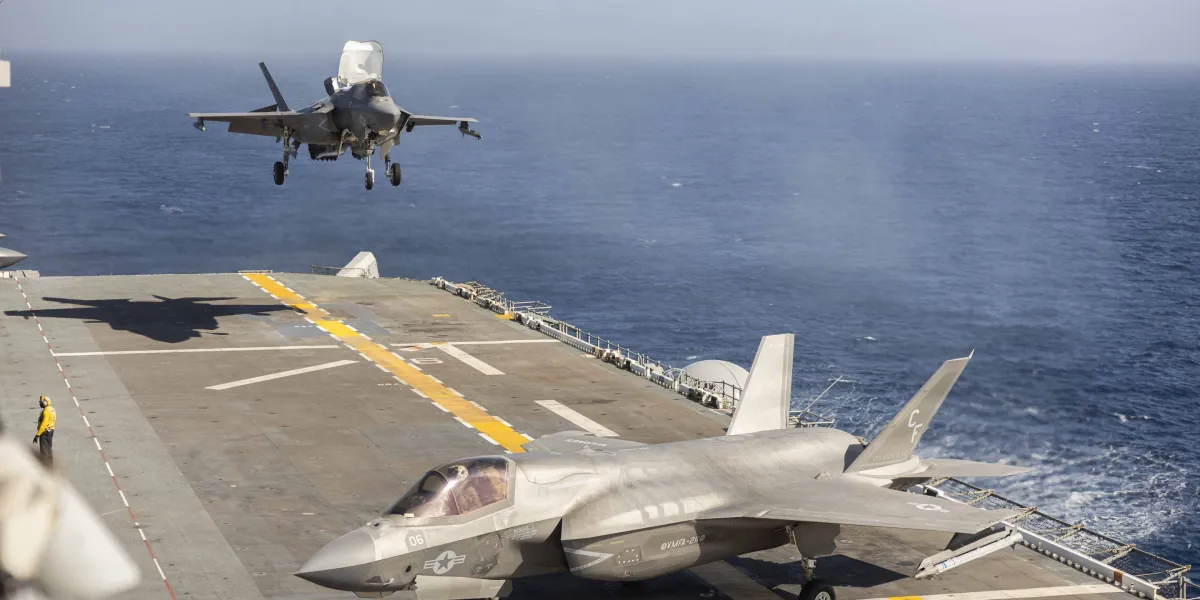
Instead, sources reported that Mr Trump expects bombing of Iran to resume after the US midterm elections. Washington is also deploying the USS Theodore Roosevelt aircraft carrier and the USS Makin Island Amphibious Ready Group, which includes three amphibious ships and the 13th Marine Expeditionary Unit, to the Middle East.
Any retaliation would also threaten Iran’s own oil infrastructure. For now, however, Mr Trump has indicated that he will allow the economic pressure campaign to continue.
US sanctions were tightened last month, making it more difficult for Tehran to move money through front companies and other intermediaries. As Iran’s oil revenue has dwindled, its currency has fallen to new lows.
Iranian President Masoud Pezeshkian has also complained that the country’s funds in China are blocked. “We can’t even get our own money out of a country to which we’ve supplied goods, let alone using those funds to pay someone else in another corner of the world,” he said last week.
