


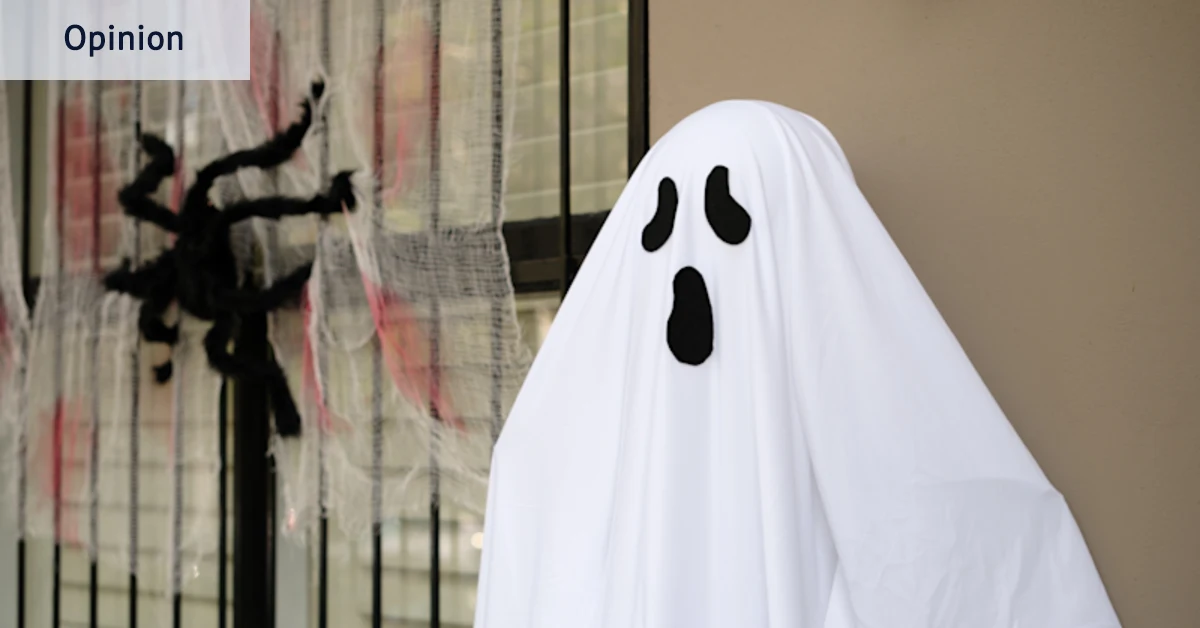
Australian ghost stories and historical tragedies could provide a distinctly local alternative to imported Halloween imagery, with tales from Berrima, Campbelltown and Canberra offering plenty of material for front-garden displays.
Australia’s folklore includes at least 21 ghost stories, according to Bill Wannan’s Dictionary of Australian Folklore. Among the best known are the Headless Ghost of Berrima, Fisher’s Ghost and the Ghost of Yarralumla.
Australian ghost stories offer local Halloween inspiration
The Berrima legend centres on Lucretia Dunkley, who was hanged at Berrima Gaol in 1842 alongside her lover, Martin Beech. The pair had been convicted of murdering Dunkley’s husband with an axe.
Dunkley was pregnant when the couple were executed. Their heads were later removed for scientific study and donated to the Australian Museum, along with the skull of her unborn child. The adult skulls were still displayed in 1900 as examples of the so-called criminal mind, while the child’s skull was eventually removed.
For decades, witnesses claimed to have seen Dunkley’s headless ghost moving among the pine trees outside the gaol. Wannan described the story as “probably the best attested ghost story in Australia”.
Campbelltown has its own enduring tale in Fisher’s Ghost. Frederick Fisher was killed by his friend George Worrall in 1826, after which Worrall claimed Fisher had returned to England and left his possessions behind.
The story unravelled after Fisher’s ghost was reportedly seen pointing towards a deep pool. His body was found there soon afterwards, and Worrall was hanged in February 1827. Campbelltown has held its annual Festival of Fisher’s Ghost since 1956, with this year’s festival including a parade on Queen Street.
Another account concerns the Ghost of Yarralumla, said to be a First Nations man haunting the Governor-General’s residence in Canberra. In one version of the story, he swallowed a stolen diamond to protect a friend, was shot dead and buried with the stone somewhere on the grounds.
The ghost of Johnny Gilbert, a member of Ben Hall’s bushranging gang, is also said to have returned from the dead. Gilbert was shot by police in 1865 before he could return a horse borrowed from a local squatter. According to the story, his ghost later rode into the property and placed the horse in its stable.
Such stories could replace familiar imported images with scenes drawn from Australian history. One possible display would depict explorers Burke and Wills starving after refusing assistance from local Indigenous people.
Another would feature John Ainsworth Horrocks, who died during an expedition in 1846 after a camel named Harry attacked him while he was trying to unload a shotgun. The weapon discharged, killing the explorer.
David Hunt, in True Girt, described Horrocks as holding “the dubious distinction of being the only explorer to have been shot by his camel”.
For Halloween decorations with a local flavour, an unfortunate explorer, a hostile camel and a fatal gun may offer a more distinctly Australian scene than a recycled supernatural film.
