


Airfare prices are set to remain high as volatile fuel costs and resilient travel demand squeeze airline profits, with carriers passing increased expenses on to passengers through higher fares, surcharges and baggage fees.
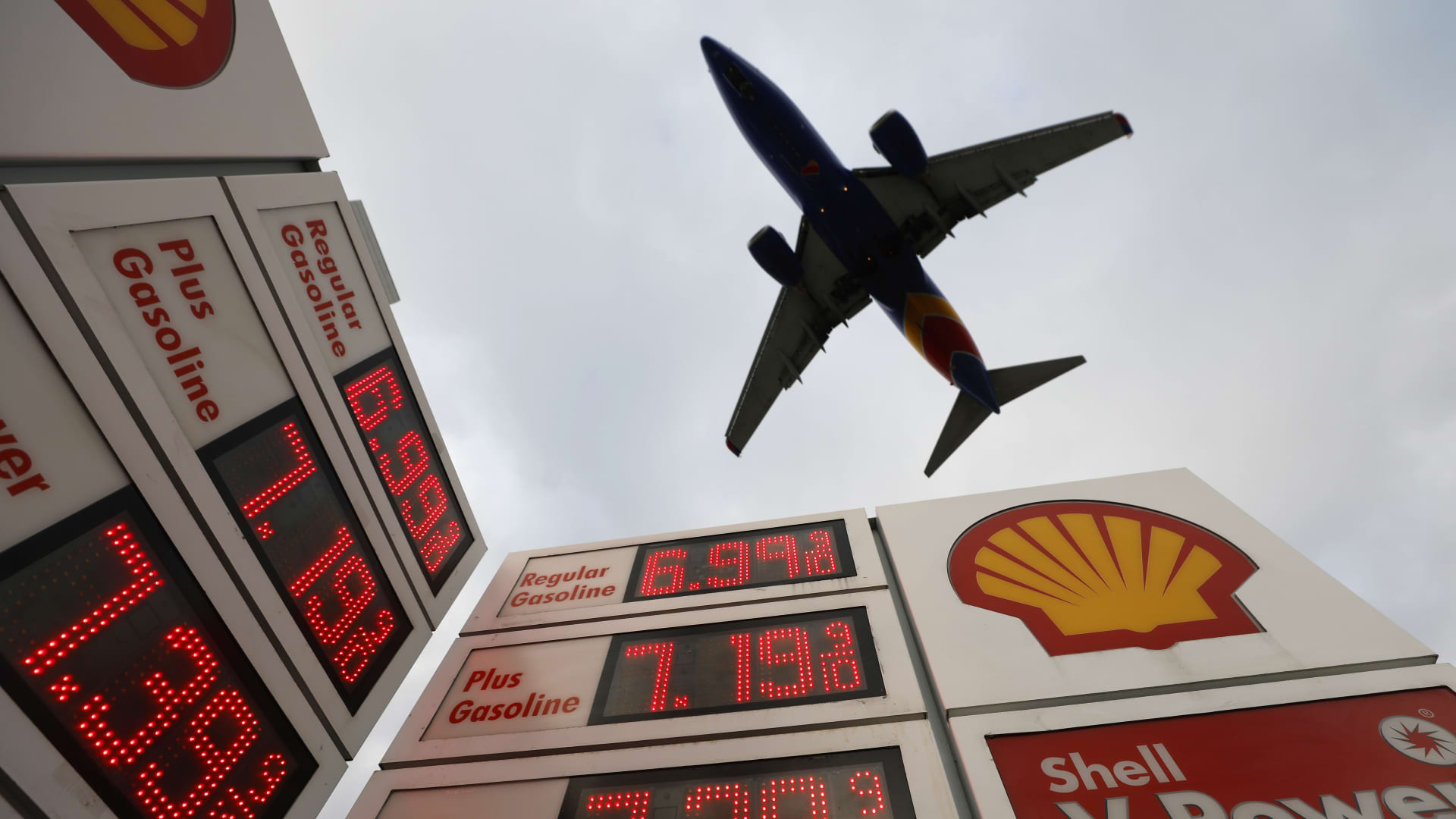
The conflict involving Iran, which began at the end of February, pushed diesel, petrol and jet fuel prices to multi-year or record highs. Disruption around the Strait of Hormuz and strong demand have driven up refined fuels, including jet fuel, by more than the price of crude oil.
Airline executives are not expecting a rapid fall in fuel costs, while bookings have continued despite higher ticket prices. Vanessa Hudson, chief executive of Qantas Airways, said the business could not rely on the Strait of Hormuz reopening at a particular time.
“There’s a backdrop of resilient demand in in this environment. We’re making sure that we’ve got our capacity settings right,” Ms Hudson said.
Airlines have also expanded premium cabins to take advantage of demand for more spacious and expensive seats, in some cases reducing the number of standard economy places available.
Passenger numbers in the US were slightly lower this year than last, with airport security screenings down 1% through September 20 compared with the same period in 2025. However, demand has remained strong enough for airlines to retain much of their pricing power.
US airfare rose 23.4% in August from a year earlier, while domestic return tickets for Thanksgiving were selling for an average of 402 dollars as of September 24, according to Hopper. Christmas return fares were up 23% at 452 dollars.
Hayley Berg, an economist at Hopper, said many families viewed holiday travel as essential and were booking earlier than usual despite disliking the prices. She said the focus on Thanksgiving and Christmas could leave opportunities for cheaper fares during the intervening autumn period.
Airline revenue rises as profit forecasts weaken
Airlines are forecasting double-digit revenue growth for the third quarter, even though slightly fewer people are flying. Robert Isom, chief executive of American Airlines, described the year-on-year revenue environment as unusually strong outside periods such as the recovery after the pandemic or the September 11 attacks.
But higher revenue has not protected carriers from rising costs. Analysts have reduced their profit forecasts for US airlines following another increase in jet fuel prices during the summer.
American Airlines said in July that it expected an adjusted third-quarter loss of between 10 and 70 cents a share, and cut its profit outlook for 2026.
Investors will receive a fresh indication of the outlook when Delta Air Lines reports its third-quarter results on Friday. The carrier, described as the most profitable US airline, also owns a refinery that could benefit it as fuel prices rise.
Analysts are expected to focus on the fourth quarter and beyond. Savanthi Syth, an airline analyst at Raymond James, said carriers were unlikely to introduce many broad fare increases, but could reduce flights if jet fuel remained between four and 4.50 dollars a gallon.
Fewer flights would leave passengers with less choice and could push fares higher. “You’re going to see more rationalization in capacity,” Ms Syth said.
Airlines weigh capacity cuts against future fare pressure
Fuel uncertainty has already led carriers to trim schedules and abandon routes that are unprofitable or performing poorly. The collapse of Spirit Airlines in May removed between 1% and 2% of capacity from the US market, according to Barclays, giving both low-cost and full-service airlines more scope to raise prices.
However, a fall in oil prices could change the picture. Investors will be watching to see whether airlines respond by adding capacity sharply, which could put downward pressure on fares.
Brandon Oglenski, an airline analyst at Barclays, said higher booked fares were likely to support similar revenue trends per available seat in the fourth quarter. He said American Airlines and United Airlines, whose current schedules show domestic capacity growth of 10% and 9% respectively, would be closely watched.
With energy prices and jet-fuel refining margins still elevated, airlines are expected to restrain capacity expansion, with some potentially offering early indications of their plans for 2027.
