


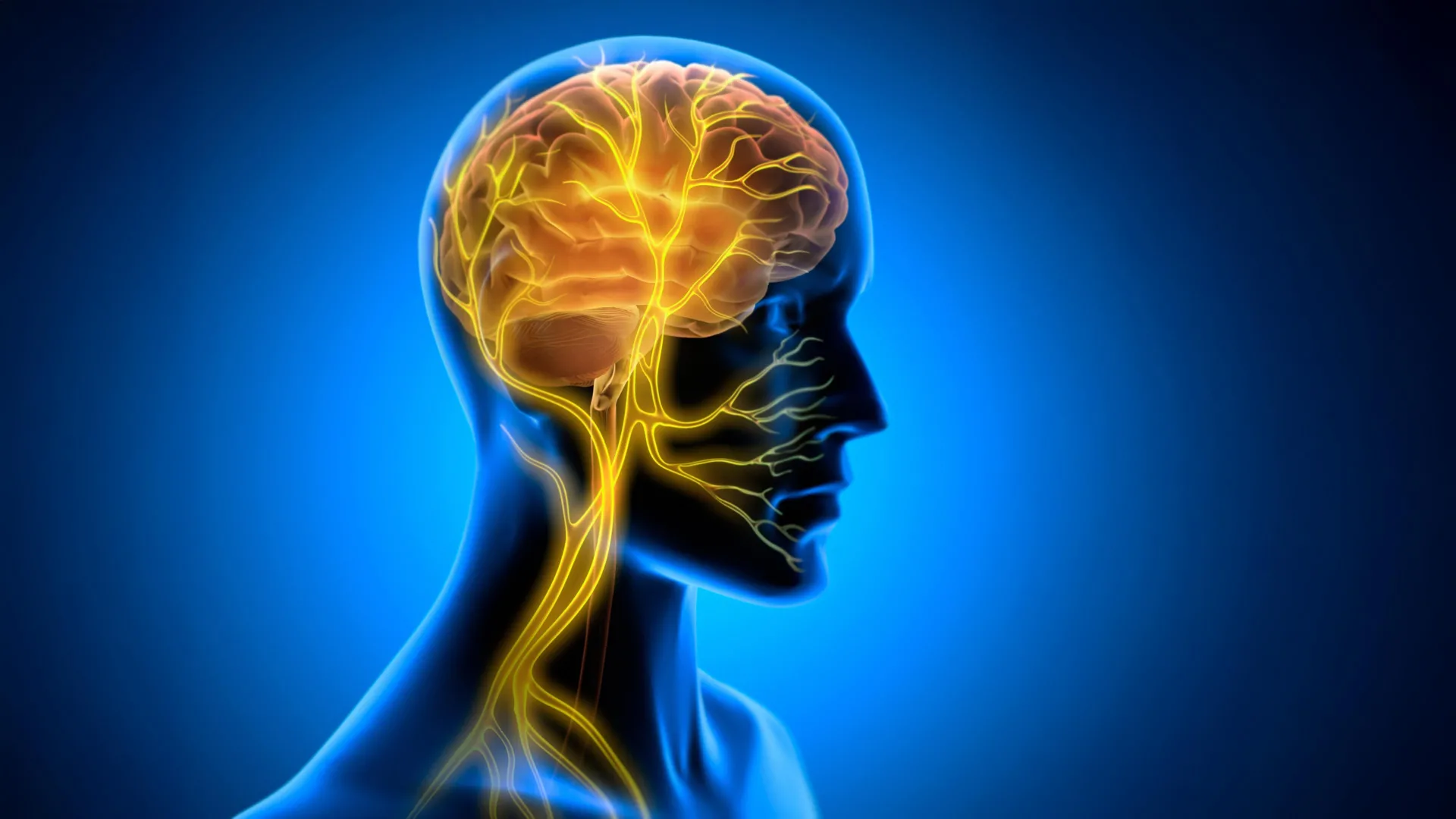
Scientists in Japan have demonstrated that delivering stimulation to the vagus nerve after training can bolster long-term motor learning in mice, suggesting the body’s signals to the brain help determine how lasting new skills become. The work, conducted at Tohoku University, and published in iScience on August 25, 2026, points to a role for body-to-brain communication in solidifying learning.
The brain–body link behind lasting learning
The vagus nerve serves as a major information highway between the brain and the body. It carries signals from internal organs to the brain while also transmitting commands from the brain back to those organs. Vagus nerve stimulation (VNS) is already clinically approved for treating several disorders, but the new study suggests there may be another important mechanism involved: rhythmic changes in blood vessels inside the brain.
To explore this possibility, researchers attached a small cuff electrode to the left cervical vagus nerve in mice and tested VNS during horizontal optokinetic response learning, a cerebellum-dependent eye movement task that teaches mice to better follow moving visual stripes—a reflex similar to tracking a moving scene.
The biggest effect appeared after practice.
“The key point is that VNS was delivered only after training,” said Professor Ko Matsui. “Our findings suggest that VNS may open a hidden window of opportunity for enhanced learning by making the brain environment more receptive to long-lasting change.”
Rhythmic changes in brain blood volume
The team then searched for brain changes that might accompany the improved learning, measuring blood-volume activity near the cerebellar flocculus, an area involved in HOKR learning.
Using fiber photometry, they found that a single round of VNS produced a two-phase vascular response: local blood volume briefly decreased before rising after a delay. When VNS was repeated, it created rhythmic oscillations in blood volume.
Those vascular rhythms also appeared to be related to learning. Mice with larger blood volume oscillations generally showed better learning by Day 5, suggesting that changes in the brain’s vascular environment could be connected to the longer lasting effects of the stimulation.
“Our brains may be more strongly influenced by the body than we imagine,” said lead author Junyu Chen. “By tuning the brain’s metabolic environment, including rhythmic vascular movements, we may eventually unlock capacities that would otherwise remain latent.”
Exploring the Brain–Body Connection
Future research will focus on refining stimulation protocols and determining more precisely how communication between the brain and body supports long-term plasticity.
By studying this two-way communication pathway in greater detail, scientists hope to better understand how learning becomes lasting and how that process might eventually be enhanced.
