


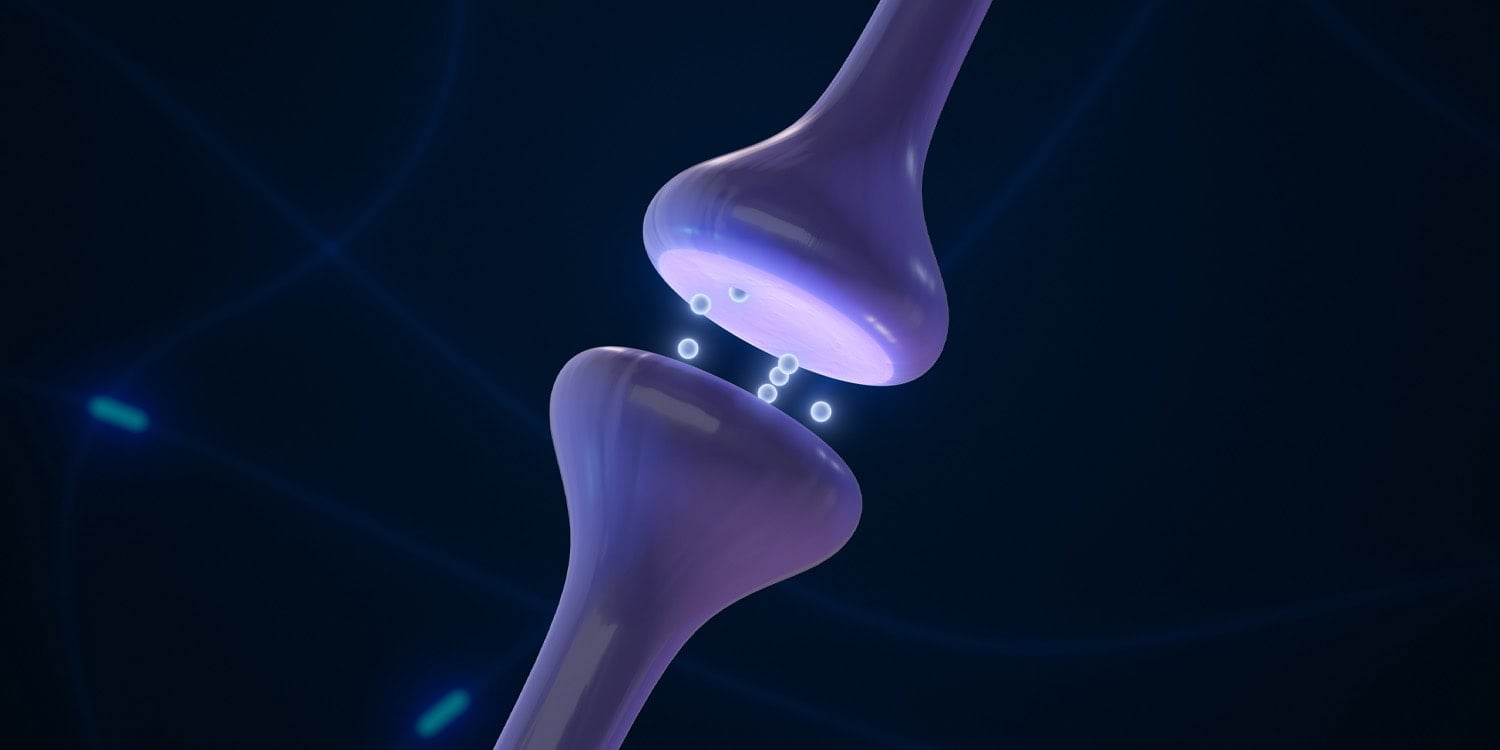
A new study in mice from Korea University researchers has revealed how receptors for dopamine and insulin act together in the brain’s central amygdala to regulate compulsive eating. The findings, published in Molecular Psychiatry, point to a cellular mechanism that prevents overconsumption of sugary and fatty foods and may shed light on why certain eating disorders and metabolic conditions often co-occur.
Compulsive eating involves an intense drive to consume highly palatable foods despite potential health risks and shares behavioural traits with substance addiction. Repeated overconsumption of fat- and sugar-rich foods can contribute to obesity and diseases such as diabetes, the researchers note.
Investigators led by Bokyeong Kim and Ja-Hyun Baik at Korea University, together with colleagues from several South Korean institutions, focused on the central amygdala, a brain region implicated in processing emotions, motivation and environmental cues. They found that dopamine D2 receptors and insulin receptors are often present on the same neurons in this area.
In a first set of experiments, the team compared mice genetically engineered to lack D2 receptors entirely with unmodified mice trained to lever-press for a sugary food pellet. When mild electric foot shocks accompanied the reward, normal mice reduced their lever pressing, whereas the D2 receptor-deficient mice persisted in seeking the sugary pellet, displaying a compulsive drive for the treat.
To confirm the effect was specific to the central amygdala, the researchers delivered viral inhibitors to remove D2 receptors only in that brain region of otherwise normal mice. These mice similarly continued pressing the lever despite the shocks, indicating a central role for D2 receptors in this area.
The study then mapped the relationship between dopamine and insulin receptors on these cells, discovering that around 60 percent of central amygdala neurons with D2 receptors also carried insulin receptors. When D2 receptors were removed, insulin receptor expression in the region dropped by more than half.
Further experiments involved infusing insulin or a dopamine-mimicking drug into the central amygdala. In normal mice, both substances triggered phosphorylation, an activation step for insulin receptors. In mice lacking D2 receptors, neither infusion activated insulin receptors, suggesting that dopamine receptors modulate insulin receptor signalling.
The researchers traced this interaction to a protein that normally inhibits insulin signalling. Activation of D2 receptors suppressed this inhibitory protein, enabling insulin receptor activity to proceed more freely.
To test whether insulin receptors on D2-expressing neurons influence feeding, the team engineered mice to lack insulin receptors specifically on those neurons in the central amygdala. When subjected to the lever-press task with foot shocks, these mice likewise ignored the punishment and continued seeking the sugary food, mirroring the dopamine receptor mutants.
Electrophysiological recordings in brain tissue showed that applying a dopamine-mimicking drug alone did not alter baseline excitability of central amygdala neurons. However, when insulin and the dopamine analogue were applied together, the neurons became markedly more electrically active, indicating a synergistic interaction between the two receptor systems.
In live animals, researchers used fibre photometry to monitor activity of D2-expressing neurons during meals. Neuronal activity in the central amygdala decreased when mice consumed highly palatable food, while normal chow produced little change. Mice with lower neuronal activity tended to eat more of the rich food, and activating the receptors helped stabilise activity and reduce intake.
Optogenetic experiments further demonstrated a causal link: silencing the D2-expressing neurons in the central amygdala caused a surge in intake of sugary and fatty food, whereas activating these cells reduced consumption. Importantly, blocking insulin receptors abolished the suppressive effect of activation, indicating that functional insulin receptor signalling is required to restrain compulsive eating behavior.
The team also measured dopamine release during extended access to the rich diet. Mice with reduced dopamine receptors showed blunted dopamine release under continuous access, while a separate group given access for just one hour a day exhibited a binge-like pattern, consuming around 64 percent of daily calories during that hour.
While the findings illuminate a novel interaction between dopamine D2 receptors and insulin receptors in a key brain circuit, the researchers acknowledge that experiments were conducted in mice. Lever-pressing with foot shocks models only a facet of human compulsive behaviour and may not capture the full complexity of eating disorders or food addiction.
Looking ahead, the scientists propose studying how this receptor partnership adapts over a longer lifespan and after prolonged exposure to obesity-promoting diets. They suggest that therapies targeting both dopamine and insulin pathways could eventually address metabolic diseases and eating disorders together.
The study was authored by Bokyeong Kim, Minji Kim, Hyun-Yong Lee, Jung Hyun Pyo, Jihee Seo, Yoon Jeon, Ho Lee, Joung-Hun Kim, Seung Hyun Ahn, Sung Wook Chi, Je Kyung Seong, and Ja-Hyun Baik of Korea University and collaborating South Korean institutions.
