


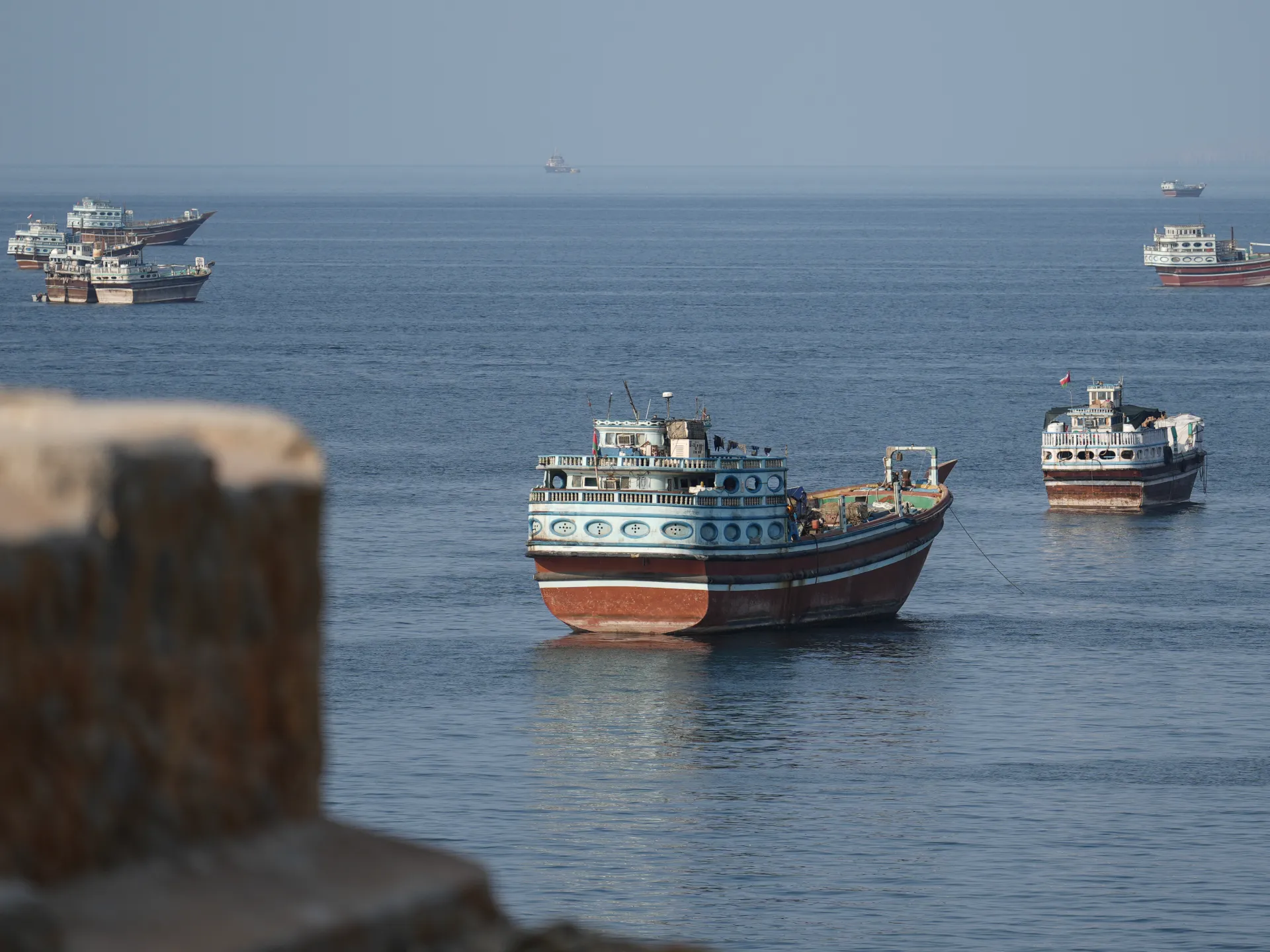
Middle Eastern oil exports have risen above pre-war levels despite Iran’s attempts to restrict traffic through the Strait of Hormuz, prompting speculation that Gulf states may be paying for the safe passage of tankers.
Crude shipments from the region reached between 19.5 million and 22.5 million barrels a day on four days during the final week of September, according to provisional figures from maritime tracking firm Kpler. Before the US-Israel war on Iran began in February, exports averaged about 18 million barrels a day.
Michelle Brohard, Kpler’s head of policy and geopolitical risk, said the increase could partly reflect an informal arrangement under which countries pay Iran to allow vessels through the strategic waterway. She stressed that the suggestion was speculation and has not been independently verified.
“I suspect there is a toll that’s being paid, which is giving these ships safe passage,” Ms Brohard said in an interview with energy analyst Rory Johnston.
She said countries may be seeking to move as much oil as possible before the conflict resumes, describing the payment of “10 percent of their cargo, or 20 percent of their cargo” to Iran as unsustainable alongside continued US escorts for shipping.
How oil is moving through the Strait of Hormuz
The rise in exports has also been linked to US ships escorting tankers, an increase in ship-to-ship transfers and the use of pipelines through Saudi Arabia and the United Arab Emirates. Kpler estimates that 40 per cent of oil now bypasses the strait, while much of the crude that crosses it is transferred to different tankers offshore.
Shipments through the Red Sea are also included in the figures, while vessels that switch off their automatic identification systems to avoid detection may not be recorded.
Iraq’s state-owned Oil Tanker Company said on Saturday that it had moved two million barrels of crude through the Strait of Hormuz on a very large crude carrier. Its director general described it as the company’s first such operation in decades.
Iran disputes claims that it has lost control of the waterway. Senior Islamic Revolutionary Guard Corps commander Ali Fadavi said on Sunday that only three to four million barrels a day were travelling along a US-supervised route, calling that volume “negligible” compared with pre-war traffic.
Before the conflict, about 125 large commercial vessels passed through the strait each day, including oil tankers, gas carriers, bulk carriers and container ships.
Lloyd’s List reported as early as March that the IRGC had established a “toll booth” system to control vessel movements. The Trump administration has repeatedly said Iran would not be allowed to charge a toll under any possible agreement with Washington.
Oil prices remain above pre-war levels
Oil prices have eased slightly as exports recover and after G7 countries announced plans to release 100 million barrels from emergency reserves. Brent crude was trading at about $101.59 a barrel on Monday, down 0.71 per cent, while US West Texas Intermediate fell 1.2 per cent to about $90.05.
Susannah Streeter, chief investment strategist at Wealth Club, said the longer-term outlook would depend on the security of energy supplies. She warned that the strait remained a major flashpoint after another tanker was attacked on Sunday.
On Monday, the United Kingdom Maritime Trade Operations group said a tanker travelling through the waterway had been ordered by the IRGC to turn back or risk being targeted.
Abdul Khalique, head of the Liverpool John Moores University Maritime Centre, said a transit-fee arrangement was “plausible” but was more likely to represent an informal security mechanism than a formal maritime levy.
“No public proof confirms a systematic, state-run Iranian toll system,” he said, adding that international maritime law protected transit passage through international straits and made formal tolls legally questionable.
Chris Beauchamp, chief market analyst at IG Group, said the suspected arrangement was possible in part, but argued that the main difficulty for exporters was the availability and cost of shipping. The shuttle system in the Gulf had helped move oil out of the region, he said, but had increased freight rates and reduced the supply of vessels elsewhere.
In September, the US imposed sanctions on digital assets firm BitBank, alleging that it had been used by Iran’s Hormuz Safe Marine Services Authority to transfer money to Tehran. The authority was established by the Iranian government to collect fees for the safe passage of vessels through the strait.
Mr Beauchamp said Asian buyers were increasingly having to source crude from further away, extending journey times. “Ships don’t get built overnight,” he said.
