


Young Australians living with their parents have reached a record proportion, with almost half of those aged between 18 and 29 still in the family home as soaring housing costs reshape the transition to adulthood.
Figures from the Household, Income and Labour Dynamics in Australia (HILDA) survey show that 49.9% of people in that age group lived with their parents in 2024, compared with 39.4% in 2001.
The pattern is more common among young men, 55% of whom remain at home, compared with 45% of young women. However, the difference has narrowed from 11.9 percentage points in 2001 to 9.6 points in 2024.
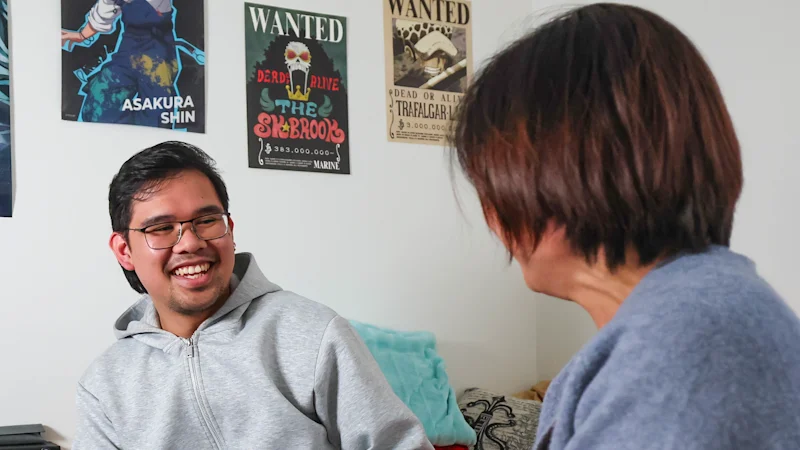
For 24-year-old trade journalist Ethan Benedicto, who lives with his parents and 18-year-old brother in Clyde North, south-east Melbourne, the arrangement has allowed him to save more than 60% of his fortnightly pay.
“Everything is just expensive in general. Rent’s expensive … but I save over 60 per cent of my fortnightly pay,” he said.
Mr Benedicto said living with family was also common among friends from South-East Asian and Middle Eastern backgrounds. He hopes to have a home with his partner by the time he is between 27 and 30.
Oliver Mason, 24, works part-time at an op shop and lives with his parents in Picnic Point, Sydney. He said moving out made little financial sense while many of his friends were also living at home.
“I think there’s a bit of complacency and apathy that’s bred out of the fact that the housing market is hard to access,” he said.
Mr Mason said he would be most likely to leave home if he entered a relationship and wanted a place of his own.
Housing costs keep young Australians at home
Dr Kyle Peyton, a report co-author from the University of Melbourne, said the cost of housing was a major reason young adults were delaying leaving the family home.
“It’s more difficult than it’s ever been in Australia for young people to get out of their parents’ house and find a place to live and start a family,” he said.
He said stagnating real incomes had contributed to “a real sense of hopelessness about the future” among the current generation.
Those who do leave home are often renters and are not necessarily moving into more comfortable accommodation. One in five young people living away from their parents reported inadequate comfort, compared with one in 25 of those who remained at home.
Dr Peyton said some young people were weighing up whether to stay with their parents while saving for a deposit or move into a rental property that might be in poor condition.
The HILDA survey also found that housing stress among lower-income households in mainland capital cities reached a record high in 2024. Housing stress is defined as spending more than 30% of disposable income on rent or mortgage payments.
Among the bottom 40% of earners, 36% of private renters and 30% of mortgage holders exceeded that threshold. Renters, single parents and older single people recorded the highest rates of housing stress.
Almost 8% of households said they had been unable to pay their mortgage or rent on time, the highest proportion recorded since 2003.
Melbourne University economics professor Roger Wilkins said financial and housing stress were worsening despite employment remaining relatively strong.
“We’re working more than ever, yet the cost of living is outpacing growth in incomes,” he said, warning that economic wellbeing could deteriorate further if the labour market weakened.
Declining energy and mental health among younger people
The survey also recorded a sustained fall in vitality scores across all age groups over the past decade. The largest decline was among women aged between 25 and 34.
Self-reported mental health among younger Australians, particularly young women, has also fallen substantially and persistently.
The HILDA study has followed the same 9,000 households since 2001. The latest figures are based on interviews conducted in 2024, almost a quarter of a century after the survey began.
