


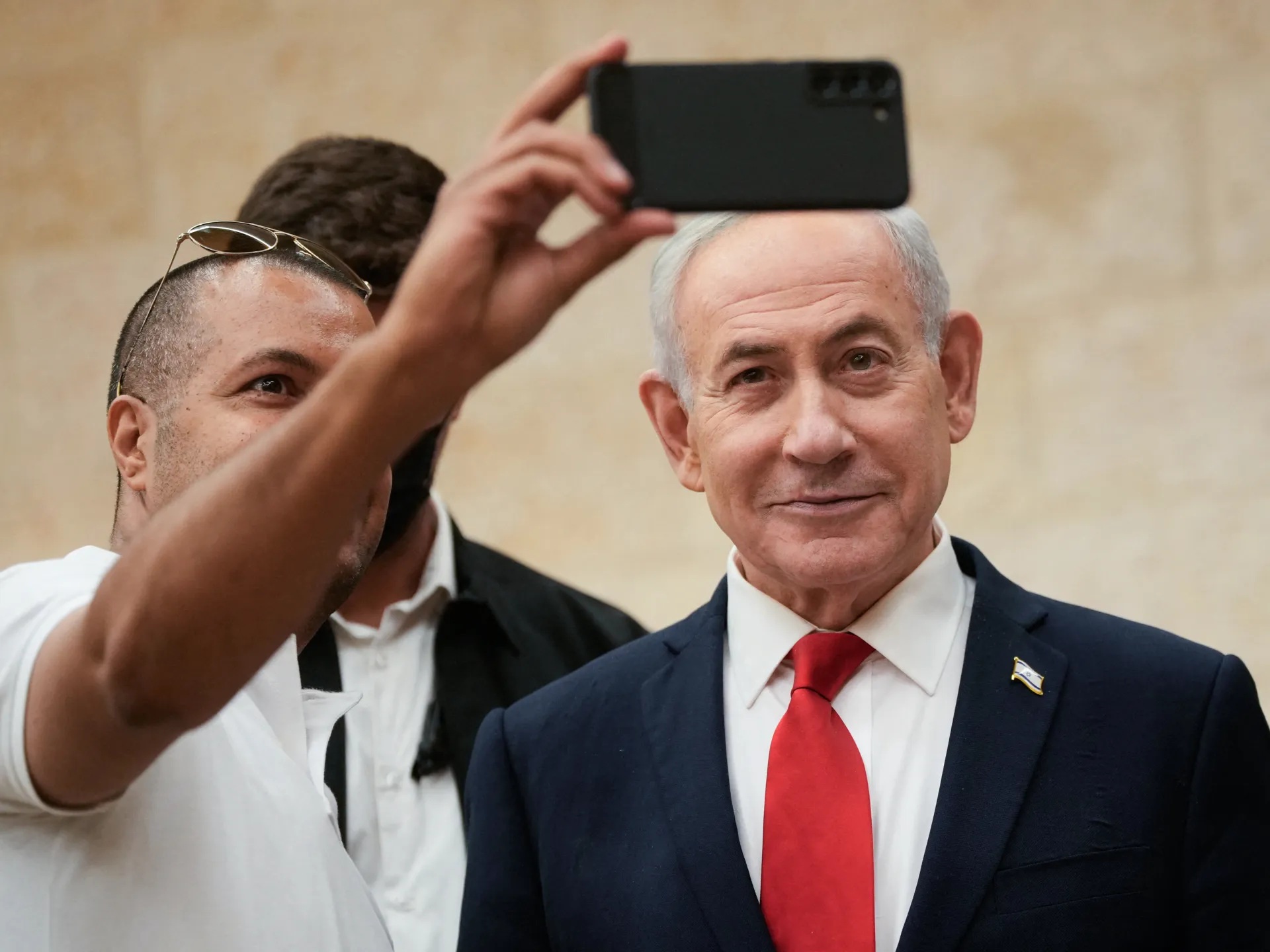
Benjamin Netanyahu’s political legacy is increasingly defined by the opposition he has forged, as Israel prepares to choose between its longest-serving prime minister and a field of rivals united mainly by their determination to remove him.
The election on October 27 will take place against a backdrop of deep polarisation, corruption proceedings and criticism of Netanyahu’s handling of the Hamas-led attack on October 7, 2023, and the wars that followed.
His supporters continue to regard him as uniquely capable of leading Israel. At the United Nations General Assembly in late September, delegates walked out as he began speaking, prompting the prime minister to respond: “If there are any other moral cowards who haven’t left the hall, please do so now.”
For many of his backers, the confrontation reinforced the image of a leader willing to stand up to international pressure. “For many in Israel, but not all, he’s the only man that can truly lead Israel. He makes them proud to be Jewish,” said Mitchell Barak, a former Netanyahu aide.
Netanyahu, who is seeking re-election while wanted by the International Criminal Court on charges of war crimes in Gaza, has occupied Israel’s political centre for decades. Born in Tel Aviv in 1949, he spent part of his early life in the United States and later served as ambassador to the United Nations.
He first became prime minister in 1996, then returned to office for a record 12-year period from 2009 to 2021. He regained power the following year at the head of Israel’s most far-right government.
Netanyahu’s political legacy and Israel’s rightward shift
Political analyst Nimrod Flaschenberg said Netanyahu had become “the perfect encapsulation of Israel’s political polarisation”. He described the prime minister as being “always” in campaigning mode and capable both of building coalitions that reflect public opinion and steering that opinion himself.
During Netanyahu’s years in power, Israel has moved further to the right, while the prospect of a two-state solution has receded. His current coalition has given prominent positions to National Security Minister Itamar Ben-Gvir and Finance Minister Bezalel Smotrich, both associated with hard-line nationalist and settlement policies.
In 2018, Netanyahu’s coalition passed the Nation-State Law, which declared national self-determination to be “unique to the Jewish people”, removed Arabic’s status as an official language and described the development of Jewish settlements as a national value.
Aida Touma-Sliman, an outgoing parliamentarian from the left-wing Hadash party, said Netanyahu had not created racism and fascism in Israel but had helped advance them. “He’s smart. He knows exactly what he’s doing when he includes people like Smotrich and Ben-Gvir in his government, and he knows the outcome of those appointments,” she said.
Netanyahu has also faced sustained opposition over efforts to weaken judicial oversight. In January 2023, he and his right-wing allies proposed a judicial overhaul that triggered protests involving hundreds of thousands of people.
His political battles have unfolded alongside corruption cases dating back to 2019, which could result in a prison sentence if he is convicted. Netanyahu has confronted the legal establishment pursuing those cases while leading successive military campaigns.
An opposition united against one man
Recent polling cited in the source material suggests that Likud and its allies are level with a broad anti-Netanyahu bloc made up of parties that are themselves largely right-wing and militaristic. Likud won 32 seats in the 2022 election, but recent projections put it at about 20 to 22, with some former supporters moving towards the opposition or more hard-line parties.
The anti-Netanyahu alliance has not chosen an official leader, although former army chief Gadi Eisenkot is widely viewed as its most likely candidate for prime minister.
“He’s essentially running unopposed. It’s Netanyahu versus a coalition of opponents,” Barak said.
For Netanyahu’s critics, the contrast between his position and that of his opponents has become a symbol of the system he helped shape. Touma-Sliman pointed to the exclusion of Arab parliamentarian Sami Abu Shehadeh from the election over remarks about the Gaza war, while Netanyahu remains a candidate despite accusations against him.
“He’s helped create a system where Arab MK Sami Abu Shehadeh is barred from running, and he, a war criminal who has led his country through a genocide, is not,” she said.
Flaschenberg said Netanyahu’s supporters still saw him as Israel’s only viable leader, while his opponents viewed him as responsible for the country’s failures before and after October 7.
But he argued that Netanyahu’s most lasting impact may be visible in the alternatives now presented to voters. “Netanyahu’s legacy lies with the opposition. All of the main contenders are right-wing, militaristic and ultimately racist,” Flaschenberg said. “That’s Netanyahu’s legacy.”
