


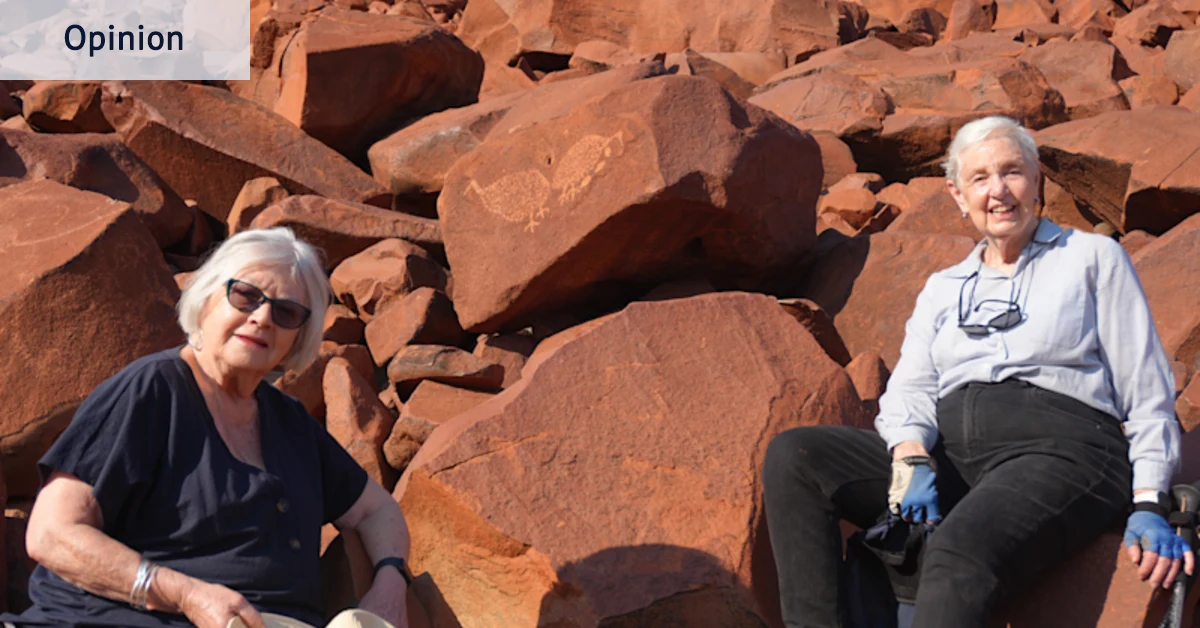
Campaigners say a delayed monitoring report has found that damage to Murujuga’s ancient rock art extends across a wider area and affects more carvings than previously recorded, while scientists could not rule out continuing harm from industrial pollution.
Friends of Australian Rock Art (FARA), which has worked with traditional custodians for two decades, said the findings raised serious questions about the protection of the World Heritage-listed site in Western Australia’s Pilbara region.
Murujuga, also known as the Burrup Peninsula, contains an estimated two million Aboriginal carvings and was recently designated Australia’s latest UNESCO World Heritage site. Industrial facilities, including Woodside’s North West Shelf gas plant, continue to operate within the landscape.
The 2025 Murujuga Rock Art Monitoring Report was released last month, a year later than expected. FARA said its findings contradicted repeated government and industry claims that industrial emissions had not caused significant damage.
The report found that damage had affected more petroglyphs and a larger area than earlier monitoring indicated. Its Curtin University scientists were also unable to rule out further or ongoing damage linked to industrial pollution.
Concerns over Murujuga rock art monitoring
FARA said the Western Australian Government had previously attributed damage to emissions from a small power station that closed more than 20 years ago and was more than 10 kilometres from the sites showing the greatest impacts.
By contrast, Woodside’s North West Shelf facility lies within the area identified by the monitoring report as experiencing the greatest damage, the organisation said.
Professor Benjamin Smith, from the University of Western Australia, has previously said current industrial emissions were “five times higher” than historic levels. Professor Adrian Baddeley, the study’s lead statistician, resigned after criticising what he called “unacceptable government interference” in the presentation of findings from the previous year’s research.
FARA also questioned the independence of the monitoring programme because it is funded by industries operating at Murujuga. The organisation said the state government had withheld the latest results until after decisions had been made on approving an extension to Woodside’s North West Shelf project.
It said Woodside’s liquefied natural gas processing facilities released more than 20 tonnes of acid-forming industrial pollution over Murujuga each day.
The organisation is challenging approvals for the facility in both state and federal courts. Its federal case concerns approvals allowing the LNG export operation to continue until 2070, while a separate challenge to the Western Australian Government’s approval is before the state’s Supreme Court.
FARA said the federal assessment was made possible by Murujuga’s National Heritage listing in 2007, which it helped secure alongside traditional custodians.
Judith Hugo and Susan Swain, FARA’s co-convenors, said governments and industry should be held responsible for protecting the cultural landscape and that the organisation would continue its legal and campaigning efforts.
