


A nine-year-old girl from El Salvador was held in a US government shelter for 281 days after immigration officials detained her mother during the process to reunite them, lawyers said. The pair were eventually returned to El Salvador together, while the girl’s older siblings remained in the United States.
The case is among those cited by attorneys and child advocates as evidence that the Office of Refugee Resettlement, which is responsible for unaccompanied migrant children, is being used to support the Trump administration’s deportation campaign rather than prioritising family reunification.
The girl, identified by her initials M.R., spent more than seven months at a shelter in the Houston area. In a letter to her mother, Carmen, she wrote in Spanish: “I want to be with you already,” adding that she missed her and wanted to be held.
According to her lawyer, M.R. repeatedly asked to leave the shelter. She told her mother by telephone that she felt lonely and sad, was suffering nosebleeds and believed she had an infection.
Carmen had no criminal record and had a pending asylum case when immigration officers detained her at a DNA testing appointment in April. She had been told the appointment was the final step before her daughter could be released into her care.
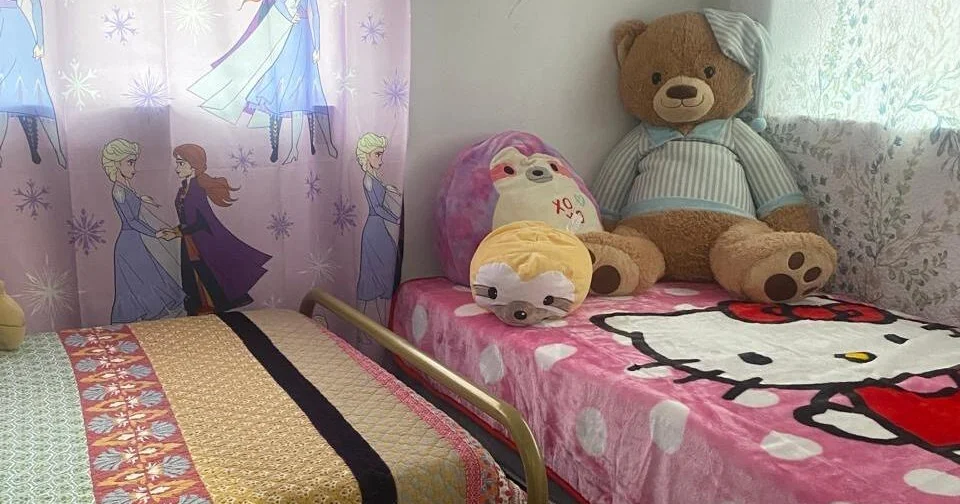
By then, Carmen had provided financial information and fingerprints, and a social worker had visited her home. The family had prepared a bedroom for M.R. with a Hello Kitty bed cover, Frozen curtains and a lamp projecting stars and astronauts on to the ceiling.
After Carmen was arrested, the resettlement office rejected her sponsorship application, citing her detention. The girl’s lawyer said the child did not understand why officials had detained her mother instead of allowing them to live together.
“Our government has completely failed them and has treated them in a way no human being should ever be treated,” said Alexa Sendukas, managing attorney with the Galveston-Houston Immigrant Representation Project, which represents M.R.
Longer stays in migrant children shelters
As of September, almost 1,900 children were being held in shelters overseen by the Office of Refugee Resettlement. The agency was created to care for unaccompanied minors separately from immigration enforcement.
Jonathan White, a former federal health official who ran the office’s unaccompanied children programme during part of Donald Trump’s first term, said it was legally required to place children in the least restrictive setting and release them without unnecessary delay, usually to a vetted parent or relative.
Lawyers said average stays had grown from about a month before Mr Trump’s second term to nearly six months. Some children have remained in custody for much longer, including cases in which a potential sponsor was detained or officials refused to release a child despite sponsorship requirements being met.
White said the administration was deliberately changing the shelter system from a child welfare programme into a detention system intended to encourage migrants to leave the country. The Department of Homeland Security did not directly respond to questions about the case.
In an unsigned email, the department said Immigration and Customs Enforcement did not separate families and that the administration was trying to locate 450,000 unaccompanied children who arrived during Joe Biden’s presidency.
It also said many children had been placed with sponsors who were smugglers or sex traffickers, a claim that has been disputed. The department supplied details of 16 cases in which sponsors were arrested in connection with serious crimes, including rape, drug trafficking and homicide.
The Department of Health and Human Services, which oversees the resettlement office, did not respond to questions about M.R.’s case or its treatment of unaccompanied children.
Children facing prolonged separation
M.R. travelled to the US with her older sister late last year, crossing the Rio Grande before they were detained by Border Patrol officers in Texas. The sisters had hoped to join their mother and brother, who were living in Tennessee.
Carmen said gang members had murdered M.R.’s father, uncle and a pregnant cousin in El Salvador. The girl later told a social worker that her maternal grandmother had hit her and her sister with a belt and an open hand while caring for them.
M.R.’s sister was released after turning 18, three weeks after arriving in the US. That left the younger girl in a new country without her mother, twin older siblings or other close family members.
Doctors and lawyers who have visited migrant children shelters said prolonged stays were causing anxiety, depression and stress disorders. Some children had begun wetting their beds, suffering chest pains, crying at night or harming themselves, while others had attempted suicide.
Sural Shah, a member of an American Academy of Pediatrics team that visited several shelters, said some children were developing mental health problems and regressing developmentally.
“It’s heartbreaking,” Dr Shah said, adding that months in a shelter could have long-term effects including post-traumatic stress disorder.
M.R.’s shelter records showed that she received counselling but was not diagnosed with a mental health condition. Her therapist noted that she was sad and cried when speaking about the length of her stay and missing her mother.
Carmen said they spoke by telephone around three times a week, with M.R. asking when she would be released and when they would be together. The girl also complained of feeling unwell and having nobody to hug or comfort her.
“I felt like the worst mother in the world, because I couldn’t explain to my daughter what was happening, what they’d done to me,” Carmen said.
In July, Carmen decided she could no longer bear her daughter’s distress. She asked to leave the US with M.R., despite facing a deportation order and the risk of returning to El Salvador, where she said those who had threatened her family remained active in her former neighbourhood.
“I don’t want to feel alone again like I did at Christmas, like I did on Mother’s Day, and for your birthday,” M.R. told her mother. “All of those days I’ve felt so alone. I don’t want to go on like this.”
In mid-September, three weeks before M.R.’s tenth birthday, the girl and her mother were sent to El Salvador. Her older siblings stayed in the US to pursue their asylum cases without Carmen.
