


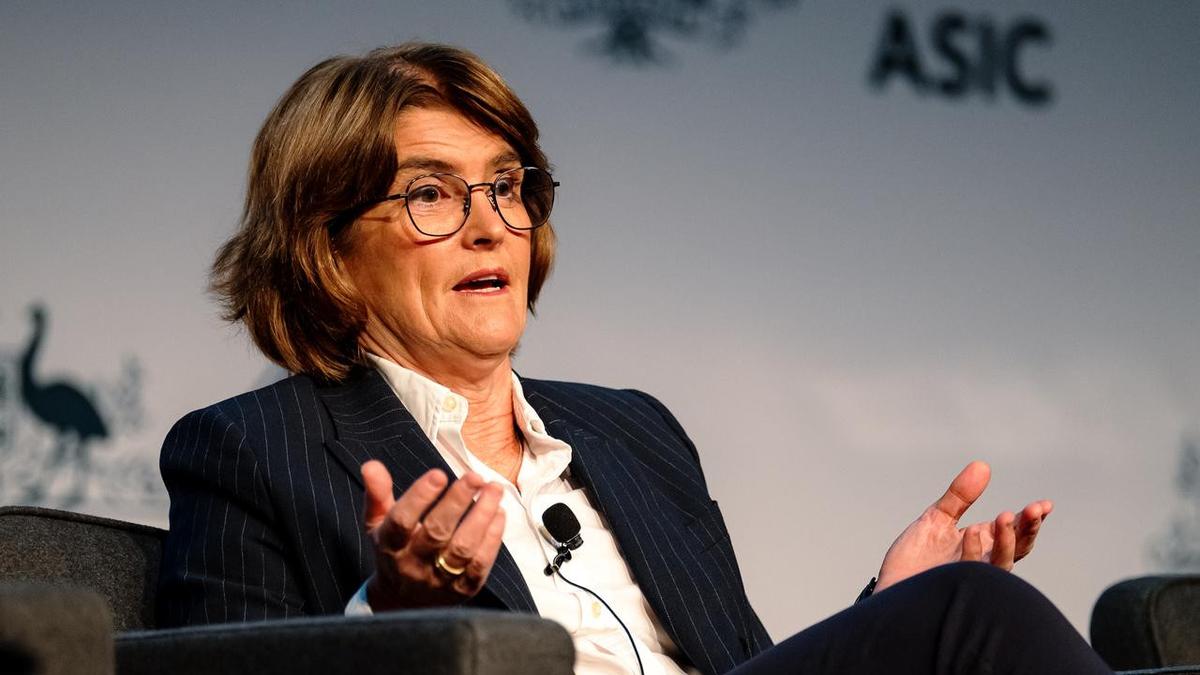
Australia’s five interest rate rises over the past year were not a knee-jerk response to soaring oil prices, Reserve Bank governor Michele Bullock has said, arguing that inflationary pressures were already building before the conflict involving Iran disrupted a major oil shipping route.
Speaking at the ASIC Forum in Sydney, Ms Bullock said the RBA had begun raising borrowing costs before the Middle East conflict and that inflation had been above the bank’s target during the latter half of the previous year and the start of this year.
“We already had inflation above target in the latter half of last year and early this year, and we’d already started raising interest rates before the Middle East conflict started,” she said.
Oil price rises had intensified the problem, she said, but could not be directly countered by monetary policy. “(Oil price rises have) made it worse, they’ve made it more challenging. We can’t offset the oil price rises.”
The RBA governor said higher interest rates could nevertheless reduce demand and ease pressure caused by excess demand across the economy. Australia’s inflation target is between 2 per cent and 3 per cent, while headline inflation currently stands at 4.3 per cent.
RBA board divided over November rate rise
Minutes from the bank’s latest meeting showed that its nine-member board voted six to three to increase the official cash rate in November to 4.85 per cent, its highest level in 18 years.
The members who supported leaving rates unchanged said the 100 basis points of tightening already delivered during the year was still working through the economy. They argued that the full impact was not yet visible in the data and that it was too soon to judge the size of the effect.
“The case to leave the cash rate target unchanged at this meeting was founded on a view that, while further tightening in monetary policy might still be required, there was no need to make that judgement immediately,” the minutes said.
However, the majority believed the risks posed by higher-than-expected inflation could not be ignored. The minutes said the latest inflation figures and the bank’s updated forecast pointed to a more inflationary environment than had previously been assessed.
They also warned that a significantly higher path for inflation would further erode living standards, particularly for lower-income Australians who did not receive government welfare payments linked to inflation.
The board is due to hold its final meeting of the year in early December, with some economists suggesting the cycle of rate increases may have come to an end.
The November minutes said household borrowing trends indicated that financial conditions remained restrictive. House prices and new housing lending had fallen sharply, while growth in household credit had continued to slow.
Lending to property investors had declined particularly markedly, partly because of recent tax changes, the minutes said.
