


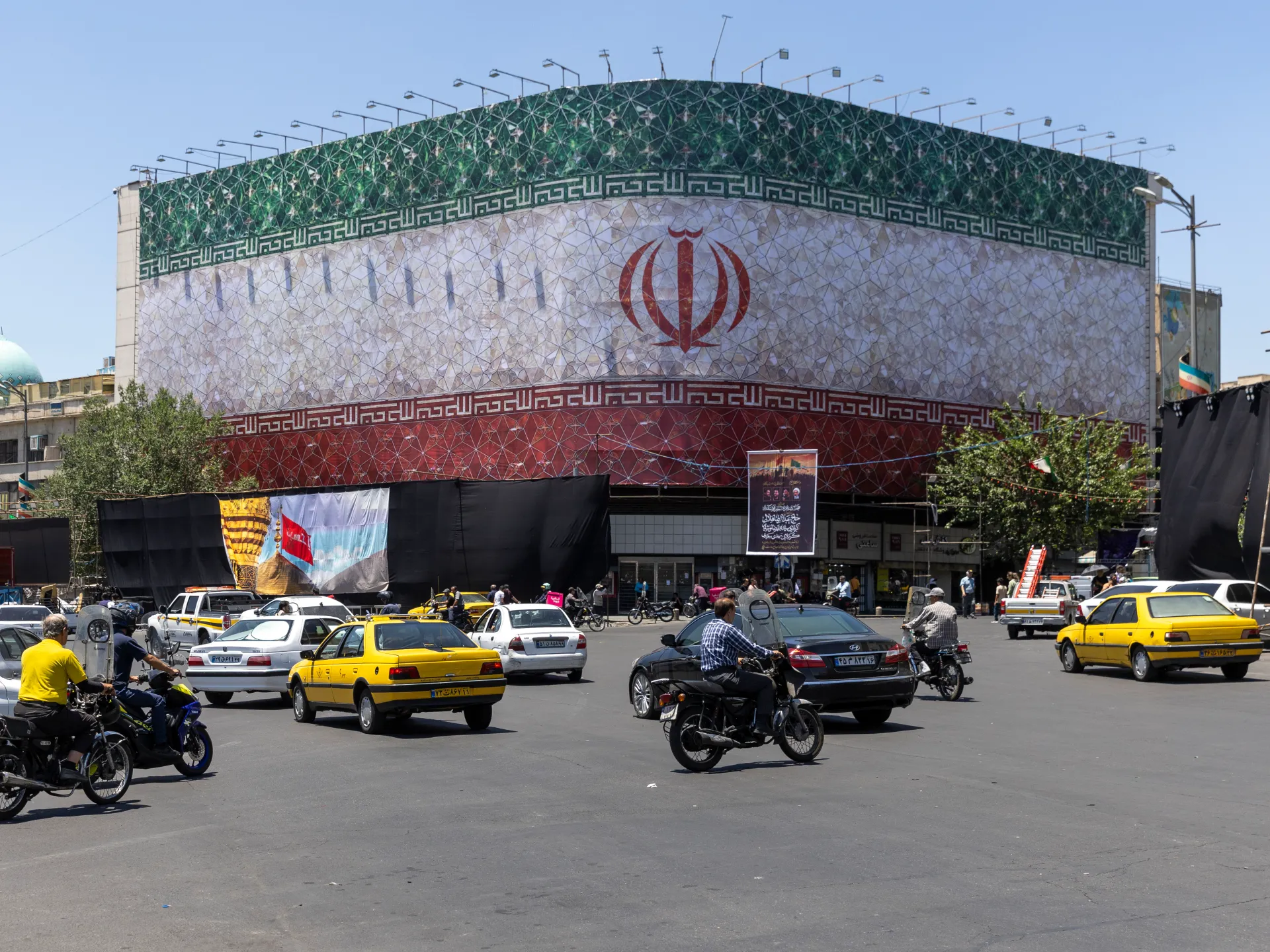
Iran’s car market has become increasingly unaffordable for ordinary households, with domestic vehicles rising by as much as 80 per cent since the start of the war while wages struggle to keep pace.
For Hossein, a 32-year-old marketing specialist in Tehran, replacing his 13-year-old Iranian-made car has become an increasingly distant prospect. His monthly salary, after a recent pay rise, is about 900 million rials, or roughly 390 US dollars.
He earns around four-and-a-half times the minimum wage, but even a modest upgrade would require him to commit more than 20 months of his entire income.
Hossein’s manual Peugeot 206 could sell for up to 10 billion rials. An automatic Peugeot 207, however, now costs about 28 billion rials, leaving him to find the equivalent of more than 20 months’ salary after selling his existing vehicle.
A domestically produced Shahin saloon costs more than 31 billion rials, while the Reera crossover is priced above 43 billion rials. Buying either would require saving roughly 24 or 37 months of total income respectively, assuming prices remained unchanged and he spent nothing on living costs.
“I’m losing hope of ever being able to buy a new domestic production car too, unless the country opens up and becomes a bit more normal again,” Hossein said.
The pressure is not limited to the cost of purchasing a vehicle. Locally made tyres, motor oil, brake pads and clutch kits have at least doubled in price over the past year, while some spare parts have more than tripled.
Domestic car prices have risen between 40 and 80 per cent since the conflict began, with some models costing more than 130 per cent above their September 2025 prices.
Iran’s car shortage and rising import costs
Iran’s economic crisis has deepened since the United States and Israel launched a surprise war on February 28, followed by sanctions and a siege. Damage to steel producers and restrictions affecting the country’s southern ports have further disrupted supplies.
Experts say protected state-linked businesses, limited imports and economic isolation have left consumers paying high prices for vehicles that are often of low quality. Additional government charges, currency costs, financing fees and margins charged by intermediaries have also pushed up prices.
Mohammad Rashidi, a member of the presiding board of Iran’s parliament, told local media: “People are forced to buy expensive low-quality cars whose real prices should be a quarter of global prices, and this is a direct harm done to them. The traces of a mafia system are visible throughout the process.”
His allegations echo comments by other officials and state-linked media, which have described the industry as resembling an organised crime operation.
About 233,000 cars were manufactured or assembled in Iran during the first five months of 2026, according to the latest figures released by state media. That compared with 366,000 in the same period a year earlier, while only about 25,000 vehicles were imported.
Importing a vehicle is largely restricted to a small number of state-linked companies and intermediaries. Duties and value-added tax can increase the final price by as much as 200 per cent, while discussions about reducing tariffs have so far produced no agreement.
The disparity is particularly stark for expensive vehicles. A 2026 Toyota Land Cruiser VXR sells for about 660 billion rials, or 287,000 dollars, in Iran, compared with roughly 86,000 dollars in the United Arab Emirates.
A mid-range Chinese-designed Exeed VX costs about 32,000 dollars in China and 42,000 dollars in the UAE. In Iran, a state-linked company assembles the same vehicle from imported parts under another name and sells it for the equivalent of about 53,000 dollars.
The costs were on display at a three-day international car exhibition in Tehran, where most of the vehicles featured were made in China. The cars remain available despite US sanctions because Iran exports almost all of its oil to China and exchanges it for goods including vehicles.
Some manufacturers and importers did not attend, either because they had no vehicles to offer or because customers who had registered months earlier had still not received their cars. Spare parts for some of the models on display were unavailable in Iran or cost several times more than in international markets.
Even the least expensive vehicles at the exhibition were beyond the reach of most workers. An XPENG G9 electric SUV priced at 120 billion rials, or about 52,150 dollars, would take a minimum-wage worker around 50 years to buy without spending any income on food, housing or clothing.
Large queues nevertheless formed outside the exhibition centre on each of its three days. “It was sad because most people just came to take pictures with the cars they knew they could never afford,” one young visitor said. “The doors of the cars were locked too.”
Iran’s ageing and fuel-hungry domestic fleet also carries a heavy social cost. Poor safety standards contribute to high road death rates, with at least 1,609 people killed on intercity roads during the current month of Shahrivar, which ends on September 22.
More than 20,000 people die on Iran’s roads each year, while rising petrol prices and inefficient vehicles add to household costs and contribute to polluted city streets.
