


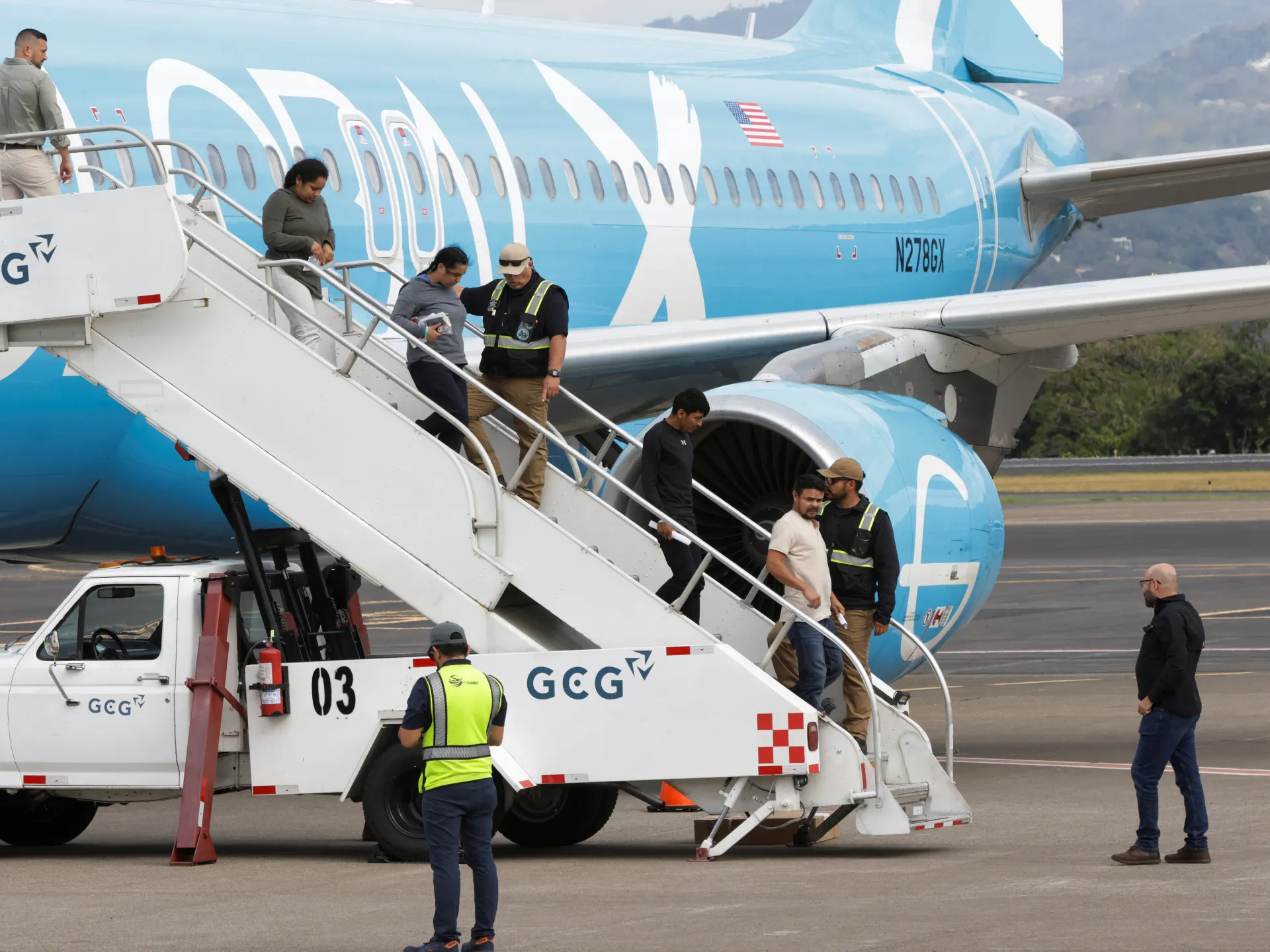
Jamaica has received its first group of third-country deportees from the United States, with 22 people arriving at Norman Manley International Airport in Kingston as the Trump administration expands its removal agreements with other nations.
The deportees were later placed on a bus and taken to an undisclosed location, according to media reports.
Under a memorandum of understanding signed in June, Jamaica is expected to transfer those sent there to their countries of origin or to other destinations. The Jamaican government has said it will not accept anyone with a criminal record.
In a joint statement, Jamaica’s Ministry of National Security and Peace and its Ministry of Foreign Affairs and Foreign Trade described the arrangement as a transit scheme to facilitate the return of “Third Country Nationals” to their home countries or elsewhere.
Support for the deportees will be provided by the International Organization for Migration, a United Nations organisation, the statement said. It added that the arrangement would not be funded by the Jamaican Government.
Jamaica is one of at least 35 countries reported to have entered agreements with Washington to receive people who have no connection to the destination country. The US administration has earmarked about $410 million to support such arrangements, according to a report cited in the source material.
Opposition challenges Jamaica deportation deal
The agreement has prompted criticism from Jamaican opposition figures, who have raised concerns about national security and the lack of public debate over its terms.
Fitz Jackson, the opposition spokesperson on national security, said: “Jamaicans are being asked to trust a secret document that touches their security, their communities and their public services.”
Foreign Minister Kamina Johnson Smith said questions about the arrangement had already been answered. She said the United States had not agreed to publish the deal, adding on social media: “As I explained before, some countries have agreed to receive criminals, we have not.”
She added: “Some countries have had their agreements made public, but our partner has not agreed for this one to be.”
Human rights groups and other advocates have condemned third-country deportations, questioning whether people are being removed without due process and whether they may be sent to places where they face danger.
Legal challenges are continuing in the United States. Critics have argued that the arrangements can be used to circumvent court orders preventing the return of some immigrants to countries where they could face violence or persecution.
They have also pointed to recipient countries including South Sudan, which is experiencing conflict or has faced allegations of serious human rights abuses. In some cases, critics say, deportees sent to a third country have subsequently been returned to the country covered by a US protection order.
A Democratic report from the US Senate Foreign Relations Committee quoted an unnamed official as saying the purpose of sending people to distant destinations was to instil fear. “The point is that the administration can threaten people that they will literally be dropped in the middle of nowhere,” the official said. “The point is to scare people.”
