


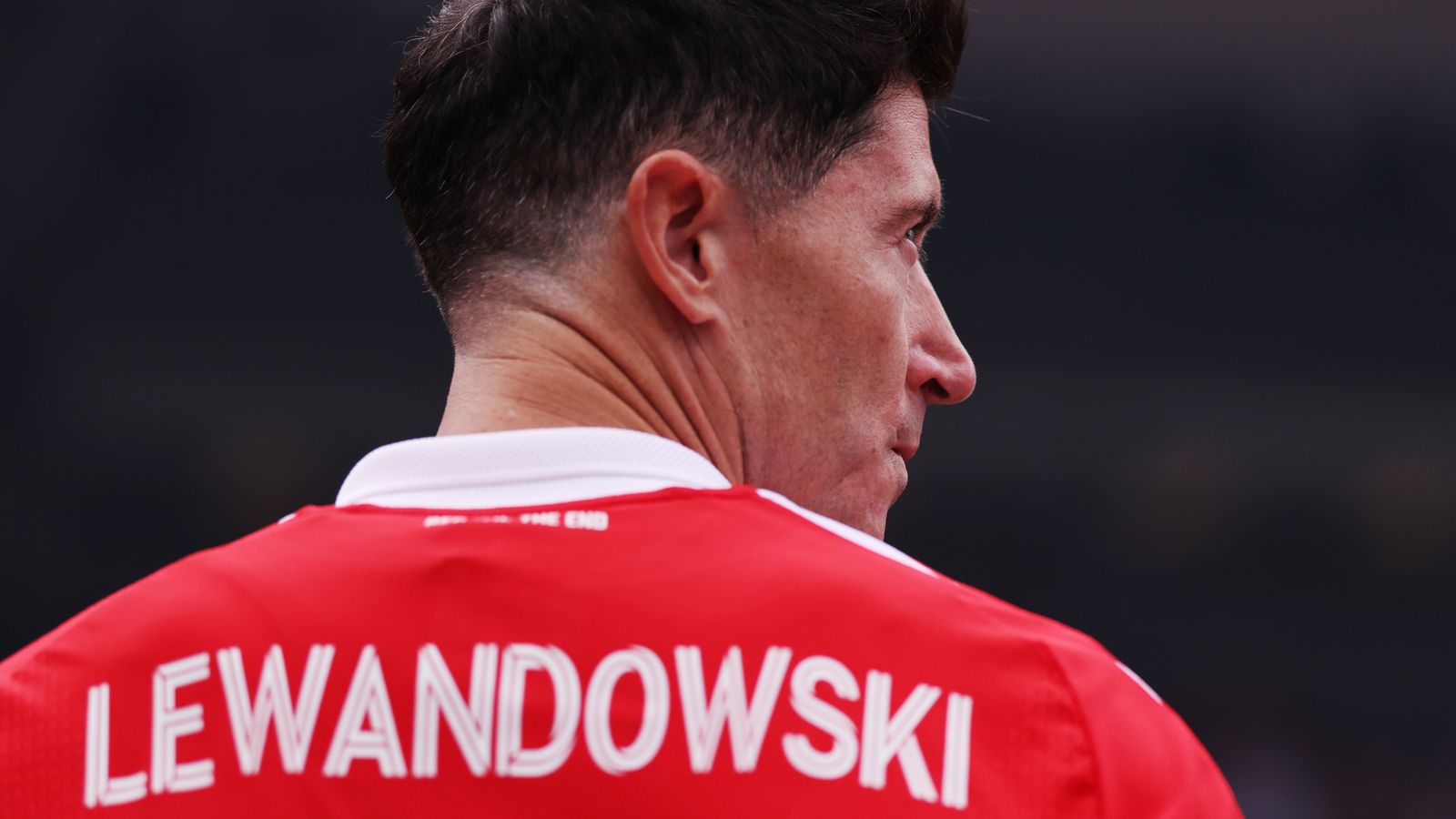
Chicago Fire have reached the Major League Soccer play-offs for a second successive season, with sporting director Gregg Broughton saying Robert Lewandowski’s arrival has helped accelerate a wider transformation at the club.
The former Blackburn sporting director is overseeing a project aimed at making the Fire a major force in Chicago, where the club are seeking to match the profile of the city’s established sporting institutions.
“We want to compete for championships,” Broughton said. “We have been very open about that. Our job is to make Chicago Fire one of those topics that people are talking about in bars and restaurants in the city.”
The Fire had not reached the play-offs for eight years before last season. Their latest qualification means they have now done so in consecutive campaigns for the first time since 2009, with a meeting against Charlotte to come on Sunday.
The club’s ambitions extend beyond results. A new training ground is already in place, while a purpose-built stadium is due to open in the summer of 2028.
“Every week it gets bigger as you drive past it. You can feel momentum building,” Broughton said. “It keeps everyone focused. We know where we want to be.”
Lewandowski’s influence reaches beyond the pitch
Lewandowski has scored nine goals, including three in his last two matches, since joining Chicago Fire. But Broughton believes the Poland international’s value is also being seen in the stands and within the club.
Chicago has a significant Polish community, and the forward has attracted supporters in large numbers. Broughton said thousands of fans wearing Poland or Lewandowski shirts had also been seen at away matches in Toronto and New York.
“There are enormous benefits off the field,” he said.
The veteran striker has also made an impression on younger players. When academy members travelled with the first team to New England, Broughton said they were initially too nervous to speak to him. Lewandowski, he recalled, went to each of them and shook their hand.
On the return flight, Lewandowski sat beside head coach Gregg Berhalter and spent an hour and a half reviewing footage from the match. Broughton said he was “meticulous” not only about his own performance but about that of the team.
“He is demonstrating what performance at the very highest level looks like,” Broughton said.
The sporting director believes the challenge is to ensure that standard is reflected across the organisation. Chicago Fire have traditionally had a top-10 budget without the corresponding success, but Broughton wants the club to secure greater value from its resources.
He pointed to the work of Darcy Norman, the club’s director of physical performance, who he described as a world-leading expert with a World Cup and Champions League winners’ medals from his time with Germany and Bayern Munich. Eddie Rock, the head of strategy, was praised for his knowledge of MLS roster rules.
Broughton also claimed Chicago Fire have the biggest analytics team in MLS. The club used its modelling to identify players in markets not traditionally associated with the league, including Dje D’Avilla, who arrived from the Portuguese second division, and Mbekezeli Mbokazi, signed from Orlando Pirates.
Mbokazi’s performances have been particularly striking, with Broughton calling him “the highest-performing central defender in MLS”. He said the league’s physical demands, including the importance of running during turnovers and transitions, had helped inform the club’s recruitment strategy.
The approach is designed to give the Fire an edge while operating within MLS constraints, combining data with scouting and a clear alignment between departments.
Broughton, who previously worked at Luton, Norwich and Norwegian club Bodo/Glimt, said his role in Chicago also involved shaping the club’s culture. He holds the UEFA Pro Licence but has no ambition to become a coach, which he believes helps his relationship with Berhalter.
“It allows me to sit there and have the football conversations with him, while also knowing that I am not after his job,” he said.
The Englishman sees parallels between Chicago and Bodo/Glimt, where he helped a previously little-known club from near the Arctic Circle rise to the top of Norwegian football. Both places, he joked, have “brutal winters”, while Chicago is also “a hardworking industrial city”.
The next step in the Fire’s development comes against Charlotte, as the club attempt to turn growing investment, infrastructure and Lewandowski’s influence into further progress on the pitch.
