


Backroom costs for Scotland’s NHS soared by £58million in just one year and the annual bill is now £1.1billion – enough to pay for 33,000 new nurses.
While the NHS struggles to cope with pressure on the frontline, the bill for corporate functions like human resources, finance and communications has sky-rocketed.
The soaring costs despite repeated promises by SNP ministers over several years to reform Scotland’s public sector to bring down costs.
It led to renewed calls for the number of health boards to be cut so that back office savings can be reinvested to help ‘exhausted’ staff deal with the crisis on the frontline.
Scottish Government analysis of the cost of ‘corporate functions’ within NHS boards shows that this soared from £1.084billion in 2023-24 to £1.142billion in 2024-25.
Based on an average band five starting salary of £34,544 , the annual bill for corporate functions is equivalent to the cost of employing 33,000 nurses for a year.
Scottish Labour health spokesman Dame Jackie Baillie said: ‘This is a huge sum of money, which could have been used to employ tens of thousands of nurses. Instead, that money is going towards paying expensive corporate bills, with taxpayers ultimately picking up the tab.
‘Scottish Labour has been clear that we need an NHS that is fit for purpose, with investment in modern equipment and new technology. And we have called for a streamlining in the number of NHS boards to cut bureaucracy, with resources instead directed towards the frontline.
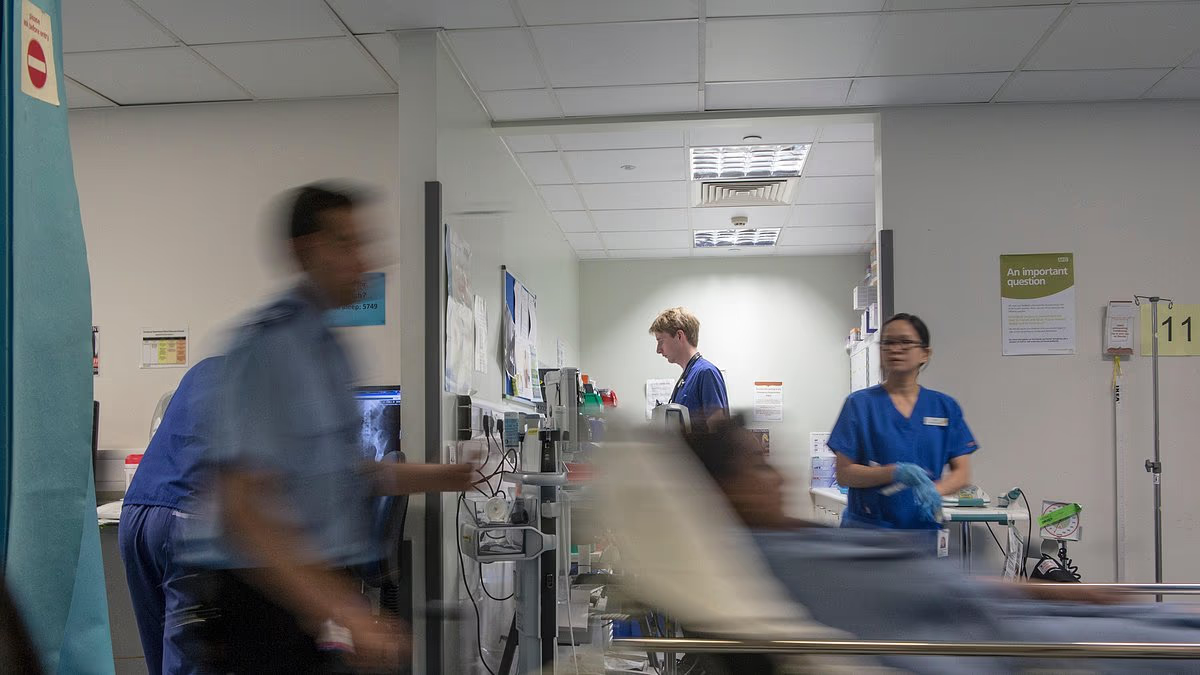
The NHS bill for corporate functions has sky-rocketed to £1.1 billion while frontline staff continue to struggle
‘It is crucial that every penny is spent wisely so that patients are given the care they need when they need it, and that hardworking staff are fully supported.’
The £1.142billion spent on corporate costs in the NHS in 2024-25 included £445.5million on digital and data, £442.8million on property, £106.1million on human resources, £105.1million on finance, £27.1million on commercial and £15.6million on communications.
Despite the rising costs, the full-time equivalent number of staff performing corporate functions in the NHS fell marginally from 11,570 in 2023-24 to 11,530 in 2024-25. The number of ‘contingent’, or temporary, workers fell from 230 in 2023-24 to 130 in 2024-25.
Scottish Conservative health and care spokesman Miles Briggs said: ‘Patients are waiting months for treatment, NHS staff are exhausted and morale is being driven into the ground, yet the SNP has somehow found another £58 million to spend on backroom corporate functions.

Scottish Conservative health and care spokesman Miles Briggs
‘This is a damning example of the SNP’s completely misplaced priorities after years of mismanaging our NHS and piling pressure onto frontline staff.
‘Every one of those millions should be scrutinised when patients are stuck on waiting lists and frontline teams are crying out for more staff and resources.
‘The SNP must urgently cut unnecessary bureaucracy and put taxpayers’ money where it belongs – into frontline services, better patient care and giving NHS staff the support they desperately need.’
When added to the cost of corporate functions at the Scottish Government, its quangos, executive agencies and public corporations, the overall cost in the public sector of backroom functions was £1.7billion in 2024-25, which was £83million higher than the previous year.
John Swinney is under pressure to unveil measures to cut the cost of the public sector, including within backroom roles in the NHS, when he unveils his programme for government next week.
The SNP Government has now announced a target to cut back office function costs by £1billion a year by the end of the decade.
SNP ministers first outlined plans for a ‘reset’ of the public sector in 2022, saying it needs to be reformed to become more efficient and that it needs to be reshaped and refocused post-Covid. But they have been repeatedly criticised by spending watchdogs for failing to deliver promised savings.
A Scottish Government spokesman said: ‘Public services support people and communities and the Scottish Government’s reforms will focus on delivering the things that matter most to people, such as easier access to the NHS and more efficient services. As ministers have set out, it’s about rewiring public services to ensure they are high quality, efficient and sustainable for generations to come.
‘This data underlines the Scottish Government’s commitment to ensuring high quality public services, while delivering value for money for the public purse.’
