


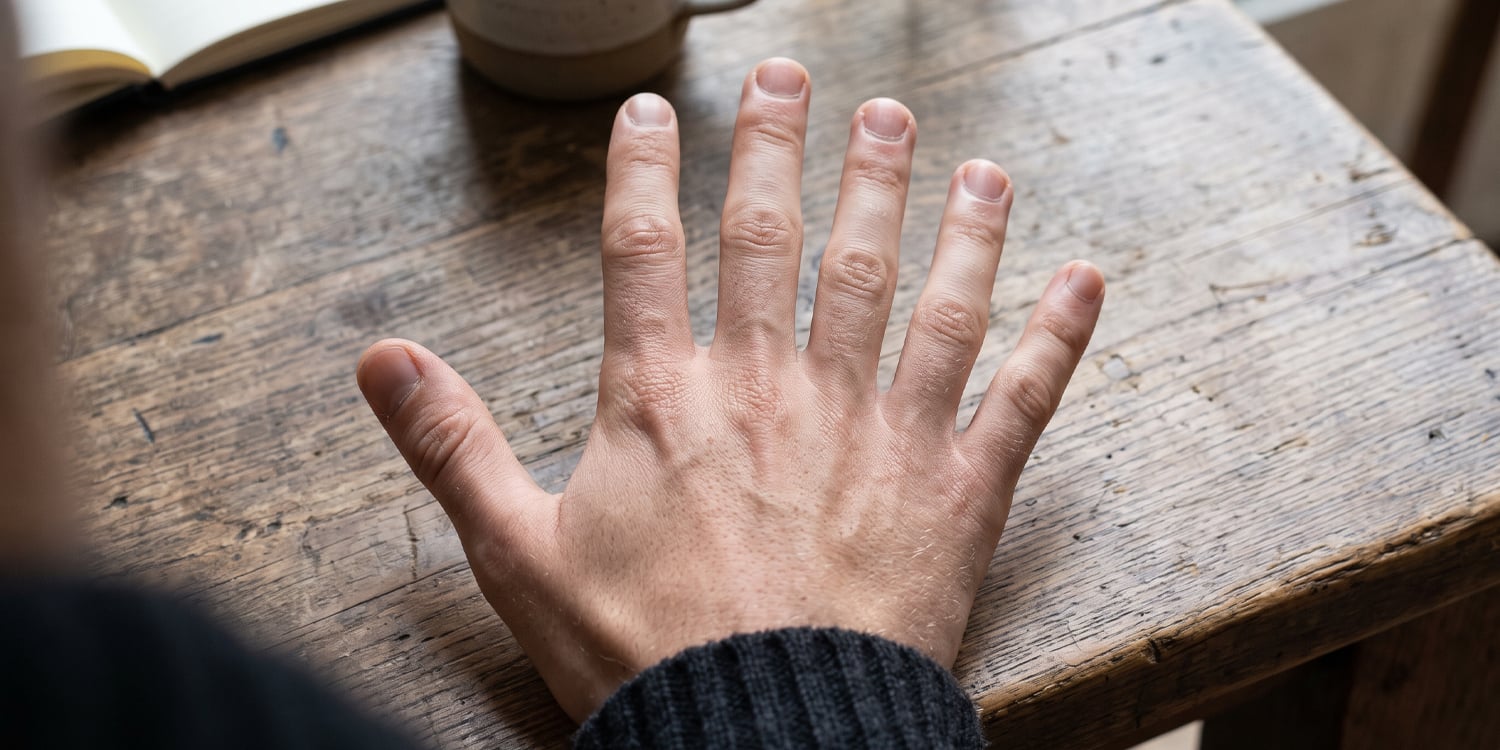
A new study published in the Journal of Experimental Psychology: Human Perception and Performance demonstrates that a brief mirror-box illusion, which convinces people they possess an invisible sixth finger, can quickly alter how they judge what their hands are capable of. The research, led by Denise Cadete of Birkbeck, University of London, found that participants reported needing wider openings to pass through gaps and could span wider blocks after the illusion—efforts that occurred even among those who did not consciously feel the extra digit.
The work sits within a broader psychological discussion of affordances—the brain’s automatic calculations of how a body can interact with its surroundings. The study notes that perceived action possibilities are not measured in inches or centimetres alone, but through the body’s own internal gauge. It cites previous work showing that when adults used a prosthetic widening the hand by a centimetre, they recalibrated judgments to pass through larger openings.
Beyond prosthetics, researchers have explored how the brain can adopt nonexistent limbs when visual and tactile cues are manipulated together. The Anne Boleyn illusion of 2016 demonstrated that mirror-based touch could evoke a sense of a sixth finger beside the little finger, and a 2025 study extended this by showing the phantom digit could be experienced even if angled in postures biologically impossible up to 180 degrees away from the palm.
Cadete and colleagues designed an experiment to test whether the illusory sixth finger would influence action boundaries as well as perception. The team, affiliated with Birkbeck’s Body Representation Lab and Vestibular×Space Neuroscience Lab, preregistered their design and analyses before collecting data. Cadete described the aim as seeking “an implicit measure for the experience of having a sixth finger” to avoid relying solely on self-report, and then to probe whether the illusion could update action representations too.
The study recruited 50 healthy adults, including 32 women, with an average age of 31.4 years. All but one participant were right-handed, and the left hand served as the target hand in both the illusion and control conditions in a counterbalanced design. Participants sat at a table with a vertical mirror aligned down the centre of their bodies, hiding the left hand behind the mirror while the right hand remained visible in front of it.
To induce the illusion, a researcher stroked the corresponding fingers on both hands in synchrony, brushing from the thumbs to the little fingers twice. After touching the inner side of the hidden left pinky against the top of the visible right pinky, the final sequence delivered 20 strokes to the outer edge of the hidden pinky and to the empty space just outside the reflected pinky. In the control condition, the final 20 strokes were applied directly to both pinkies rather than to empty air.
Immediately after stimulation, the researcher covered the hands to obscure vision, and participants kept their hands still to avoid proprioceptive disruption. Across eight trials per condition, they judged aperture by watching a wooden frame with black triangles that opened and closed like a camera shutter, calling out when the opening matched the smallest gap their closed left hand could pass through without touching. In a second set of eight trials, they judged grasping ability by assessing whether they could span each of 16 foam-board blocks with their left hand.
After every two estimates, brief top-up strokes were applied, and at the end of each block participants rated their conscious sensations on a 0-to-10 scale. The session concluded with the participant placing the left hand inside the shutter to physically grasp the blocks, enabling researchers to compute an accuracy ratio for each individual (estimated size divided by actual physical limit; 1.00 equals an exact match, above 1.00 an overestimation, below 1.00 an underestimation).
Questionnaire responses confirmed the illusion’s effect: on average, ratings for feeling six fingers increased from 1.13 in the control condition to 4.36 in the illusion condition. Participants also reported higher sensations for feeling two little fingers (3.96 vs 1.24), touch in an unusual place (4.92 vs 1.86), touch off the body (3.55 vs 0.93), and a larger little finger (3.06 vs 1.80). By contrast, asking participants to rate feeling an entire extra hand yielded no significant difference between conditions. Overall, the group averaged below the midpoint on the scale, with 22 of the 50 participants reporting little or no sixth finger.
Cadete explained that the illusion is “not imaginary, is not a weak sensation or a delusion; it is a vivid sensation of having a sixth finger, created by a trick using visual-tactile stimulation that will map a real touch onto empty space next to the hand.”
In the action-judgment tasks, the illusion shifted judgments of both hand width and grasping reach. The aperture task saw the average estimated-to-actual opening ratio rise from 0.92 in the control condition to 0.97 after the sixth-finger stimulation, reducing the proportion of participants who underestimated the required opening from 72 percent (36 of 50) to 58 percent (29 of 50).
Similarly, the grasping task showed a smaller but notable shift, with the average estimated-to-actual grasp width rising from 0.98 to 1.01, suggesting participants believed they could span wider blocks after the illusion. Those who demonstrated a larger increase in aperture tended also to show a larger increase in grasping estimates.
“These findings point to a flexibility of the mind, not only in perceiving extra body parts that they never had, but also in integrating them immediately into their action perception,” Cadete said. “People change the perception of the action abilities of their hand when experiencing an invisible and illusory sixth finger, as if their hand had indeed six fingers to move and grasp objects.”
Remarkably, the analyses showed no significant correlation between how strongly participants reported feeling a sixth finger and how much their aperture or grasping estimates changed. In an exploratory, non-preregistered analysis, the researchers split the sample into 28 participants who consciously felt a sixth finger (scoring 4–10) and 22 who did not (0–2). Both groups showed wider openings in the aperture task after the illusion, with the shift larger for those who felt the illusion (an average change of 0.07 versus 0.03).
In the grasping task, the within-group shifts were not statistically significant in either subgroup, potentially due to reduced statistical power when dividing the sample. Cadete highlighted that the aperture result among participants who did not feel the extra finger was unexpected and noteworthy, underscoring that the illusion can update action perception even without conscious awareness of the sixth finger.
The authors interpret the findings as evidence that the illusion operates on two partly distinct levels: synchronized touch and visual cues may update the brain’s body schema—the unconscious map of body size and posture used to plan actions—even when a person does not consciously experience a sixth finger. As with all research, the study notes caveats, such as the use of imagined rather than physically executed movements and the possibility that mirror-viewing influenced results by altering perception of the hidden hand.
The researchers caution that the results may not generalise beyond laboratory settings or healthy adults, and that moving the hand during the illusion could yield different outcomes. They nevertheless suggest that passive touch and vision can begin reshaping perceived hand capabilities within 60 seconds, without active movement or motor control.
Cadete sees potential applications for supernumerary robotics and prosthetics, with the findings offering a way to update both body and action perception. “These findings can help design supernumerary robotics and prosthetics, in a way that updates their body perception but also their action perception,” she said. “At the same time, this shows the flexibility of our mind in the way our bodies are perceived, allowing for additions and including them into a new and extended representation of the acting body.”
She also emphasised a broader aim: to understand the mechanisms behind representing extra body parts and why they appear to have different constraints from real body parts, with future work exploring why humans possess this ability and how it could be applied to robotics to aid those with motor limitations due to injury or neurological disorders.
The study, Beyond Five: How the Experience of a Supernumerary Sixth Finger Alters Action Perception, is authored by Denise Cadete, Harriet Morris, Megan Rose Readman, Sally A. Linkenauger, Elisa R. Ferrè and Matthew R. Longo.
