


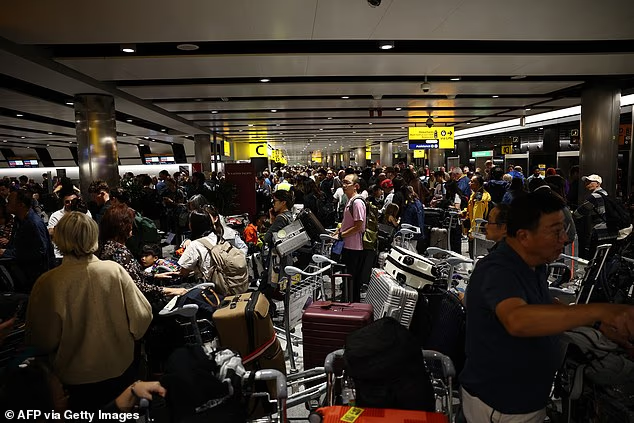
UK flight cancellations are continuing into a second day after a technical failure at air traffic control provider NATS caused widespread disruption across Britain’s airports.
At least 246 flights had been cancelled at Heathrow and a further 33 at Gatwick by 6am on Wednesday, according to FlightRadar24. Airlines warned that delays and cancellations could continue as aircraft and crew are moved back into position.
About 1,300 flights to and from UK airports were cancelled on Tuesday after a fault in NATS’s flight-processing system affected operations at airports including Heathrow, Gatwick, Manchester and Stansted.
Heathrow said flights were operating on Wednesday but warned passengers that the disruption could last throughout the day. Travellers were told to check directly with their airline and only go to the airport if their flight was confirmed.
“Following yesterday’s NATS technical issue, flights are operating today, but some disruption may continue as airlines reposition aircraft and crew,” the airport said.
NATS said it had implemented a fix and that its system was recovering, but acknowledged that the process of restoring normal operations had taken longer than expected.
“This has been a very complex recovery and has created difficulties for the whole aviation network, from which it will take time to recover,” the organisation said.
Transport Secretary Heidi Alexander is due to speak to NATS chief executive Martin Rolfe on Wednesday before addressing MPs during the second reading of the Civil Aviation Bill.
Mr Rolfe has faced calls to resign from airlines, including Ryanair, after the latest failure. The company said more than 65,000 of its passengers had been affected and that more than 50 scheduled flights had been cancelled.
Ryanair chief operating officer Neal McMahon accused Mr Rolfe of “repeated mismanagement” and said the NATS chief should accept responsibility for the disruption.
Wizz Air also criticised the organisation, saying a critical national infrastructure provider should not repeatedly bring the aviation system to a standstill.
Mr Rolfe defended his position, saying he “always accept(s) full responsibility” for the failure, while insisting that his immediate focus was on restoring services and assisting passengers, airlines and airports.
Airlines warn of further delays
British Airways said it had been forced to cancel or divert more than 100 flights on Tuesday, affecting tens of thousands of customers.
Travel journalist Simon Calder warned that the effects of the failure would be particularly severe on Wednesday because aircraft scheduled to operate early flights had not been able to leave the previous evening.
Passengers were left stranded on aircraft and in terminal buildings during Tuesday’s disruption. Josie Donoghue said she spent three hours on the runway at Gatwick before being allowed to leave after her flight to Ireland was cancelled.
“Getting through that airport was like trying to get out of Alcatraz,” she said. “We were trapped in there.”
Gatwick, Manchester and Stansted were among the airports warning passengers to check their flight status before setting off. Luton said it was open and operational but cautioned that some services could still be affected.
Heathrow said it had deployed additional staff across its terminals to support passengers while working with NATS and airline partners to restore normal operations.
The air traffic control provider said engineers and operational teams were continuing to help airports and airlines clear the backlog, and apologised for the disruption caused.
