


The race to build personal AI agents is facing a growing obstacle: the cost of running them. Elon Musk has warned that Grok Bot is losing too much money relative to its revenue, while OpenAI has acknowledged that its Dots assistants require substantial computing power.
Musk said this week that the cost of operating Grok Bot, the personal assistant introduced by SpaceX in August, was “unsustainably high relative to revenue”. He suggested that the service was being allocated less computing capacity, meaning users were reaching their limits more quickly.
The comments underline the financial and infrastructure pressures facing technology companies as they attempt to develop assistants that can complete tasks proactively rather than simply respond to prompts.
Adam Fry, who leads ChatGPT’s consumer business, said at a dinner with reporters in New York that OpenAI’s Dots were “on the compute heavy side”. Each assistant has its own cloud computer, he said, allowing it to carry out tasks for users through accounts and services to which it has been given access.
Dots can read and respond to emails, search for and book event tickets, and perform a range of other tasks. OpenAI’s background mode is intended to make them an always-available service capable of working quietly on a user’s behalf.
OpenAI seeks to reduce the cost of Dots
The company has introduced an automatic system that directs different tasks to different underlying models, including GPT-6.1 Terra. The smaller model requires less computing power than GPT-6 Astra, which originally handled all Dots tasks.
OpenAI says the change will reduce the computing intensity of Dots. The assistants are currently available only to Pro subscribers, whose plan costs 100 dollars a month.
Fry said he expected improvements in computing efficiency to bring costs down rapidly while model performance improves. But the challenge is compounded by the fact that more capable agents, particularly those running continuously, consume more computing capacity.
OpenAI is also building other elements of a consumer AI ecosystem. Its voice mode has 250 million weekly active users, according to Fry, while the company says ChatGPT searches with search intent have reached one-fifth of Google’s volume. Consumer devices designed by former iPhone architect Jony Ive are due to debut this year.
The expansion is taking place amid rising opposition to data centres. OpenAI has begun referring to such facilities as “compute campuses” and has promised to reduce pressure on local electricity grids, while saying it will not take limited power supplies away from local households.
Community opposition could delay permits or prevent facilities from being built if companies cannot demonstrate sufficient benefits, including job creation and environmental protections.
The scale of the industry’s spending is highlighted by Anthropic’s regulatory filing, which refers to purchase agreements totalling 895.4 billion dollars, “substantially all of which is related to compute and infrastructure”. The filing also identifies the inability to secure additional computing capacity as a major risk to the company.
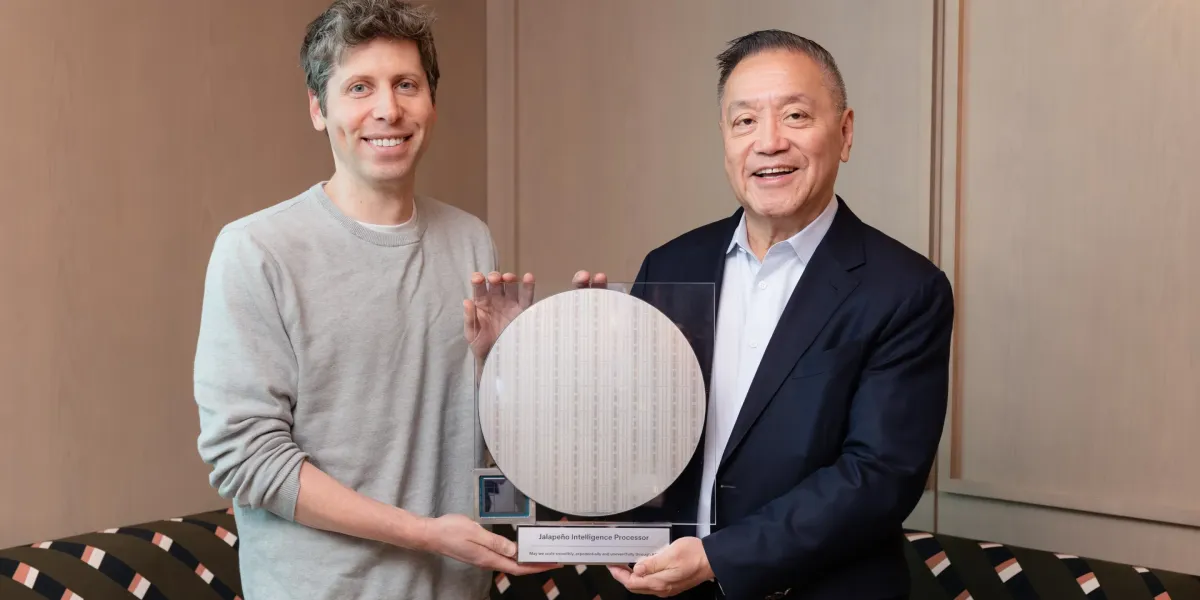
OpenAI faces similar demands as it seeks to expand its infrastructure. Its systems rely largely on Nvidia graphics processing units, while the company is developing an in-house chip called Jalapeno, which is expected to move into scaled production in 2027.
The company, which does not yet make a profit, is also seeking further funding. Its latest financing round reportedly raised 11 billion dollars, below a target of 30 billion dollars, although even the larger figure would represent only a fraction of the potential cost of powering personal AI agents at scale.
