


Rescuers in Nepal are racing to reach workers believed to be trapped inside hydropower tunnels, as the search for survivors enters its second week after catastrophic flooding killed more than 1,200 people along the country’s border with China.
Authorities believe dozens may still be alive in underground chambers protected from the torrent of water, ice, rock and mud that tore through mountain valleys. Around 900 hydropower workers remain unaccounted for, although the wider number of missing people is considerably higher.
At the Rasuwagadhi Hydroelectric Project, officials believe 46 workers could be sheltering in a room-like structure inside a tunnel. Amhsu Kiran Shahi, a board member of the Nepal Electricity Authority, said the chamber was thought to contain food and water.
“We are very confident that there is life in there because … there is food and water in the building,” Mr Shahi told Reuters. The 111-megawatt facility lies in Rasuwa district, roughly five kilometres from the Chinese border. ([internazionale.it](https://www.internazionale.it/ultime-notizie-reuters/2026/09/02/good-chance-that-trapped-workers-are-still-alive-in-nepal-hydropower-plant-official-says))
Rescue teams have already attempted to enter the tunnel but failed to locate the chamber. Officials said they planned to try again, while specialist crews cleared debris and assessed whether other routes could be opened.
Hydropower tunnels offer last hope for survivors
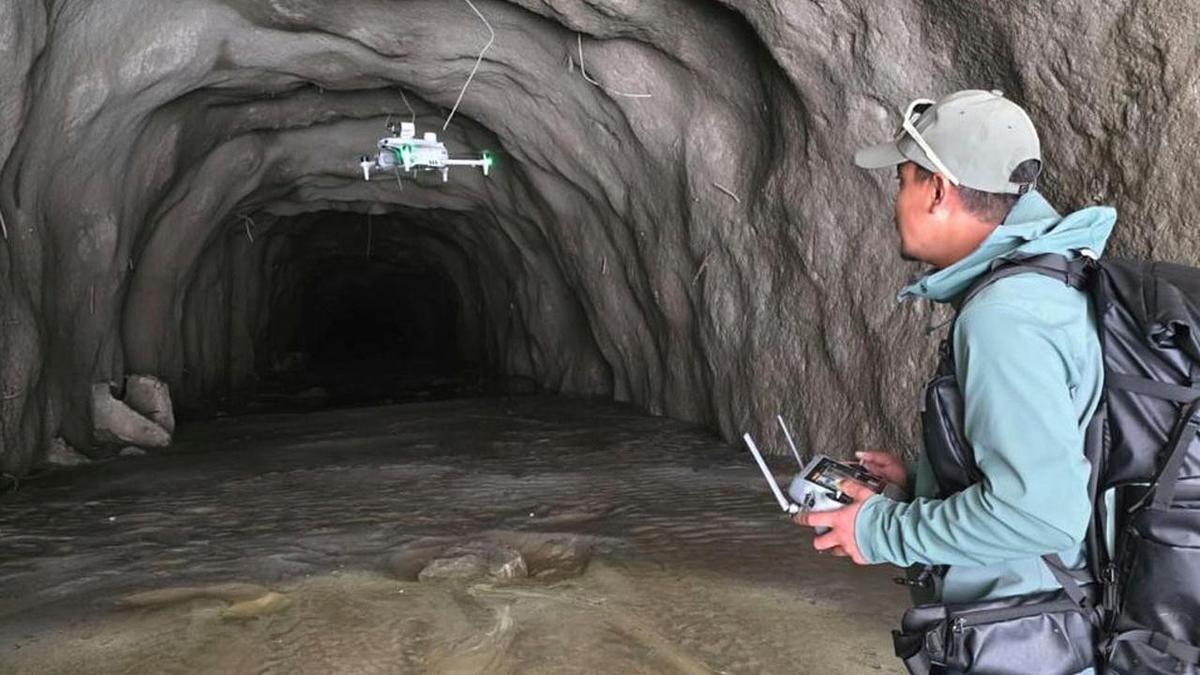
Operations are also focused on the Upper Trishuli 3A project, where rescuers took almost six days to find the entrances beneath thick layers of mud. A dry area is believed to exist inside the tunnel, and pipes are being used to pump oxygen into the structure as teams work to break through.
Officials said 279 people had been rescued from hydropower projects affected by the flooding, while at least 639 others remained missing from those sites. Army teams warned that access was being slowed by collapsed passages, damaged roads and vast quantities of mud and rock. ([internazionale.it](https://www.internazionale.it/ultime-notizie-reuters/2026/09/02/good-chance-that-trapped-workers-are-still-alive-in-nepal-hydropower-plant-official-says))
Specialist tunnel-rescue teams from India and China have been deployed alongside the Nepal Army, with support also arriving from South Korea, the United States and other countries. Nepal’s foreign ministry said more than 21,000 members of the army, police and armed police force were involved in search, rescue and relief operations. ([mofa.gov.np](https://www.mofa.gov.np/content/1869/fourth-press-briefing-on-bhote-koshi-flood/))
Phanindra Paudel, a senior official at Nepal’s National Emergency Operation Centre, acknowledged that the prospects of finding people alive elsewhere were diminishing.
“The hope of finding survivors is decreasing,” he said. “We pray and are hopeful. Hope is hope.”
Prime Minister Balendra Shah told parliament that the search would continue, despite the scale of the destruction and the increasingly difficult conditions in the Himalayan terrain.
“Our priority remains clear: To continue our search and rescue operations, find those who are still missing and continue supporting everyone affected,” he said.
Nepal’s foreign ministry said on Tuesday that 1,010 bodies had been recovered and about 4,000 people remained unaccounted for, while more than 11,800 people had been rescued. The figures are being revised as isolated areas become accessible and officials verify reports. ([mofa.gov.np](https://www.mofa.gov.np/content/1869/fourth-press-briefing-on-bhote-koshi-flood/))
Across the border in Tibet, China reported 21 deaths and 541 people still missing. The reopening of the road to the Gyirong border crossing has allowed excavators, search dogs and life-detection equipment to reach areas previously cut off by the flood.
Chinese teams are searching flattened buildings, including dormitories, car parks and an inspection facility, as unstable cliffs, rain and a fast-flowing river continue to hamper the operation.
In Nepal, residents have returned to the remains of villages and towns to salvage possessions from the debris. The prime minister described the flooding as one of the major disasters experienced by human civilisation, noting that some security personnel sent to warn communities had themselves gone missing.
