


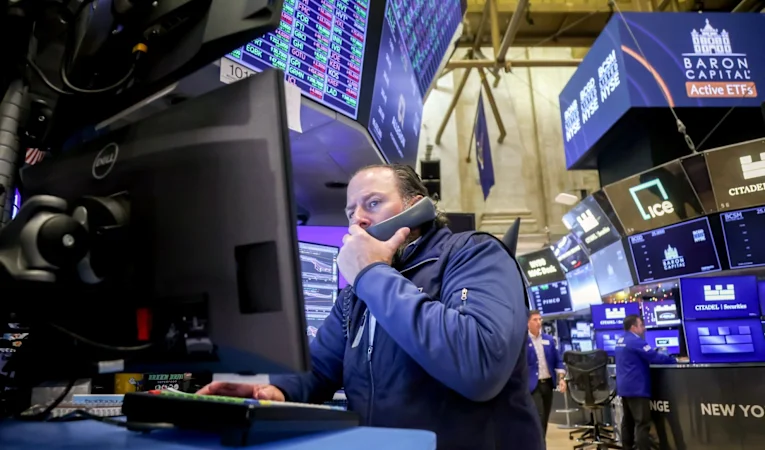
A broad technology sell-off on Wall Street has sent US shares to their worst weekly performance since late June, with Australian sharemarket futures pointing to a weaker open.
The S&P 500 fell 1.1 per cent on Friday, taking its loss for the week to about 2 per cent and erasing the gains recorded the previous week when it reached an all-time high.
The technology-heavy Nasdaq composite dropped 2.1 per cent, recording its first weekly decline in five weeks and its sharpest fall since June. The Dow Jones Industrial Average was more resilient, slipping 0.3 per cent.
Australian futures indicated an opening loss of 11 points, or 0.1 per cent. The Australian dollar was trading at US69.57 cents.
Chipmakers bore the brunt of the retreat as investors questioned how long the enthusiasm surrounding artificial intelligence investment can continue. Micron Technology fell 5.6 per cent, Advanced Micro Devices lost 6 per cent, Broadcom declined 4.5 per cent and Intel dropped 5.8 per cent.
Meta shares fell 3.7 per cent, while Alphabet, Google’s parent company, lost 2.5 per cent. More than half of the companies in the S&P 500 ended lower, while all but seven of the 75 technology stocks in the index declined.
The technology sector has endured a volatile week as bond yields around the world have risen to their highest levels in years. Investors are concerned that companies funding a major expansion of artificial intelligence infrastructure through debt markets may be unable to sustain the same pace of borrowing and spending.
Netflix fell 2.9 per cent after announcing that its chief content officer, Bela Bajaria, would be replaced by Peter Rice. The move followed the streaming company’s announcement that it planned to cut about 6 per cent of its workforce, or nearly 1,000 jobs.
Energy stocks provided some support, with Exxon rising 2.5 per cent and Chevron adding 2.6 per cent. Alcoa gained 2.5 per cent and Travelers rose 1.5 per cent after both companies reported quarterly results that exceeded Wall Street forecasts.
Investors are watching the US earnings season closely, with expectations for profit growth helping American shares reach record levels despite inflation and wider economic concerns.
In the bond market, the yield on the 10-year US Treasury edged down to 5.09 per cent from 5.10 per cent. Yields have fallen despite figures showing consumer and wholesale inflation rose more than economists had expected.
The data has raised the prospect of the Federal Reserve increasing its key interest rate before the end of the year. Traders now put the probability of a rate rise at the central bank’s December meeting at 74.3 per cent, up from 50.2 per cent a month earlier, although they expect rates to remain unchanged at this month’s meeting.
The S&P 500 lost 84.62 points to close at 7,659.44. The Dow fell 175.28 points to 52,002.41, while the Nasdaq declined 572.99 points to 26,140.03.
Oil prices also moved higher, with Brent crude rising 3.7 per cent to settle at 109.86 US dollars a barrel. Supply remains under pressure amid the absence of a deal between the United States and Iran to end the war, while uncertainty in the Middle East and concerns about flows through the Strait of Hormuz have added to the market’s risk premium.
