


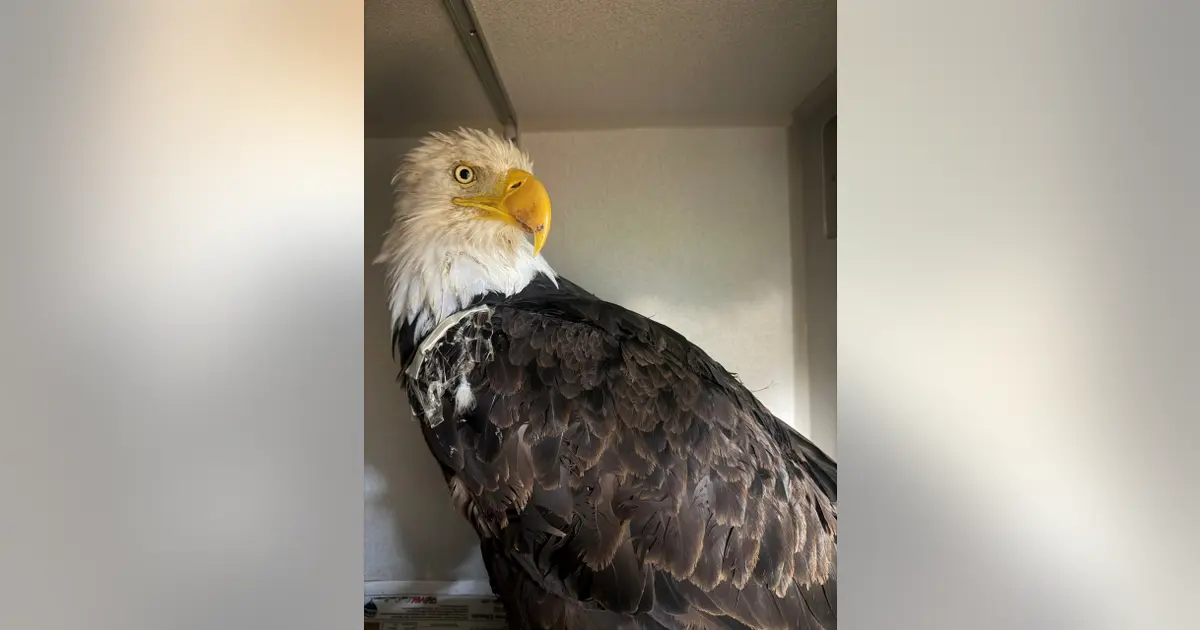
A necropsy has found that Jackie, the much-loved bald eagle from California’s Big Bear Valley, died from highly pathogenic avian influenza after the virus caused a stomach ulcer, prolonged internal bleeding and severe anaemia.
The findings were released by the California Department of Fish and Wildlife (CDFW) in partnership with San Diego Zoo Wildlife Alliance and Ojai Raptor Center following the bird’s death after more than three weeks of intensive medical care.
Bird flu confirmed as primary cause of death
Veterinary pathologists found evidence of HPAI, commonly known as bird flu, in several tissues, including the ulcerated section of Jackie’s stomach. The infection was confirmed through additional testing by the United States Department of Agriculture’s National Veterinary Services Laboratory system.
Steve Kubiski, director of disease investigations at San Diego Zoo Wildlife Alliance, said the virus had appeared in an uncommon form in Jackie. The resulting ulcer caused persistent blood loss, anaemia and a serious secondary bacterial infection known as sepsis.
The necropsy also showed chronic disease in the ventriculus, the muscular part of a bird’s stomach commonly called the gizzard. Severe inflammation and blood clots were found in the heart and several major blood vessels.
“Jackie was suffering from multiple severe and interconnected disease processes that had been developing over time and ultimately led to her decline and death,” the CDFW said.
Tests ruled out West Nile virus, while heavy metal levels, including lead, were within acceptable limits and were not linked to the eagle’s illness.
Investigators did detect brodifacoum, an anticoagulant rodenticide, in Jackie’s liver, along with other persistent environmental contaminants. However, the necropsy did not show the uncontrolled bleeding typically associated with rat poison, and officials said it was not the primary cause of her death.
“The necropsy results have helped connect many of the findings we were seeing throughout the eagle’s hospitalisation,” said Chris Eksteen, executive director of Ojai Raptor Center.
Jackie’s remains cremated
Jackie’s remains were cremated by the US Fish and Wildlife Service’s National Eagle Repository to reduce the risk of spreading bird flu to other wildlife or people.
The repository receives eagle remains from across the United States and evaluates, stores and distributes remains, parts and feathers to enrolled members of federally recognised Native American tribes for cultural and religious purposes.
Meghan Hertel, director of CDFW, said understanding the test results could help improve the treatment and care of other eagles and wildlife.
Jackie had formed part of a well-known pair that had occupied the Big Bear Valley for years. Her mate, Shadow, remains in the area, and wildlife officials said camera footage had shown no evidence that he or the eaglets were ill.
Eagles can contract HPAI through contact with infected birds or by eating infected prey. The disease has been circulating among wild bird populations across the United States.
