


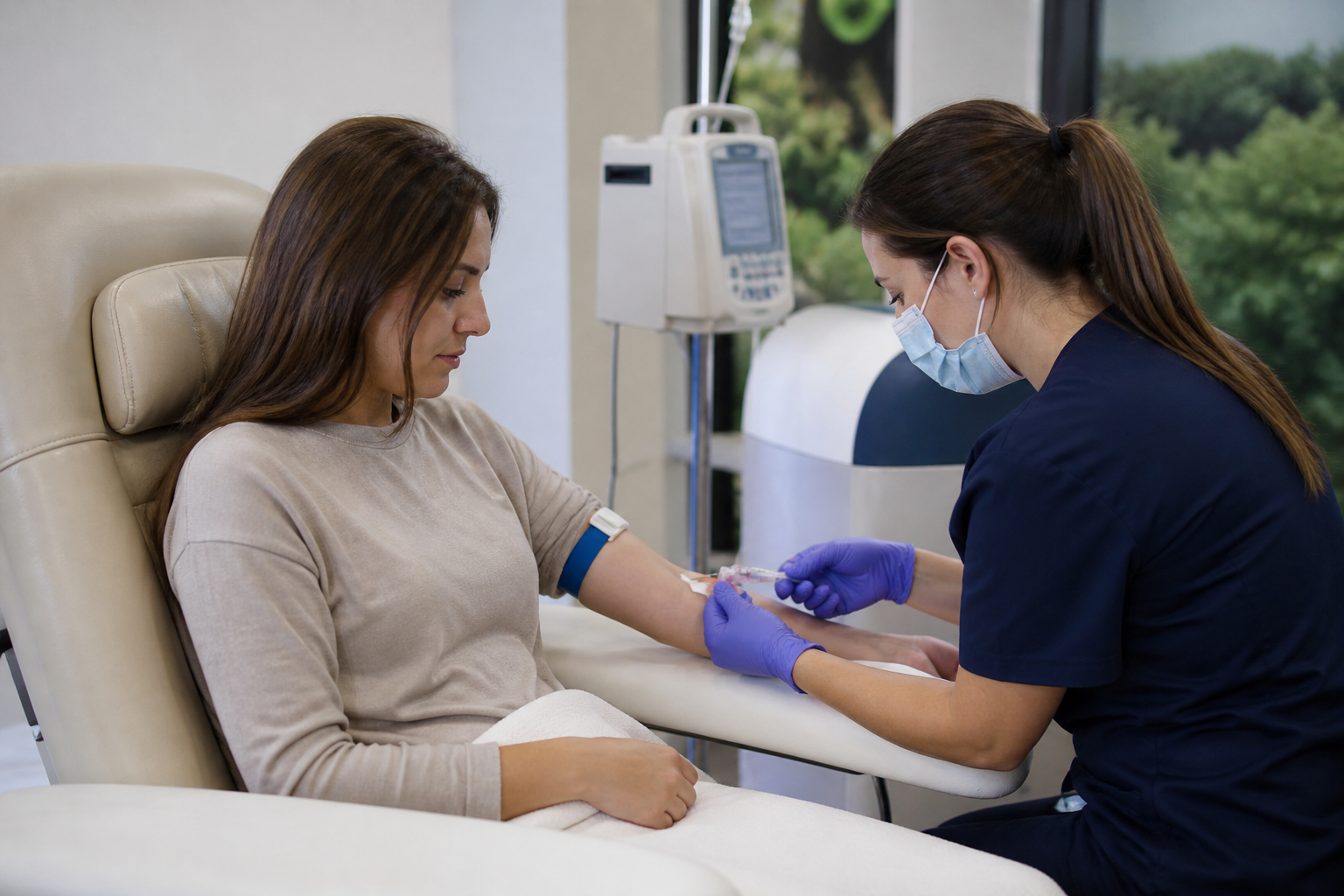
Tens of thousands of cancer patients in England are set to benefit from a new one-minute injection that will replace gruelling intravenous infusions lasting up to two hours, in what NHS bosses say is a major leap forward in modernising cancer care.
The injectable form of pembrolizumab an immunotherapy drug already widely used on the NHS — will be rolled out across the health service to treat 14 different types of cancer, including breast, cervical, lung, and head and neck cancers, according to The Telegraph.
The new method cuts treatment time by up to 90 per cent. Patients will now receive the drug as a one-minute injection every three weeks, or a two-minute dose every six weeks, instead of sitting through hour-long hospital sessions hooked up to a drip.
Around 14,000 patients in England begin the therapy each year, and most are expected to switch to the faster injection, which has recently been licensed for use in the UK. NHS England said the country would be among the first health systems in the world to roll out the injectable form on such a large scale.
The drug works by blocking a protein that prevents the immune system from attacking tumours, allowing the body’s own defences to identify and destroy cancer cells.
Professor Peter Johnson, the national clinical director for cancer at the NHS, hailed the move as transformative for patients. “This immunotherapy offers a lifeline for thousands of patients and it’s fantastic that this new rapid jab can now take just a minute to deliver — meaning patients can get back to living their lives rather than spending hours in a hospital chair,” he told The Telegraph. He added that the change would also “help free up vital appointments for NHS teams to treat more people and continue to bring down waiting times”.
Health Secretary Wes Streeting, himself a cancer survivor, said he understood first-hand the importance of swift, efficient treatment. The MP was diagnosed with kidney cancer in 2021 and underwent treatment before later being promoted to shadow health secretary.
Health Secretary Wes Streeting, himself a cancer survivor, said he understood firsthand the importance of swift, efficient treatment. The MP was diagnosed with kidney cancer in 2021 and underwent treatment before later being promoted to shadow health secretary.
“As a cancer survivor, I know how important quick treatment is, and this rollout will offer quicker, more convenient care, saving patients’ time and helping them in their recovery with less time in hospital,” he said. He went on to argue that the shift would help the NHS make “every penny and every second count” while freeing clinicians to “care for even more people and potentially save even more lives”.
The announcement follows the introduction last year of five-minute “superjabs” for 15 other cancers, meaning near-instant treatments will soon be available across the NHS for almost 30 forms of the disease.
Beyond the benefits for patients, the change is expected to ease pressure on hospital staff. Under the existing system, pharmacy teams must prepare infusion bags under sterile conditions — a process described by officials as time-consuming. The ready-to-use injection removes that step entirely. NHS estimates suggest the new approach could save staff more than 100,000 hours each year.
One of the first patients to receive the jab said the contrast with her previous treatment had been remarkable. Shirley Xerxes, 89, from St Albans, who was treated at Mount Vernon Cancer Centre, told The Telegraph: “I can’t believe how little time it took. I was only in the chair for a matter of minutes instead of an hour or more. It’s made such a difference and gives me more time to live my life, including spending more time gardening.”
Cancer charities welcomed the move. Michelle Mitchell, chief executive of Cancer Research UK, said the innovation was “great news” and would “speed up the delivery of treatment, allowing people to spend more time living their lives outside of hospital, as well as freeing up time for staff to care for other patients”. She added that with NHS capacity “severely limited”, it was vital that ministers continued to ensure proven treatments reached patients “quickly and fairly”.
James Richardson, national speciality advisor for cancer drugs at NHS England, described the rollout as a “win-win innovation”. He said: “Patients will spend far less time in hospital and crucially our clinical teams will have more capacity to care for others. The time saved through this change is a huge gain for the NHS, and demonstrates how we are continuing to modernise cancer care for the benefit of patients.”
