


One Nation’s proposed migration crackdown has been challenged over its economic impact after party leader Pauline Hanson declined to face media questions about a plan to cut 750,000 temporary visa holders over three years.
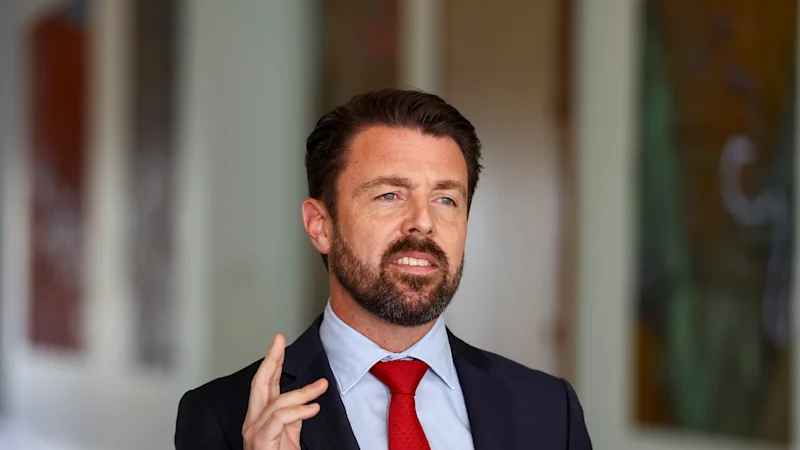
Opposition home affairs spokesman Jonno Duniam said the proposal had not been supported by modelling or costing, despite its potentially significant effect on international education and migration.
“They’ve got to come out and explain their policy. Don’t just throw it out there and hide as they have,” Mr Duniam told Radio National.
“The idea of just bluntly cutting international education and international student numbers is a great headline, but the detail is where it is at.”
Under One Nation’s plan, international students would bear much of the reduction, while families of skilled migrants would be prevented from joining them in Australia. After a three-year reset, the party wants net migration capped at 130,000, less than half current levels.
Hanson did not appear at media engagements in Canberra on Monday, instead posting a prerecorded social media video. One Nation treasury spokesman Barnaby Joyce answered questions on the policy but rejected suggestions that the cuts could push Australia into recession.
Asked why Hanson was not taking questions, Mr Joyce said: “Well, I’m here talking about the policy.” Later, he said the cost was contentious but that he was not concerned about following the will of the Australian people.
“I think the Australian people are sort of tired of the fact that you have to go to an economist to come up with public policy, to go to the Parliamentary Budget Office,” he said.
At a Q+A-style programme, Liberal frontbencher Andrew Hastie criticised Hanson for not explaining the budgetary, economic and human consequences of the proposals. Mr Joyce, who had apologised to Mr Hastie after a dispute with One Nation, joked that they were “back in the bed together”, prompting Mr Hastie to reply: “I wouldn’t say that, mate.”
Mr Duniam said Australians expected to be able to scrutinise major policy proposals and promised that the Coalition’s own migration plan, due to be announced within weeks, would be fully costed.
“I would never copy a piece of work that has not been modelled, has not been costed,” he said in a separate interview, adding that every declined visa carried a cost.
“It’s great to throw out some numbers. Some of them [visas] are uncapped. Some of them are capped. We’re not sure which ones, what impact it will have on the economy. Sorry, that is not a robust piece of work.”
The dispute comes as Labor considers a delayed plan to reduce migration from 300,000 to 225,000 over two years, while polling has indicated that a majority of Australians support lower immigration.
