


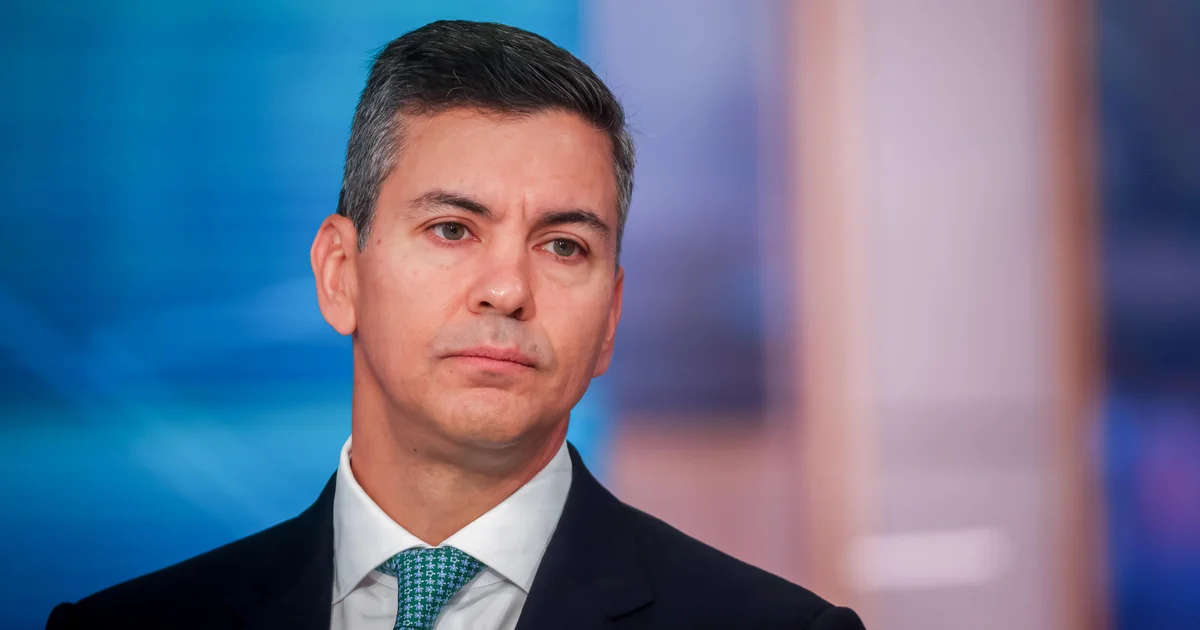
Paraguay’s president, Santiago Peña, has been placed under house arrest after lawmakers voted to remove him over alleged misconduct linked to the collapse of government-connected Ueno Bank.
The Senate’s decision makes Mr Peña the second president to be ousted by impeachment since the end of Alfredo Stroessner’s 35-year dictatorship in 1989. He has been ordered to remain at one of his homes in Asunción until appearing before prosecutors on Saturday.
Mr Peña faces allegations including breach of trust, influence peddling and using public office for personal gain. The most serious charges carry a potential prison sentence of up to 10 years.
Lawmakers accuse the president of using his political influence to direct hundreds of millions of dollars in public funds into Ueno while regulators failed to act over alleged risky insider lending. Mr Peña denies wrongdoing.
Ueno Bank collapse locks customers out of accounts
The political crisis follows the seizure of Ueno Bank by regulators three days earlier. The move left customers unable to withdraw cash, access savings or use their bank cards, affecting nearly half the country’s population.
Ueno had attracted poorer and unbanked customers with supermarket rebates, and said more than one million Paraguayans had opened their first bank account with the lender. Members of Paraguay’s national football team, which Ueno sponsored during its World Cup upset of Germany this year, also said they were unable to access their money.
The disruption has affected businesses and public projects as well as individual savers. A ride-hailing app dependent on Ueno’s services closed, leaving 3,000 drivers without work, while the state power company said 21 million dollars in loans from the Inter-American Development Bank and Taiwan was trapped at the bank.
Paraguayan bonds have suffered some of the heaviest losses in emerging markets this week, while the guaraní has fallen against the dollar.
Some depositors began receiving their money on Thursday, starting with those holding up to 10 million guaraníes, worth about 1,500 dollars. Deposits are insured up to roughly 35,000 dollars, a level the central bank says covers 97 per cent of Ueno customers.
The central bank has described the failure as an isolated case and said the wider financial system remains safe.
