


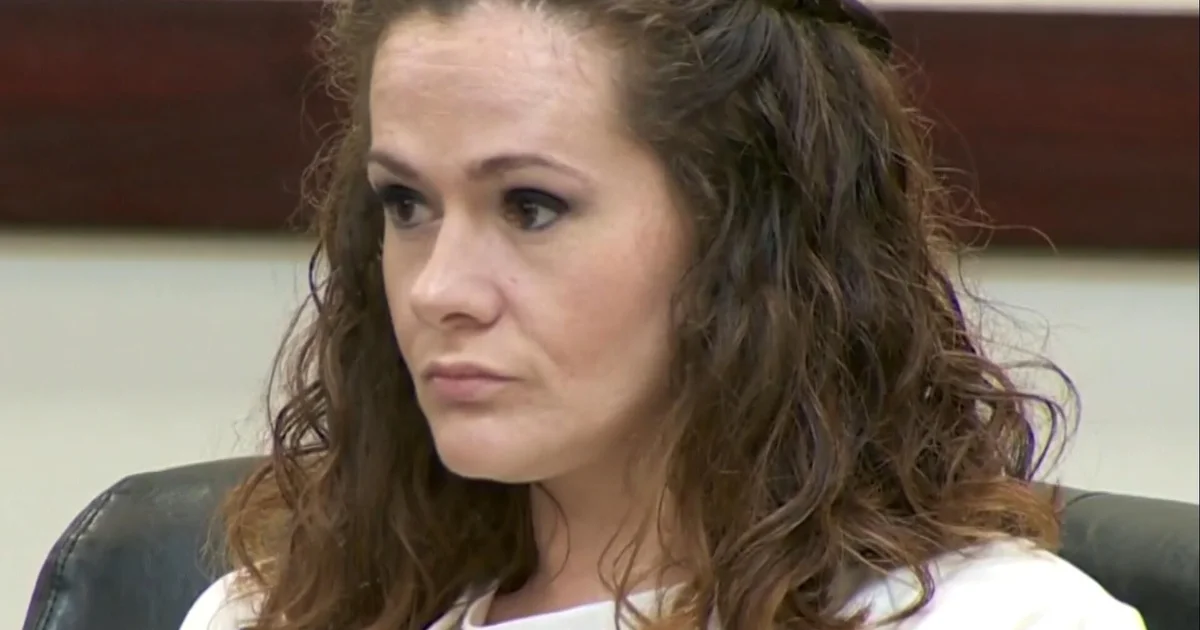
Christa Pike has regained consciousness and begun speaking after surviving a botched execution in Tennessee, her lawyers said, despite suffering pneumonia, a blood clot and severe swelling in her arms and hands.
The 50-year-old death row inmate was initially thought to be brain-dead and expected to be taken off life support, according to attorney Randy Spivey. But she woke the following day in hospital and has since started recalling parts of the failed procedure.
Spivey said Pike was confused and disorientated when she regained consciousness. She was also unable to move her arms or hands, had difficulty swallowing and could not eat.
“Her hands looked like if you were to blow up a surgical glove,” Mr Spivey told reporters. “It was extraordinary.”
He said Pike’s arms and hands remained “tremendously swollen”, adding: “We don’t know what function she will regain.”
Evidence from failed execution to be preserved
The update came after an emergency hearing at Davidson County Chancery Court, where Pike’s lawyers sought an order requiring Tennessee’s correctional department to preserve evidence from the execution attempt on 30 September.
Chancellor I’Ashea Myles ordered the state to retain relevant material, including drugs, intravenous lines, needles, catheters, medical supplies, restraints and gurneys used in the execution chamber.
The order also covers packaging, labels, written and digital records, witness accounts and correspondence about equipment or drug-administration problems. Ms Myles instructed the state “not to lose, misplace, accidentally delete, any information that may be pertinent to this litigation”.
Pike’s lawyers allege that staff failed to establish an intravenous line properly and did not recognise that a vein had been damaged. They claim pentobarbital then spread through her body, resulting in a painful and botched procedure.
The state has said its protocols were followed. Tennessee’s then correctional commissioner resigned after the failed execution, while Governor Bill Lee cancelled the only other execution scheduled in the state for the remainder of the year and ordered an investigation.
“We don’t know what they have, because they won’t tell us,” attorney Luke Ihnen said in court. “And so the preservation order seeks the broadest possible preservation of evidence.”
Calls to commute Christa Pike’s sentence
Pike’s legal team said she received two doses of the lethal injection drug and was continuing to receive critical medical care as hospital staff tried to clear the pentobarbital from her system. Her prognosis was unclear, and lawyers said she faced at least a long recovery.
They have renewed their request for Mr Lee to commute her death sentence to life imprisonment without parole, arguing that this would prevent the state from attempting another execution. Mr Ihnen said Tennessee had made no promise that Pike would not face a future execution.
Pike was convicted in 1995 of murdering her 19-year-old classmate, Colleen Slemmer. She was 18 when the killing took place and spent more than three decades on Tennessee’s death row.
Her case had attracted opposition from human rights leaders and campaign groups, who raised concerns about her age at the time of the crime, her mental illness and a history of childhood abuse. Prosecutors, jurors and judges involved in her case, along with Ms Slemmer’s mother, May Martinez, have argued that the nature of the murder warrants capital punishment.
