


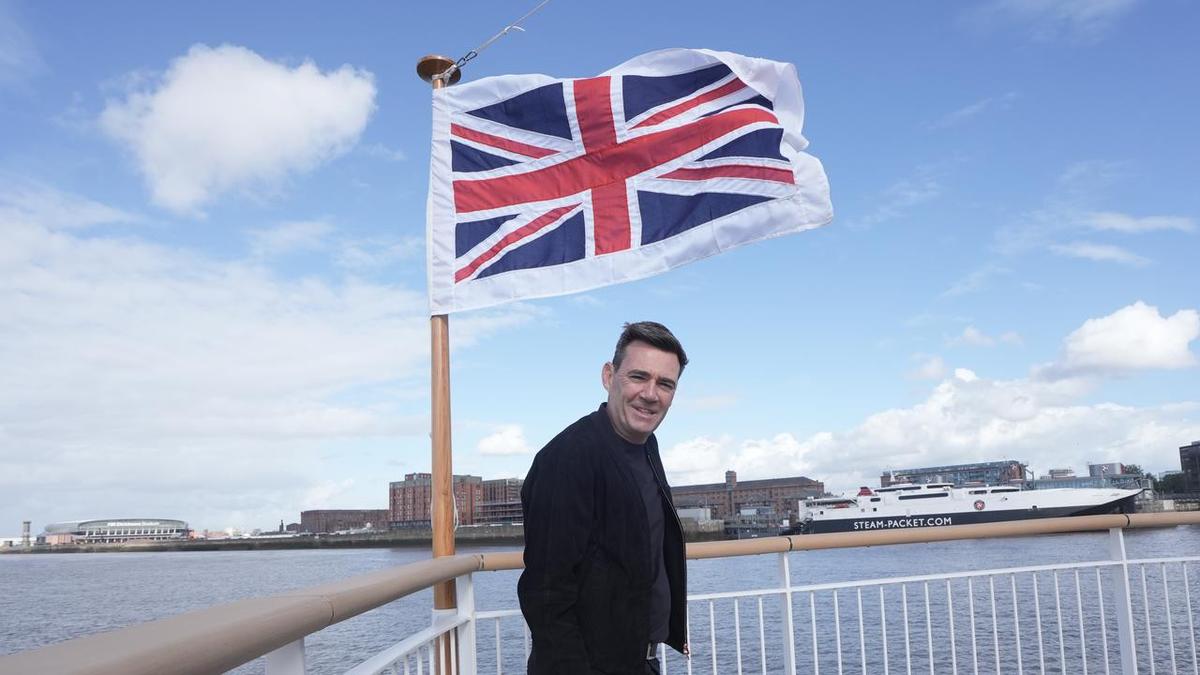
Andy Burnham will use Labour’s annual conference in Liverpool to present his government as a break with years of political and economic instability, even as rising energy costs, defence demands and Brexit-related trade barriers leave him facing difficult choices.
Two months after replacing Keir Starmer as prime minister, Burnham has so far avoided a leadership challenge and benefited from a modest revival in Labour’s fortunes. His more optimistic tone has been accompanied by measures including a cut to tax on electricity bills and a cap on bus fares.
The conference opens beside the River Mersey on Sunday, with Burnham expected to make the case for a change of direction after what he describes as a decade of division and drift following the 2016 vote to leave the European Union.
“It’s time for Britain to have hope again,” Burnham said ahead of his keynote speech on Tuesday.
“We’ve had a decade since Brexit and it’s been a decade of too much drift, too much division, and we need to draw a line on that,” he said as he arrived in Liverpool.
His message is aimed at a Labour Party that is more united behind its new leader but remains anxious about the economic consequences of conflict in the Middle East and the prospect of further pressure on household finances.
Rob Ford, a political science professor at the University of Manchester, said Burnham would have to persuade voters who wanted change while working within severe economic and fiscal constraints.
“How do you serve people a bowl of cold porridge and convince them it’s a pepperoni pizza?” Ford said.
Economic pressure looms over Labour conference
Burnham has already outlined plans to give local leaders more power to deliver what he calls “good growth in every postcode”. He has also promised reform of Britain’s privatised utilities, with particular attention on the costly, leaky and polluting water network.
But the government is likely to face sharper scrutiny over its decisions than it did during the early stages of the so-called Burnham bounce. A budget from Treasury chief John Healey is due on October 28, as higher energy prices add to the cost-of-living squeeze.
The disruption to oil tanker movements through the Strait of Hormuz has created further economic uncertainty for Britain. At the same time, the country needs to find money for increased defence spending in response to threats from Russia.
That combination means tax rises, spending reductions or both could be considered, presenting Burnham with a difficult task as he seeks to maintain Labour’s renewed sense of confidence.
The prime minister also faces disagreement within his party over whether to approve new oil drilling in the North Sea. Environmental groups oppose the move, while trade unions support it.
There is further tension over plans agreed under Starmer to make it more difficult for immigrants to settle permanently in Britain.
Although the next general election does not have to be held until 2029, Labour’s improvement has prompted speculation that Burnham could call an early contest. He rejected that possibility on Friday.
“All of this speculation on an early election, I can knock that dead,” he told ITV.
Brexit trade barriers remain unresolved
One potential route to economic improvement would be to reduce some of the trade barriers created by Brexit. Burnham has pledged closer ties with the European Union, but has not set out how far that relationship should go.
Labour won the 2024 election while promising not to seek to rejoin the bloc or enter its single market for goods, services and employment. Some senior Labour figures want that position reconsidered, including former prime minister Tony Blair.
Blair said last week that Britain and the EU should begin negotiations with “everything on the table”. Burnham has responded that such a discussion belongs to another time.
The conference therefore offers Burnham an opportunity to consolidate Labour’s recovery, but also places his government’s unresolved economic and political dilemmas firmly in view.
