


Andy Burnham has put Labour’s electoral prospects on the line with a sweeping programme to scrap the pension triple lock, reset Britain’s relationship with the European Union and replace the first-past-the-post voting system.
In his first speech to Labour’s annual conference in Liverpool, the Prime Minister said he wanted to “break the mould” of British politics and reverse what he described as the legacy of Thatcherism.
The most contentious proposal is to remove the earnings element of the triple lock from 2030, generating savings for a National Care Service. The change is expected to reduce pension payments by £15 billion a year by the end of the next decade.
Under the existing system, the state pension rises by whichever is highest of inflation, average earnings or 2.5 per cent. Labour’s plan would instead link increases to either inflation or 2.5 per cent, with a separate mechanism intended to ensure the pension does not fall below 30 per cent of average earnings over time.
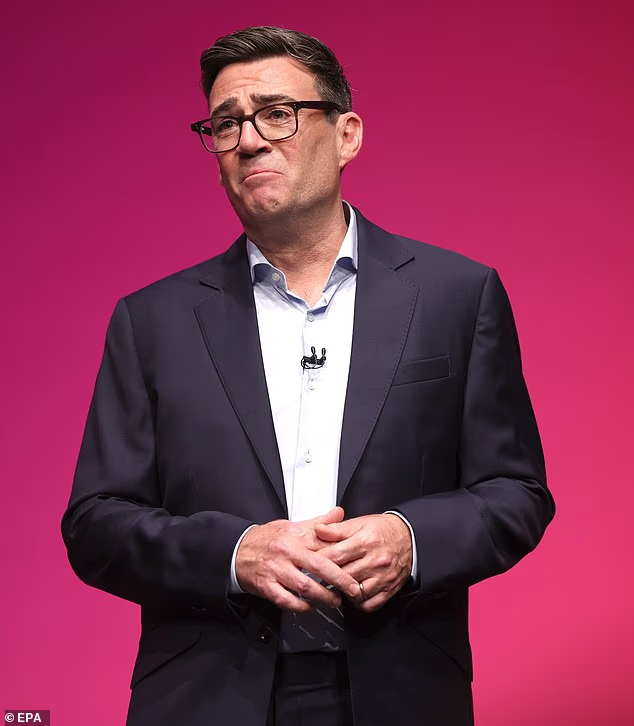
Mr Burnham became emotional as he announced the care reforms, dedicating them to his father Roy, who died this month after spending his final days in a care home with Alzheimer’s.
Government sources said older people would still receive the “highest state pension in history”. But they also acknowledged that unspecified tax rises could be needed to help fund the new service.
Lisa Nandy, the Culture Secretary, described ending the triple lock in 2030 as a “first step” and accepted that the social care plan “could require additional funding” through the tax system.
The proposed National Care Service would cover personal care but not residential costs. That means some people could still have to sell their homes to meet the cost of accommodation in later life.
Labour promises to overhaul Brexit and voting rules
Mr Burnham also declared that Brexit had done “more harm than good” and promised to examine options for reversing its effects.
A range of proposals for Britain’s future relationship with Brussels is due to be published before talks between the two sides later this autumn. The options are expected to include closer ties through the single market and customs union, as well as the possibility of rejoining the EU.
Labour will also fight the next general election on a commitment to abandon first-past-the-post. A national commission on electoral reform will draw up a replacement system for inclusion in the party’s next manifesto.
The change would represent the biggest overhaul of the electoral system in more than a century. Electoral reform is supported by the Liberal Democrats and the Greens, and critics have warned it could lead to a succession of “rainbow coalitions” that would leave the Right out of government.
The scale of the announcements, together with Mr Burnham’s repeated references to the next Parliament, prompted speculation that he could be preparing for an election next year.
The Conservative leader, Kemi Badenoch, accused the Prime Minister of wanting to take Britain “back to the 1970s”, which she said was a period marked by greater government and trade union control and a lack of economic growth.
“There is a reason our country took a different course after that decade,” she said. “Nothing Burnham announced will do anything to fix Britain’s long-term problems.”
Ms Badenoch said Mr Burnham had offered no plan to revive the stagnant economy, fund defence or tackle the rising welfare bill, beyond introducing more government schemes.
Backlash over pension and welfare plans
Nigel Farage said the Prime Minister had no mandate for the changes and called on him to hold an election immediately.
“By potentially scrapping the triple lock, Andy Burnham will abdicate his responsibility to British pensioners,” the Reform UK leader said.
He accused the Government of considering an “offensive against our elderly” rather than reducing the benefits bill, restricting migrants’ access to benefits or cutting foreign aid.
Dennis Reed, of the campaign group Silver Voices, said Labour faced a significant backlash from older voters and described the proposal as “the winter fuel payment on stilts”.
Mr Burnham insisted that he would not introduce “crude cuts” to reduce welfare spending. He also warned that the “broken” social care system would eventually “break the NHS” unless it was reformed.
The Prime Minister said he accepted that his programme would not be universally popular. “I accept I may pay a political price,” he told delegates. “But someone has to go through the pain barrier and rip the plaster off.”
He said his aim was to restore hope, revive “working class aspiration” and allow Britain to “rise again”. His plans were welcomed by Labour MPs on the hard-Left Socialist Campaign Group, some of whom joked that they were considering disbanding because their work was complete.
Mr Burnham also promised to dismantle more of the legacy of Margaret Thatcher, including ending the Right to Buy for new council homes. He said Labour would pursue greater state control of water, energy and housing.
Describing the privatised water industry as an organisation that “stinks”, he pledged an overhaul that would include action on executive bonuses.
A YouGov poll published during the conference placed Reform ahead of Labour by a narrow margin for the first time since the summer, adding to the political risks surrounding the Prime Minister’s agenda.
