


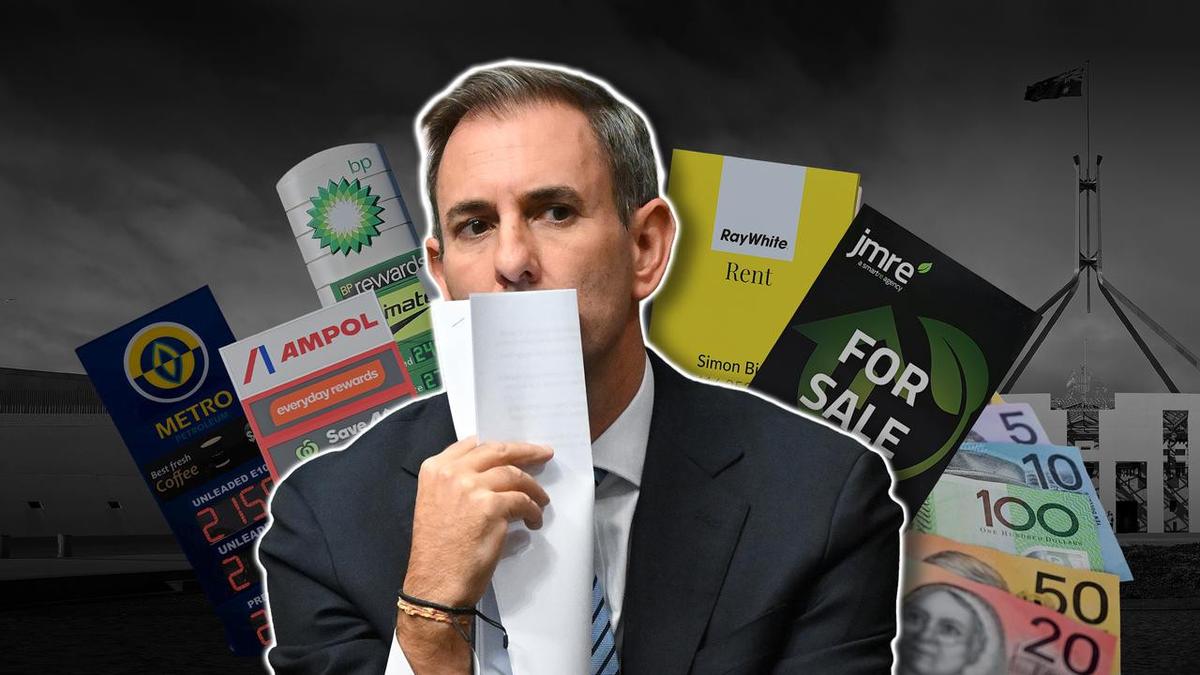
Australia’s mid-year budget update will offer households little additional help with soaring living costs, Treasurer Jim Chalmers has warned, as the government prepares further savings to contain inflation and rising debt repayments.
The fiscal update, due in December, is expected to be shaped by billions of dollars in increased borrowing costs. Labor has yet to finalise the package, but Dr Chalmers said the government was preparing for a difficult set of budget decisions.
“I think people understand that the mid-year update will necessarily be a pretty tight ship and that’s because of pressures on our budget,” he told ABC’s Insiders programme.
“One of the primary influences will be the need to find more savings.”
The government has effectively ruled out restoring a fuel excise cut introduced in April, which was intended to ease pressure on motorists facing high petrol prices driven by the war in the Middle East.
Pressure on Australia’s budget
Spending on disability and aged care was tightened in May’s budget, while Labor has faced wider criticism over continued deficits despite strong commodity prices and tax receipts.
Australia’s annual headline inflation rate rose to 4 per cent on Wednesday, as the impact of higher oil prices continued to feed through the economy. The Reserve Bank raised interest rates to 4.6 per cent the previous day, marking the fourth increase of the year.
Former Reserve Bank governor Philip Lowe has argued that the government should target large surpluses rather than deficits and reduce spending to ease inflationary pressure.
The final budget result for 2025/26, published on Monday, showed a deficit of $22.3 billion. That was around $6 billion lower than forecast in May, although higher government borrowing costs as global bond yields increased continued to weigh on the position.
Dr Chalmers rejected the suggestion that budget settings were the main cause of inflation, again pointing to the impact of the Iran-US war.
“There is very, very substantial and intensifying pressure, not just on our budget, but on budgets right around the world,” he said.
Reserve Bank governor Michele Bullock has said unemployment, which stood at 4.6 per cent in August, would need to rise to help bring inflation under control. Australia’s jobless rate remains below the OECD average and that of comparable countries including Canada and New Zealand.
Assistant minister Andrew Charlton said deliberately allowing unemployment to rise was inconsistent with Labor’s values and could risk a recession.
“As a Labor government, it is a big priority for us to make sure that we don’t go into a recession that drives a lot of people into unemployment,” he told News24’s Sunday Agenda.
Shadow treasurer Tim Wilson accused Labor of mismanaging the economy and said its spending was worsening pressure on taxpayers. He did not set out how a Coalition government would return the budget to surplus, saying its policies would be announced before the next election.
