


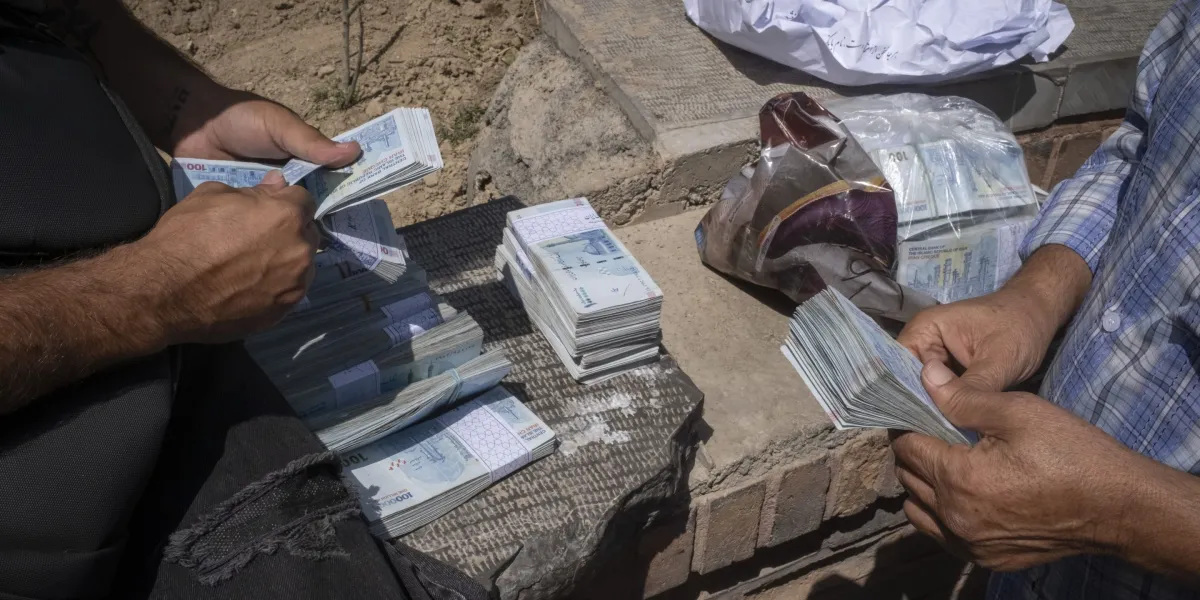
The Iranian rial has fallen to a fresh record low of more than 2.5 million to the US dollar, as a naval blockade pushes the country’s oil exports towards zero and intensifies a deepening cash crisis.
The latest decline was recorded among traders in Tehran on Tuesday, less than a month after the currency reached 2.2 million rials to the dollar on 2 September.
The rial was trading at about 1.5 million to the dollar at the start of this year and around 920,000 in August 2025. It began 2018 at 35,000 to the dollar.
Iran’s oil revenues under pressure
Iran’s oil exports have been severely disrupted by the US naval blockade, while neighbouring Persian Gulf states have increased their own shipments under US military protection. The developments have weakened Tehran’s control over the Strait of Hormuz.
Iran did not load any oil at its export terminals last month, according to Homayoun Falakshahi, head of crude oil analysis at Kpler. It was the first time that had happened since the 1979 Islamic revolution, he said.
The country is also unable to import goods by sea, including fuel, while land routes are congested. Inflation is nearing 90 per cent, gross domestic product is expected to contract by 5.4 per cent this year, unemployment has risen and energy is being rationed.
Tehran is still receiving limited income from oil that was already being transported by tanker before the US reimposed its blockade in mid-July. Kpler estimates that about 90 million barrels were at sea at the time, with those supplies expected to run out by the middle of this month.
Payments for the remaining deliveries, most of which go to China, could continue until December. Once that revenue ends, the Iranian regime will lose what was previously its main source of hard currency.
Oil sales normally account for about a third of Iran’s state budget and help fund the Islamic Revolutionary Guard Corps. The US also tightened sanctions last month, making it more difficult for Tehran to move money through front companies and other intermediaries.
Iranian President Masoud Pezeshkian said last week that the regime’s money in China was blocked.
“We can’t even get our own money out of a country to which we’ve supplied goods, let alone using those funds to pay someone else in another corner of the world,” he told Fox News.
Fears of renewed unrest
The currency collapse follows a previous sharp fall late last year that triggered widespread protests. The regime suppressed those demonstrations in a crackdown early this year.
The rial has weakened further since the US and Israel launched their war on Iran in February, raising concerns that economic hardship could fuel renewed unrest. Supreme Leader Ayatollah Mojtaba Khamenei has also expressed concern about “social cohesion”.
President Donald Trump has indicated that he will allow the economic pressure campaign against Iran to continue and rejected Tehran’s attempts to restart negotiations.
Secretary of State Marco Rubio said on Monday that Iran was heading towards an economic “cataclysm”. He said restricting oil revenues and imposing sanctions would prevent Tehran from accessing funds used to “kill Americans and others around the world and their own people and build weapons and threaten the world and ultimately break out to a nuclear weapon program”.
