


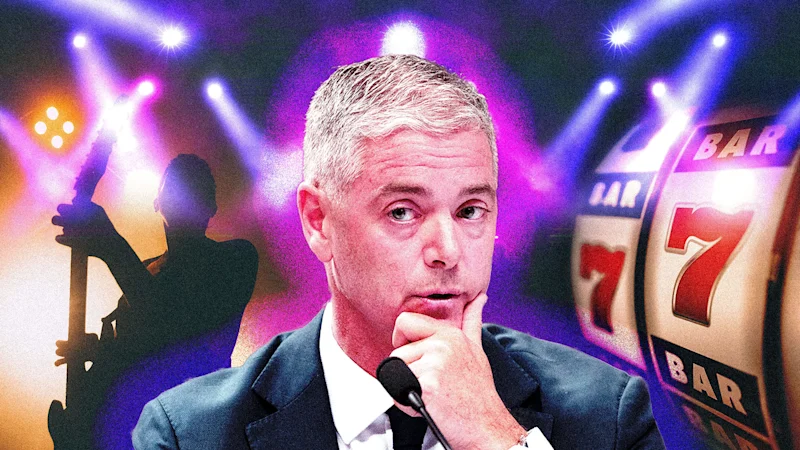
NSW poker-machine venues have claimed millions of dollars in liquor-licence discounts under the state’s live music incentive, with 59 per cent of the 645 participating venues operating gaming machines.
The scheme allows clubs, hotels, small bars and other licensed businesses to receive an 80 per cent reduction in annual liquor-licence fees, along with two additional hours of liquor trading on nights when live music is performed.
In return, venues must host at least 10 live performances a month, while regional businesses must stage 104 performances a year. Metropolitan venues are also required to provide a dedicated performance space and all participating businesses must record each gig.
Hotels and clubs dominate live music incentive
The NSW Government has spent $7.3 million since 2021 subsidising the discounts, according to its latest budget estimates response. Under the 2026 Annual Liquor Licence Fee programme, the cost to government had reached $2.6 million by April.
Hotels made up the largest group of participating venues, with 304 using the scheme, compared with 79 clubs. Hotels had saved more than $1.5 million in licence fees by April, while clubs had saved almost $400,000.
The incentive has also extended trading hours for venues with gaming machines. Of 461 participating venues trading beyond midnight, just 16 were small bars, which do not permit poker machines. After 3am, 204 hotels and 83 clubs remained open under the scheme, compared with one small bar.
Among the wealthiest clubs using the reforms are Wentworthville Leagues Club, Canterbury League Club, Dooleys Lidcombe Catholic Club and Dee Why RSL.
At Campbelltown Catholic Club, country singer Craig Woodward recently performed cover versions in a members’ lounge, where the stage occupied an area roughly the size of six gaming machines. The club has 445 machines.
The club’s chief executive, Michael Lavorato, said it had provided free entertainment for decades and welcomed measures supporting local nightlife.
“Ensuring the local community enjoys a vibrant and thriving night-time economy is a fundamental part of the role our club plays,” Mr Lavorato said. “We welcome any government initiatives that help to bolster that effort.”
Criticism from musicians and arts groups
The reforms have been criticised by musicians and arts organisations, who argue that public money is being directed towards established gambling venues while independent cultural businesses struggle.
Musician Adam Ventoura told a parliamentary inquiry that he had performed cover versions in the back corners of poker-machine pubs because the work was reliably paid.
“I’ve actually … played in these places. You’re put in the corner, nobody really cares, and you’re just there … [to] pick up a guitar, and we go and sing for our supper,” he said. “We prefer to sing our own songs because we have been making our own songs forever, but we’ll go sing Brown-Eyed Girl for somebody because they are paying the money.”
Several live music venues have closed this year, including Mary’s Underground and the Divine Playhouse in Sydney’s CBD, Blah Bar in Lismore, Newtown’s Moshpit and Marrickville’s Lazy Thinking.
Greens arts, music and night-time economy spokeswoman Cate Faehrmann said the scheme represented “another kick in the guts” for arts organisations that had closed or were struggling to survive.
“Labor likes to talk a big game when it comes to its vibrancy reforms, but the numbers show that most of the venues benefiting from them are wealthy clubs and pubs with poker machines,” Ms Faehrmann said.
“It’s outrageous that the government is handing public money to some of the wealthiest gambling venues in the state while independent music and cultural venues fight for survival.”
Darlinghurst’s Australian Design Centre, described as the state’s only dedicated craft and design hub, closed shortly before its 62nd birthday after losing federal funding in 2025 and failing to obtain state support to cover its annual shortfall.
Government defends nightlife reforms
John Graham, NSW arts, music and night-time economy minister, said the reforms had been designed to rebuild the city’s nightlife and live music scene after the 2014 lockout laws.
The $150 million programme, introduced in 2023, has reduced red tape and allowed councils to establish designated nightlife areas. The government says it has quadrupled the number of gigs in the state since the reforms began.
Mr Graham acknowledged a number of live music venues had closed, but said the alternative would have been fewer jobs for musicians and fewer performances for audiences.
“My view is pokies did kill pub rock,” he said in September.
Clubs NSW said clubs had long supported live music, particularly in suburban and regional communities. It cited research estimating that NSW clubs supported about 106,100 community and live entertainment activities each year.
A separate contemporary music bill passed last month will classify venues that regularly host original live music as “dedicated”, “significant” or “live music” venues. The first two categories will be eligible for government programmes, extended trading hours or grants, while live music venues will continue to qualify for the existing vibrancy reforms.
Mr Graham said the new framework was intended to distinguish music venues from businesses primarily selling alcohol or operating gaming machines, and to reward those that prioritised live performances.
