


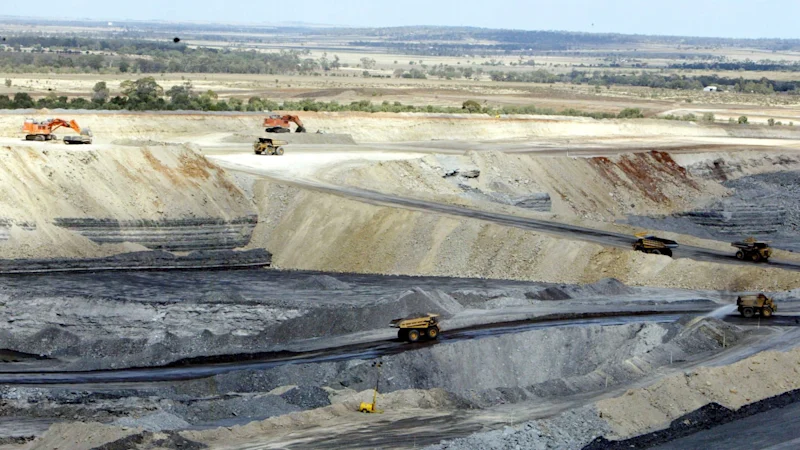
Queensland mining objections would be restricted to landowners and occupiers within 125 kilometres of a proposed project under legislation the state government says will reduce delays in approving new mines.
The bill would also narrow the grounds on which mining leases can be challenged and limit the automatic referral of objections to the Land Court. It was introduced as Premier David Crisafulli promoted the government’s support for coal and critical minerals.
Natural Resources and Mines Minister Dale Last told parliament the changes were intended to prevent campaigners living far from proposed sites from delaying projects.
“It means activists, often based thousands of kilometres away in green groups, many funded by foreign overseas entities, are no longer eligible to have a say,” Mr Last said.
He pointed to the proposed expansion of the New Acland Coal Mine near Oakey, saying uncertainty over the project had continued for 15 years and left both the company and the local community without a clear outcome.
Under the proposed system, formal objections would need to relate to the criteria used by decision-makers. Environmental impacts would no longer be a ground for objecting to a mining lease, although they could still be raised during the separate environmental authority process.
Mr Last said the changes were designed to secure a faster decision for mining proponents while maintaining environmental safeguards and allowing affected landholders and local communities to raise concerns.
“We’re replacing the automatic referral of objections to the Land Court with a more targeted and proportional referral process to reduce the number of projects held up in court,” he said.
Environmental authority applications could still receive broad submissions from any person, but explanatory notes for the bill say those submissions would carry less weight than formal objections and would not be considered by the Land Court.
The proposed 125-kilometre limit would apply to landowners and occupiers, with relevant local governments also recognised as affected parties. Exclusive native titleholders within the boundary would qualify, although some First Nations people who do not own or occupy land might not be able to use the formal objection process.
Lower-risk environmental authority applications would also no longer require public notification. Mr Last said the reforms could improve approval times by years rather than months.
The Lock the Gate Alliance, which opposed the New Acland expansion, condemned the bill. Its national coordinator, Ellen Roberts, said it was ironic that the legislation had been introduced on the International Day of Democracy.
Greens MP Michael Berkman accused the government of removing farmers’ ability to challenge mining companies over potential threats to their land and water. He also criticised what he described as the government’s “fossil fuel free-for-all”.
The bill will now undergo public consultation and consideration by a parliamentary committee, although the government controls the Queensland parliament.
Mr Crisafulli has also said streamlined approvals could help attract investment in energy generation and critical minerals. He highlighted a proposed expansion of the Mount Carbine tungsten mine, 130 kilometres north-west of Cairns, following a Pentagon-backed deal announced by EQ Resources.
Asked whether his pro-coal position had been influenced by billionaire Clive Palmer, who has repeatedly met the Premier and recently rebranded his Waratah Coal business, Mr Crisafulli said he supported investment in critical minerals, agriculture and tourism as well as coal.
“I will always stand up for opportunities for anyone who wants to invest in Queensland, even if they are our political opponents,” he said.
