


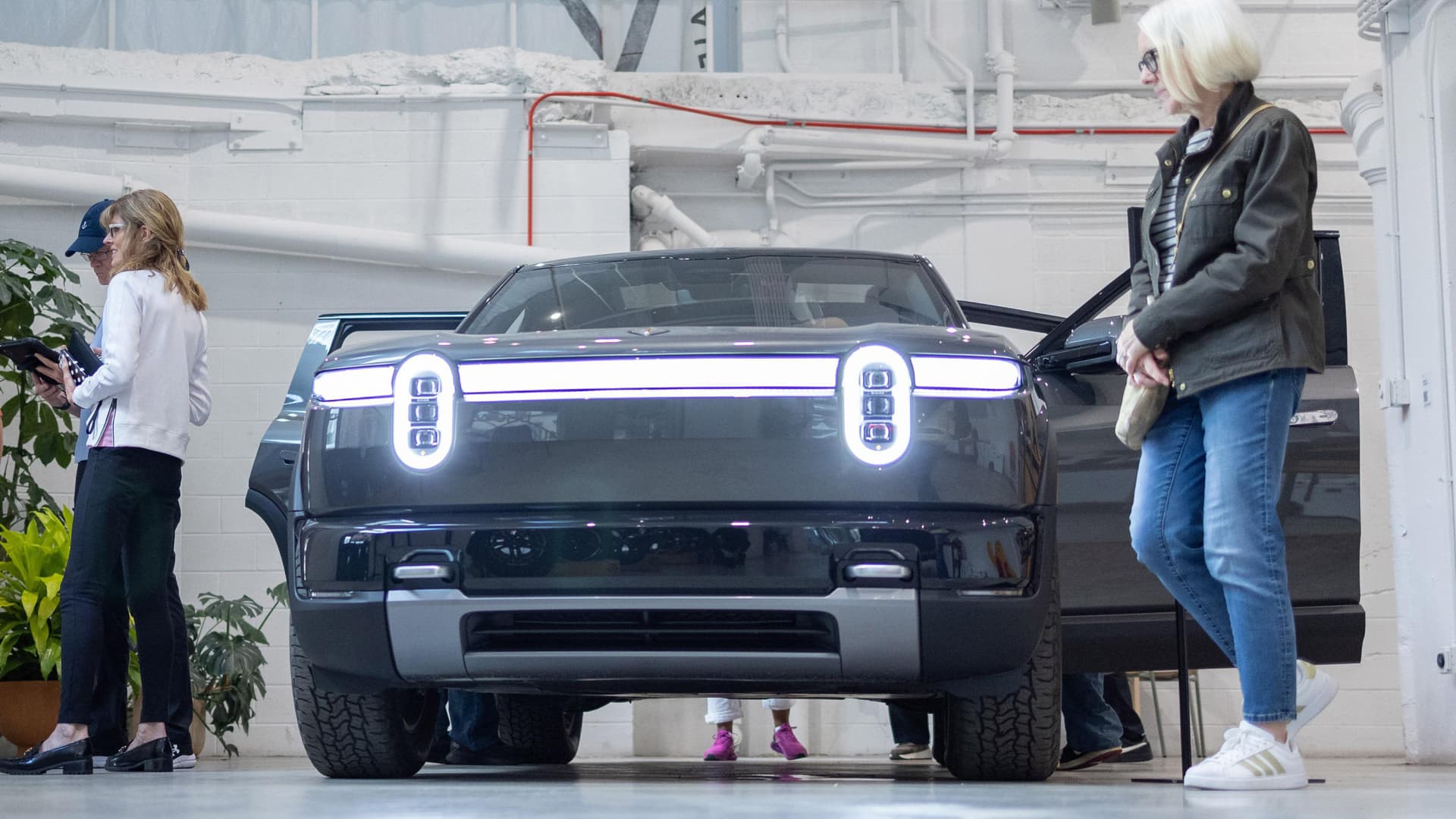
Rivian has beaten Wall Street’s third-quarter expectations as production of its smaller R2 electric SUV gathered pace, while upgrading its forecasts for deliveries and capital spending in 2026.
The electric vehicle maker reported an adjusted loss of 48 cents a share for the three months to September 30, narrower than the 62 cents expected. Revenue reached $2.16 billion, ahead of the $1.99 billion forecast.
Rivian shares rose by about 5% in after-hours trading. The stock had fallen to a new 52-week low of $11.38 during Thursday’s session before closing down 1.9% at $11.45.
Rivian raises 2026 delivery forecast
The company now expects to deliver between 67,000 and 70,000 vehicles in 2026, compared with previous guidance of at least 65,000.
It also reduced its forecast for capital expenditure to between $1.4 billion and $1.5 billion, a $300 million reduction at the midpoint. The projected adjusted pre-tax loss was narrowed by $100 million at the midpoint, to between $1.75 billion and $1.85 billion.
Rivian attributed the improved earnings outlook to stronger-than-expected revenue from regulatory credit sales, a receivable linked to a tariff refund and the anticipated rise in vehicle deliveries.
The R2, which began reaching customers in June, has become Rivian’s best-selling model. The company delivered a record 19,248 vehicles between July and September, with the R2 accounting for much of the quarter-on-quarter increase.
Rivian remains loss-making, although its net loss attributable to common stockholders fell to $913 million from $1.17 billion in the same quarter a year earlier.
Gross profit increased to $176 million from $24 million, while the adjusted loss before interest, tax, depreciation and amortisation improved by $167 million to $435 million.
The company’s software and services division generated $605 million in revenue and a gross profit of $256 million, representing a 42% margin. Its automotive operations recorded almost $1.55 billion in revenue but a gross loss of $80 million.
Chief executive RJ Scaringe has said Rivian can achieve profitability on a per-vehicle production basis with the R2 this year, but that production will need to exceed current plans for 160,000 vehicles for the company as a whole to become profitable.
“That ramp-up is critical for us getting to positive gross margin on R2 and that ultimately will contribute to positive gross margin for the business,” Scaringe said.
Rivian said its cash, cash equivalents and short-term investments stood at $5.5 billion at the end of the quarter, up from $5.3 billion three months earlier.
