


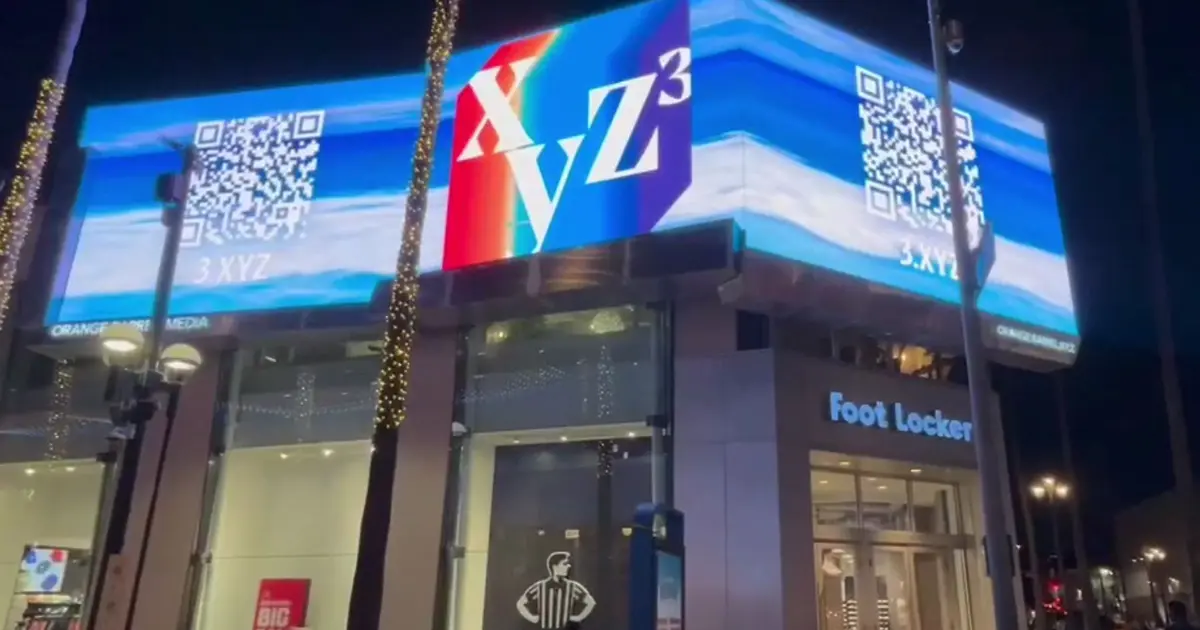
Digital billboards have begun appearing above Santa Monica’s Third Street Promenade, ending a ban on off-premises advertising that had stood for almost four decades and prompting a sharp debate over the future character of the Californian beach city.
Two large displays are now operating at the north-east corner of Arizona Avenue and the Promenade, and near Wilshire Boulevard. As many as 16 could eventually be installed across the designated area, which also includes the Santa Monica Place shopping centre.
The arrival of the screens has divided residents. Mary Boyer said the illuminated displays were out of keeping with the city’s seaside identity.
“This is not Las Vegas, or New York. This is a quiet beach town and I think it looks very ugly,” she said.
Houman Hemmati said the signs could alter the atmosphere of the city, turning a traditionally subdued shopping district into something more akin to a major entertainment centre.
“When you add light-up billboards to make the place look like Times Square, all of a sudden you dramatically change the character of a place and you change it from something quiet and sleepy to something flash, loud, and always on,” he said.
Another resident, identified as Bob, welcomed the change, saying: “I like it a lot. It’s bright, it’s large.” He added that the displays could help refresh the area.
Santa Monica digital billboards expected to raise millions
The Santa Monica City Council approved the Digital Display District in December 2025, allowing large-scale digital advertising at specified locations along the Promenade and around Santa Monica Place.
The city has said the scheme is intended to support the recovery of downtown, attract visitors and provide a new source of income at a time of significant financial pressure. Its fiscal realignment plan estimates that large-format digital signage could generate about $4.5 million (£3.4 million) a year.
The scheme is subject to rules covering the location, size, lighting, operating hours, motion and use of sound. The city says the displays will also carry public art, local events, emergency notifications and other civic information.
Santa Monica’s official programming includes an Art in Motion initiative, with moving-image works shown at regular intervals. The screens are scheduled to operate for between 19 and 20 hours a day, depending on the season.
However, Shaun Rosenberg questioned whether the financial benefits would outweigh what he regarded as a loss of visual identity.
“They say this is an attempt to try and make money. I get that in theory. The question is, who are they making money from? And I think it takes away a polish, an aesthetic, and a culture that the city is built on,” he said.
One of the first messages displayed promoted The People Concern, a Los Angeles non-profit organisation that helps people experiencing homelessness access housing and support services. Some residents questioned why a homelessness campaign had appeared so prominently at the start of the programme.
The organisation said the advertising space had been provided free of charge, meaning no donor or programme funds were used to buy it. It said the placement offered a chance to raise awareness of its work without diverting money from frontline services.
The homelessness advert was no longer being shown on Monday, while other commercial messages continued to run. The city had not responded to questions about the displays, projected income or residents’ objections at the time of publication.
