


Saudi Arabia’s East-West Pipeline has returned to a pumping capacity of 5.8 million barrels of oil a day after being damaged in a major attack last month, the country’s energy minister has said.
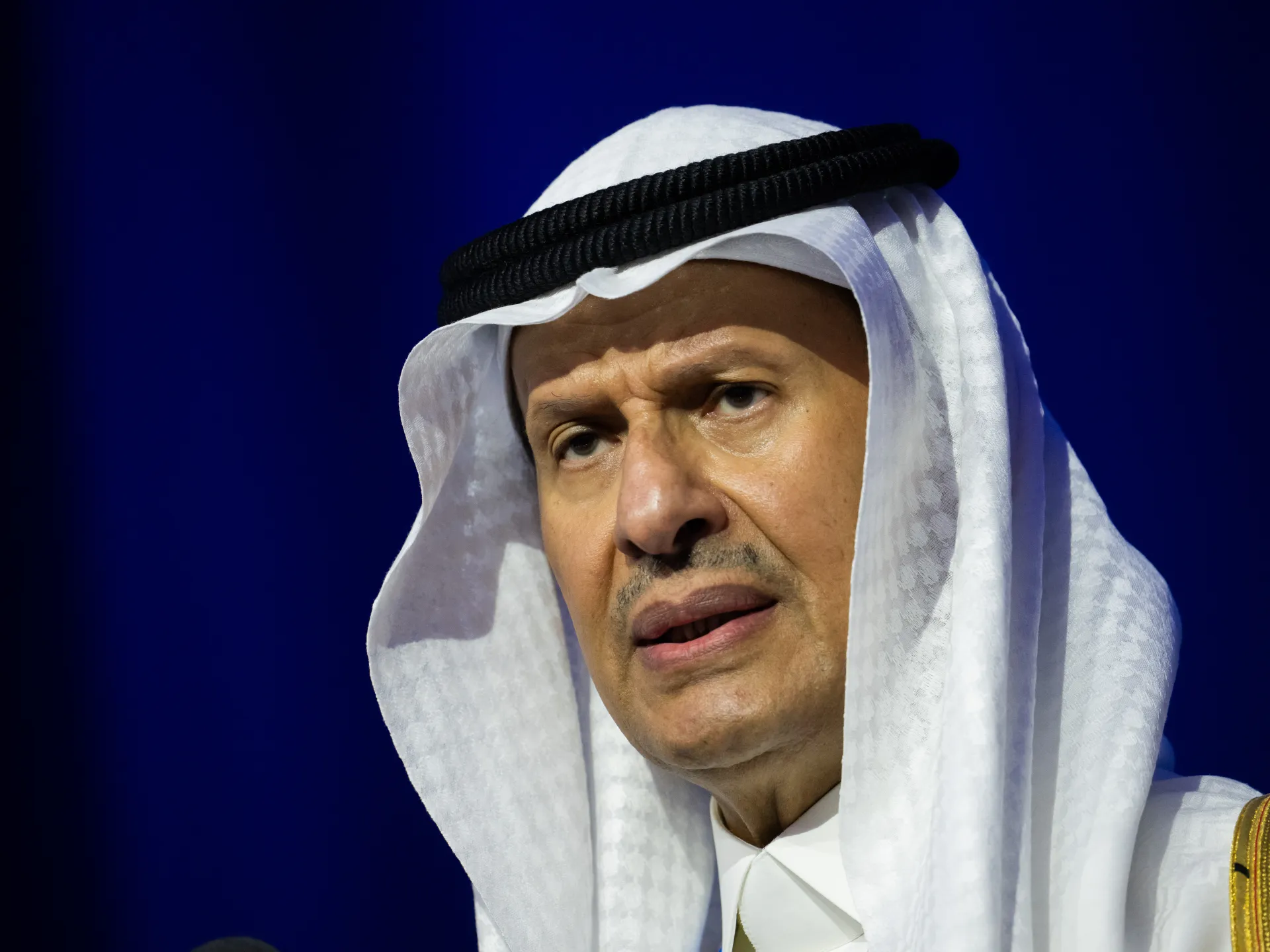
Prince Abdulaziz bin Salman made the announcement during a panel discussion at the GCC 2026 Forum in Manama, Bahrain, on Tuesday.
“Not everyone knows that within five or six days, we began using the pipeline again after the major attack that struck it,” he said, according to Saudi media. “And, thank God, as of this morning we’re back up to 5.8 million barrels.”
The strikes in early September were blamed on an Iraqi militia. Saudi Arabia’s Energy Ministry said at the time that the pipeline had been temporarily shut as a precaution while specialist teams secured it and assessed its safety.
Known as the Petroline, the 1,200km pipeline carries oil from Saudi Arabia’s major producing fields in the east to the Red Sea port of Yanbu. Its route allows the kingdom to bypass the Strait of Hormuz, which has largely been closed since the outbreak of the US-Israel war on Iran in late February.
The pipeline was built in 1981 and has a maximum capacity of 7 million barrels a day. Actual flows had been significantly lower in recent months, reaching about 2 million barrels a day in August, according to commodities data and analytics firm Kpler.
Attacks by Yemen’s Houthi group had made the Red Sea route difficult to use. Since the conflict disrupted oil flows through the Strait of Hormuz, Saudi Arabia has used the pipeline to redirect about 4 million barrels a day to Yanbu, equivalent to roughly 4 per cent of global supply.
