


Scientists have identified 57 marine species and five previously unknown genera from deep-sea samples collected in Argentina’s Mar del Plata Submarine Canyon, highlighting the biological richness of the South Atlantic.
The discoveries were made during a two-week Species Discovery Workshop led by the Nippon Foundation-Nekton Ocean Census in partnership with the Schmidt Ocean Institute. Twenty taxonomists and early-career researchers from Latin America and Europe took part in the work in Buenos Aires from 13 to 24 July 2026.
The samples were gathered during a Schmidt Ocean Institute expedition in August 2025, when researchers used the remotely operated vehicle SuBastian aboard the research vessel Falkor (too) to explore the canyon.
New species identified from deep-sea samples
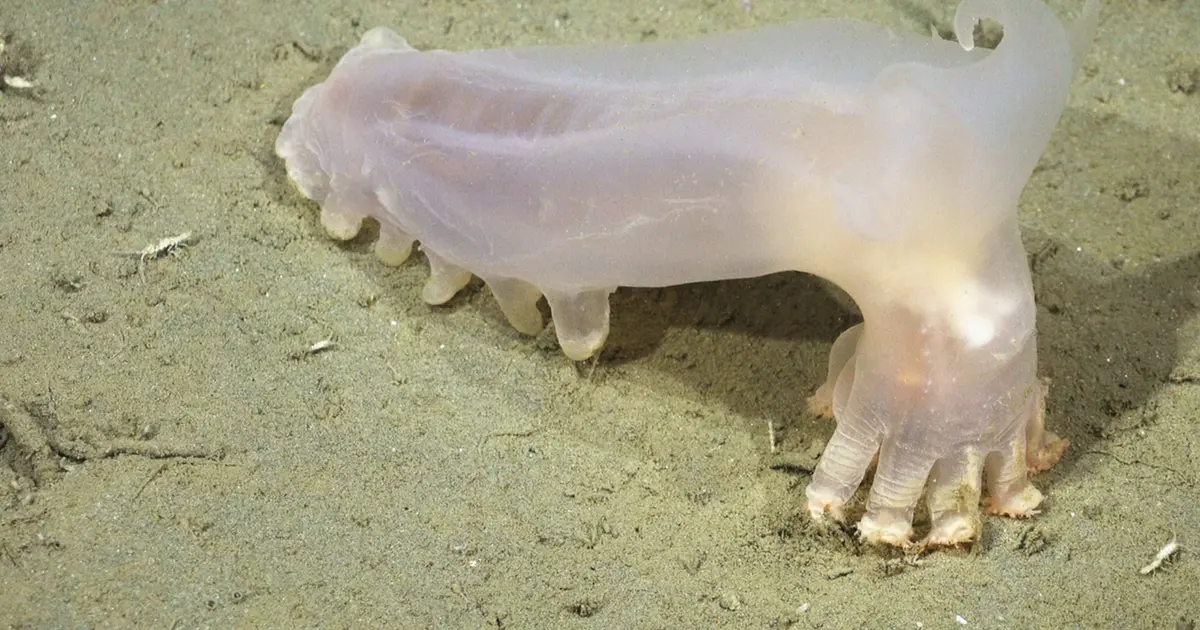
Among the most striking finds was a deep-sea sea cucumber nicknamed “Loki” because of its prominent horn-like appendages. The animal, from the genus Peniagone, was filmed on the seafloor at a depth of 2,577 metres and is one of up to 10 potentially new sea cucumber species uncovered during the work.
The team identified 20 new species of copepods, tiny crustaceans found in marine ecosystems, along with 22 echinoderms including sea cucumbers and crinoids. A further 14 species were cnidarians, a group containing octocorals, sea pens and stony corals, while the remaining discovery was a scaphopod mollusc.
The five new genera span corals, sea cucumbers and crustaceans. Researchers said the findings were particularly significant because only a limited number of specialists work on some deep-sea animal groups.
Dr Daniel Lauretta, principal investigator at Argentina’s National Scientific and Technical Research Council and the Museo Argentino de Ciencias Naturales, said international cooperation was “critical” in taxonomy.
He said the workshop had accelerated the identification of species new to science while helping to train Argentine researchers at the beginning of their careers.
The scientists used integrated taxonomic methods to examine the specimens and entered their findings directly into Ocean Census NOVA, an open-access platform designed to make information about newly discovered marine species available to researchers worldwide.
Dr Michelle Taylor, head of science at Ocean Census, said the identification of 57 species and five genera in two weeks demonstrated the “speed and power” of collaborative taxonomy.
The Mar del Plata Canyon extends beyond 3,500 metres in depth and lies near the Brazil–Malvinas Confluence, where warm subtropical currents meet colder, nutrient-rich waters. The meeting of those currents creates highly productive conditions for marine life.
Schmidt Ocean Institute executive director Dr Jyotika Virmani said the results showed what could be achieved when advanced technology and international scientific expertise were combined.
A follow-up expedition is planned for February and March 2027 at a different submarine canyon. Researchers expect further samples of marine invertebrates could lead to the identification of additional species and genera.
