


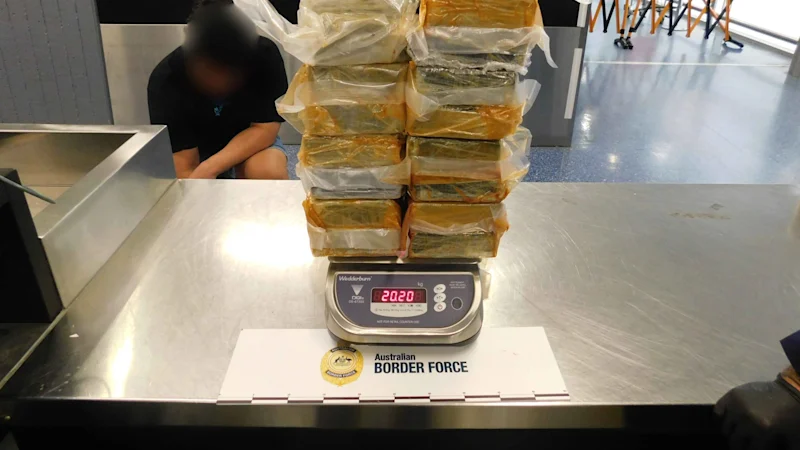
Two Sydney men have been jailed after becoming involved in a cocaine smuggling plot in which 40 kilograms of the drug, worth an estimated $13 million, was found in their suitcases at Sydney Airport.
School friends Junior Posiano and Arasi Leaga had travelled to Johannesburg after accepting $10,000 in cryptocurrency to collect luggage for a criminal syndicate, a police fact sheet said. They were promised that the bags would be filled with an unspecified product before they returned to Australia.
Both men knew the trip was illegal but said they did not know precisely what they were carrying. They had suspected the suitcases contained cash or drugs, but never opened them to check.
The pair left South Africa in October 2025 after an unidentified man returned their luggage shortly before their flight. They were told to leave their personal belongings behind and await instructions through the encrypted messaging app Signal.
After travelling back through the United Arab Emirates, they collected the bags from the carousel at Sydney Airport. Australian Border Force officers then discovered 18 vacuum-sealed bricks of cocaine, decorated with the Red Bull insignia.
The cocaine was at least 82 per cent pure. Posiano panicked when he saw officers searching Leaga’s bag.
“Let him [Leaga] go, I put all that shit in his bag. He had no idea,” Posiano told a border agent, according to the police facts. “Just arrest me, bro.”
Posiano later said he had accepted the job after being recruited by his cousin, also named Junior, out of loyalty. Leaga, who had been running a barbershop from his garage while supporting his young children and former partner, said he was “down bad” and “needed the job”.
The men were arrested and charged with importing and possessing a commercial quantity of a border-controlled drug. They pleaded guilty, with Posiano telling officers they were “basically just the pawns” and had expected to be met at the airport by “some boys”.
Sydney cocaine smuggling plot led to prison sentences
Judge Nicole Frances Noman found that Posiano had been “readily manipulated” by his relative and was trying to exonerate Leaga when he claimed responsibility for the other man’s bag. She said the men had taken a calculated risk shaped by immaturity, and that both were ashamed of what they had done.
Leaga, 22, was sentenced to four years and six months in prison and will be eligible for parole in October 2028. Posiano received a sentence of three years and nine months and will be eligible for parole in November 2028.
The court heard that Leaga’s family could provide financial support, while Posiano had good prospects of rehabilitation. Both men had indicated they wanted to find work and reintegrate into the community after serving their sentences.
They had faced a maximum penalty of life imprisonment.
