


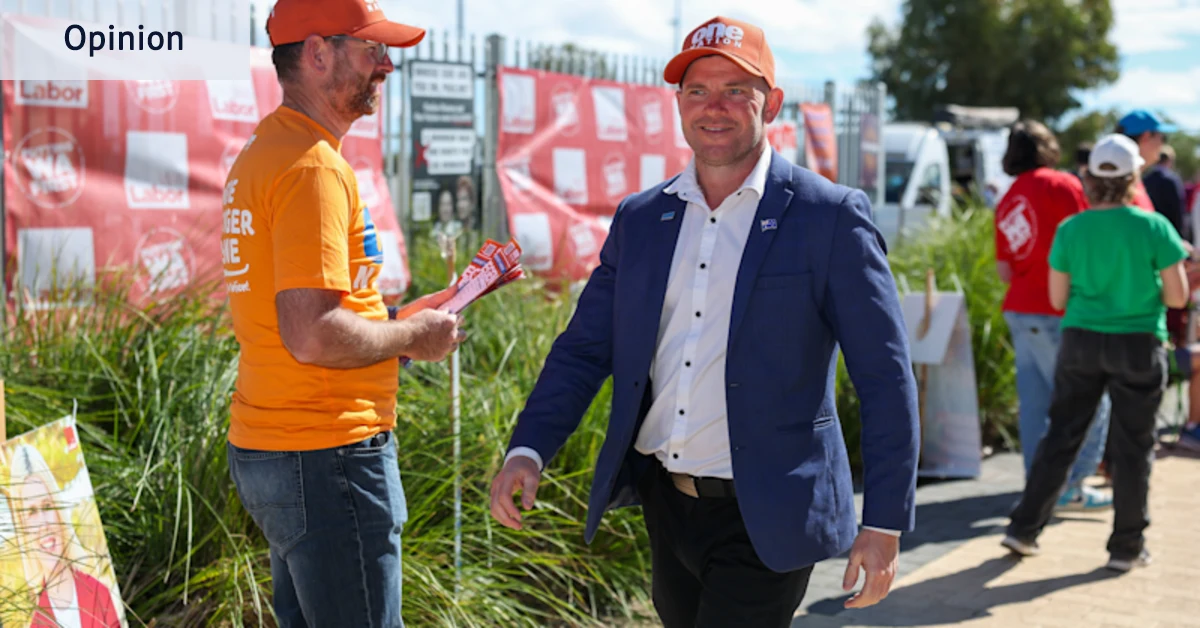
The shock defeat of WA Labor in the Secret Harbour by-election has been framed as a warning that voters in outer-suburban Australia are increasingly turning away from the major parties.
Luke Herdegen’s victory gave One Nation its first seat in the Western Australian Legislative Assembly, overturning a Labor majority of 11.5 per cent in the Perth seat.
With 74.5 per cent of votes counted, Herdegen held 57 per cent of the two-party-preferred vote to Labor candidate Georgia Tree’s 43 per cent, according to the Australian Broadcasting Corporation’s election count. One Nation recorded a primary vote of 39.1 per cent, while Labor fell to 24.4 per cent.
The result followed the resignation of former Labor MP Paul Papalia and was widely viewed as a test of support for the state government, as well as an indication of whether One Nation could convert growing public frustration into electoral gains.
Criticism of Labor’s campaign focused heavily on its choice of candidate. Tree grew up in the area but lives outside the electorate, and had previously worked as an adviser to federal Labor MP Madeleine King before moving into a government relations role with oil and gas company Woodside Energy.
During the campaign, Tree said she would live in Port Kennedy, within the electorate, while campaigning. She rejected suggestions that her main residence elsewhere meant she lacked a connection to the community, saying she had spent part of her childhood in the region and understood its concerns.
Herdegen, a gym business owner who lives in neighbouring Rockingham, also does not reside within Secret Harbour. His campaign presented him as a local business operator with links to families and small businesses across Perth’s southern suburbs.
For Kate Hulett, a Fremantle-based independent campaigner and business owner, Labor’s defeat reflected a deeper breakdown in trust between the party and working-class voters. She argued that selecting a candidate with links to the gas industry reinforced the impression that corporate interests were being given greater attention than the everyday problems facing residents.
Hulett said the electorate’s concerns extended beyond promised infrastructure projects such as an additional lane on the Kwinana Freeway. She pointed to pressure on household budgets, housing, public services and the feeling that suburban communities were being overlooked by governments dominated by the two major parties.
The by-election campaign also highlighted wider political tensions over corporate influence. Hulett criticised Labor’s fundraising relationships and its reluctance to pursue policies such as a tax on gas exports, tighter controls on gambling advertising and expanded public housing, arguing that voters had watched governments retreat from measures supported by many members of the public.
One Nation’s victory does not alter the balance of power in the Western Australian Parliament, but it represents a significant symbolic advance for the party. Its policies and priorities at state level remained less clearly defined during the campaign than the anti-establishment message that helped drive support.
Herdegen said after the result that “there are no safe Labor seats in this country any more”. The outcome is likely to intensify debate within WA Labor over candidate selection, the party’s relationship with corporate Australia and whether it remains sufficiently connected to voters in the outer suburbs.
Hulett said the result should encourage communities that feel ignored to seek representatives who are independent of corporate interests and more directly rooted in local concerns.
