


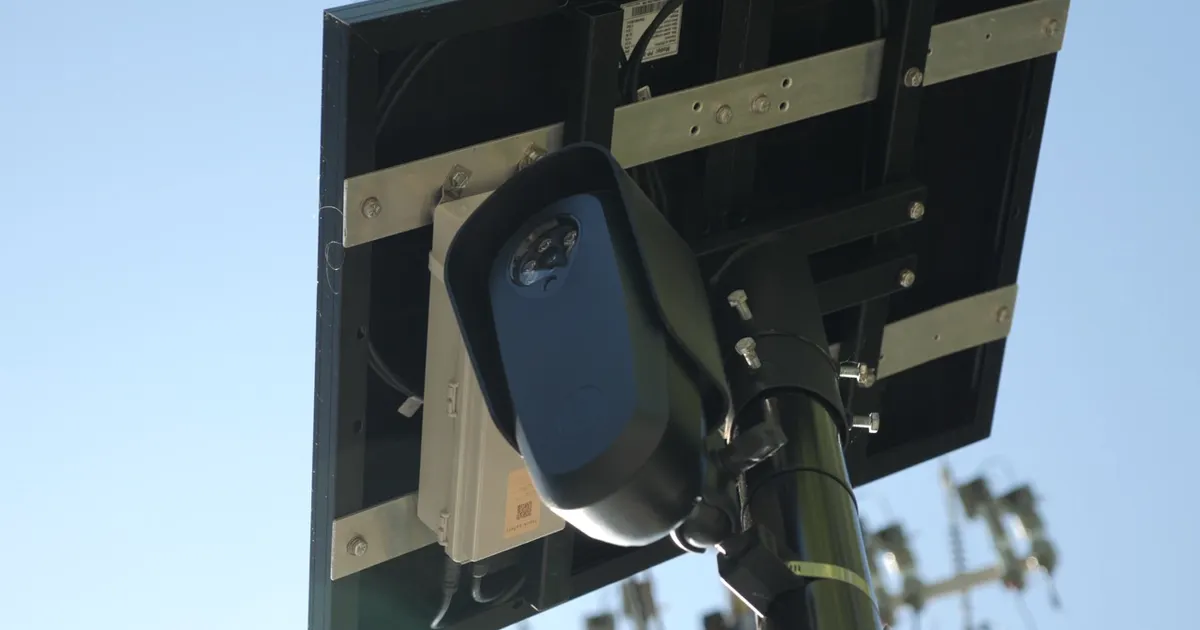
Privacy concerns over Flock’s network of AI-powered surveillance cameras came under bipartisan scrutiny in Washington, DC, on Wednesday as senators questioned how vehicle data is collected, shared and accessed by law-enforcement agencies.
The hearing was held by the Senate Judiciary Subcommittee on Crime and Counterterrorism, chaired by Republican Senator Josh Hawley of Missouri, who has launched an investigation into Flock Safety’s nationwide network of more than 120,000 cameras.
“If you haven’t heard of Flock, Flock has probably heard of you,” Mr Hawley told the hearing. “You’ve probably been scanned and surveilled and tagged multiple times this week alone.”
The cameras are linked through cloud-based systems that allow data to be shared between police departments and other agencies. Senators focused on what information is retained, who can search it and whether existing safeguards are sufficient to prevent misuse.
Executives from Flock Safety, Axon Enterprise, Motorola Solutions and Verkada had been invited to testify but did not attend. The companies’ chief executives were Garrett Langley, Rick Smith, Greg Brown and Filip Kaliszan respectively.
Witnesses included Lindsey Isaacs, a Florida woman who spent almost two weeks in jail after an automated camera alert wrongly connected her vehicle to a fatal hit-and-run. She told senators that she had feared she could spend the rest of her life in prison for a crash she said she had not been involved in.
The case has become a prominent example for privacy campaigners, who argue that an incorrect camera match can quickly lead to an arrest before investigators have independently verified the evidence.
Alasdair Whitney of the Institute for Justice, Sheriff Ross Teeple of Pinal County, Arizona, cybersecurity researcher Benn Jordan and Chad Marlow of the American Civil Liberties Union also appeared before the subcommittee.
Mr Marlow has called for federal funding to be withdrawn from law-enforcement agencies using automatic licence-plate readers, while other witnesses urged Congress to introduce clearer rules governing searches of historical vehicle-location data.
The dispute has also intensified across Maryland, Virginia and the District of Columbia. Arlington County recently removed its Flock cameras, while officials in Fairfax County, Alexandria and Washington are considering whether to continue using the technology.
In Fairfax, the campaign group De-Flock Fairfax has demanded greater public consultation before automatic licence-plate readers are installed or retained. Matthew Lofgren, a representative of the group, said residents had not been given a meaningful opportunity to approve the surveillance system.
Washington’s Metropolitan Police Department is separately investigating two possible cases of Flock camera misuse after concerns were raised by a member of the DC Council. Flock cameras were introduced in the district in 2025, although police had used other licence-plate reader systems for more than a decade.
Supporters of the technology, including law-enforcement officials, say the cameras help investigators locate vehicles linked to serious crimes and identify suspects. The Senate hearing is expected to add to mounting pressure for greater transparency and limits on how the data can be used.
