


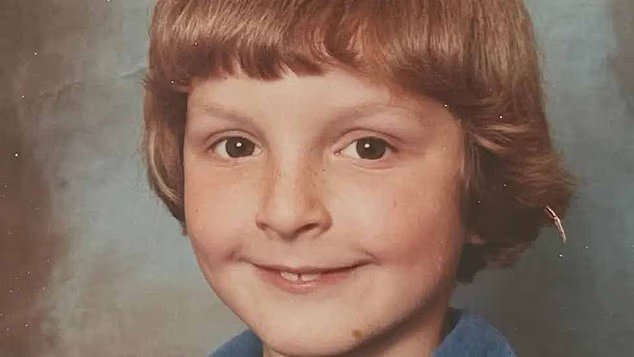
The family of Mark Billington has demanded an apology from West Midlands Police after a coroner ruled that the 15-year-old was unlawfully killed, 42 years after his death was treated as suicide.
Mark disappeared from his home in Yardley, Birmingham, on September 1, 1984, after telling his family he was going out on his bicycle to fly a kite. His body was found nine weeks later, hanging from a tree in an isolated copse near Meriden, close to Solihull.
Detectives quickly concluded that the popular paperboy had taken his own life. An open verdict was recorded at an inquest in 1998, but West Midlands Police reopened the case as a murder investigation in 2002.
By then, the rope around Mark’s neck and some of his clothing had been discarded, preventing investigators from carrying out potentially important DNA tests.
A fresh inquest was ordered after Mark’s family successfully challenged the original proceedings in the High Court. Senior Birmingham and Solihull Coroner Louise Hunt ruled this week that he had been murdered.
The hearing was told that Mark had been found hanging using an “intricate three-knot rope system”. Pathologist Dr Brett Lockyer said the rope had been tied unusually and that it was improbable Mark could have tied the knots himself.
Mark also had weakness on the left side of his body and struggled to maintain a grip. The coroner said it was “extremely unlikely” that he could have harmed himself in the way he was found.
Ms Hunt said: “I’m satisfied that Mark was murdered and there is no evidence that he took his own life.”
She added: “The rope was an intricate three-knot system akin to a pulley.” The coroner concluded that Mark had been unlawfully killed on the balance of probabilities, saying: “I think it’s right that the record has been put straight.”
Family seeks apology from West Midlands Police
Mark’s younger sister Cheryl Jeyes, 49, said the family welcomed the new verdict but remained angry that it had taken so long for the circumstances of his death to be formally recognised.
She said she would write to West Midlands Police seeking an apology, adding: “Within a few days the detectives had decided along with the pathologist that he had taken his own life.”
“They got rid of his clothes and the rope and effectively closed the case without a proper investigation,” she said.
“I know the police are different now but it is still the same force and the failings back then took away any possibility of Mark’s killer ever being caught. We are all still living it now.”
Mark’s father, Roy Billington, described him as a “lovely” and “quiet lad” who enjoyed animals, stamp collecting and cycling. The family had adopted him as a baby.
On the day he disappeared, Mark completed his paper round and was later seen flying a kite in a park with five other boys. He then deposited £8 from his paper round at the Birmingham and Bridgewater Building Society.
A witness later reported seeing his bicycle parked near the A45. Mark’s body was discovered on the morning of November 11 by four people who had gone into the woods to hunt.
The coroner said he probably died on or around the day he vanished. His parents had reported no concerns about his mental health, and the inquest heard that going missing was “completely out of character”.
Ms Jeyes, who was seven when Mark died, said their mother Wyn had died two years ago without learning what had happened to her son.
“Mum died two years ago still not knowing who had killed her son,” she said. “She would have recurring nightmares about him – one where he was running through woods and she could never catch him to protect him and one where she would see him walking up the garden wearing the same clothes he was in when he died but as a grown man.”
She said the family had been left with “a big injustice” and questioned why they had been forced to fight for decades to have the original verdict overturned.
“Why did it take 42 years for the truth about our brother’s death to be formally recognised?” she said. “Why was our family left to fight for so long? And why after everything our family has endured have we still not received an apology from West Midlands Police?”
Several theories have been examined during the investigation. Three men were arrested but never charged, while police also considered whether Mark had discovered a “bottle scam” involving boys returning bottle tops to newsagents for money.
Mark’s family remained unconvinced by that theory and suspected he might have been the victim of a sex attack by convicted killer Brian Field. Field, who lived a short distance from Mark’s home, was jailed for life in 2001 for the 1968 murder of 14-year-old Roy Tutill. He died in prison in 2024.
Mark’s trousers had been pulled down to his ankles when his body was found, but the level of decomposition meant it could not be established whether he had been sexually assaulted, drugged or poisoned.
Jenny Birch, head of homicide at West Midlands Police, acknowledged “failings” involving delays in finding the kite and Mark’s body, as well as the destruction of evidence in 1984. She said the force now operated to a much higher standard.
West Midlands Police said its focus remained on securing justice for Mark and that it was ready to follow up any new information or lines of inquiry.
Ms Jeyes appealed to anyone with information about Mark’s death to come forward. “Our brother can’t speak for himself, but we will never stop speaking for him,” she said.
