


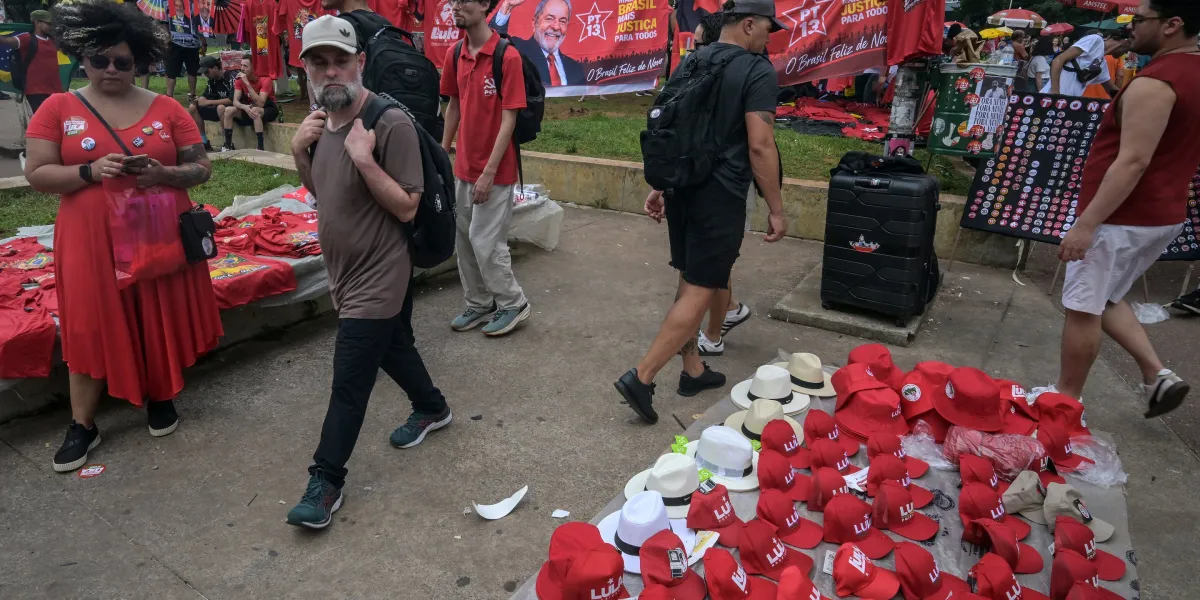
Luiz Inácio Lula da Silva has secured a second-round victory in Brazil’s presidential election, overturning a first-round deficit to defeat Flávio Bolsonaro by more than 3.5 percentage points, or over four million votes.
The result, on October 25, makes Lula the first Brazilian presidential candidate to win after failing to lead in the opening round. He had narrowly lost the October 5 vote to Mr Bolsonaro, the son of former president Jair Bolsonaro, but rebuilt his support during the campaign’s final weeks.
The outcome reverses a recent run of right-wing successes in Latin America and represents a significant setback for Mr Bolsonaro’s Liberal Party, despite its strong performance in congressional elections.
How Lula rebuilt his campaign
Lula’s campaign presented voters with a choice between reducing Brazil’s sharp income inequalities and pursuing a transition towards clean energy, alongside a programme focused on environmental protection and wider access to higher and technical education.
Mr Bolsonaro campaigned on cutting government spending, expanding militarised policing and supporting the Trump administration’s campaign against drug violence. He also offered US investors access to Brazil’s critical minerals.
Lula faced an anti-incumbent mood fuelled by high prices, stagnant wages and steep interest rates. A major corruption investigation involving Brazilian elites also cast a shadow over the contest, with Mr Bolsonaro himself and Supreme Court justice Alexandre de Moraes drawn into competing political claims surrounding the affair.
His campaign also had to counter a social media environment long dominated by material hostile to the president and his Workers’ Party. The same online ecosystem helped Jair Bolsonaro win office in 2018 and come close to re-election in 2022.
After the first round, however, young pro-Lula communicators with expertise in digital media produced videos for WhatsApp and Instagram that appealed beyond the traditional left, reaching some centrist and right-leaning voters.
The result was a substantial increase in turnout and a reduction in abstention. Minas Gerais, Brazil’s second-largest electoral state, moved decisively towards Lula, producing a swing of almost 700,000 votes.
The scale of the online operation was illustrated by the growth of the WhatsApp channel Lula’s Army. Its subscriber base rose from 50,000 on October 5 to more than 10 million by election night.
The channel was created by André Janones, a federal deputy for the Rede Party and an ally of the Workers’ Party. In Minas Gerais, 21-year-old digital influencer and law student Ana Elisa Santos Silva, who is also a member of the Workers’ Party, won more votes than any other candidate for the federal lower house.
A victory that does not end Brazil’s divisions
Lula’s victory does not give him an easy path through Congress. The Liberal Party is expected to hold 28 of the 81 Senate seats and 121 seats in the lower house when the new Congress convenes on February 1, 2027.
With its expected allies, the right will have larger majorities in both chambers. Congress is therefore likely to strengthen its influence over legislation and, crucially, the budget during Lula’s next administration.
The president, who will turn 81 on October 27, is expected to face pressure to make significant concessions. Business interests are likely to demand action on Brazil’s fiscal deficit, which is described as running at close to 8 per cent of gross domestic product.
Lula may also be able to appoint four new Supreme Court justices following upcoming retirements. That could allow him to reshape the country’s highest court and potentially improve his ability to manage relations with Congress.
What Lula’s return means for the right and Trump
Mr Bolsonaro’s defeat may prompt debate within the right over whether the movement should move beyond the Bolsonaro family. Tarcísio de Freitas, a former minister in Jair Bolsonaro’s government and governor of São Paulo, is identified as one possible alternative figure.
But five members of the Bolsonaro family will sit in the new Congress and are expected to try to preserve the coalition that supported Flávio Bolsonaro’s campaign.
Lula’s approach to the Trump administration is also likely to remain contentious. Washington intervened against his agenda during the campaign and favoured Mr Bolsonaro, while Lula has sought to defend Brazil’s sovereignty and maintain relations with the European Union, China and other international partners.
The Trump administration may pragmatically engage with Lula while continuing to pressure his government. Brazil’s deposits of rare earth elements give the president leverage in dealings with a US administration interested in securing access to them.
The election has challenged the idea that Brazilian politics is simply following the path of the United States, despite similarities including the growth of an evangelical right and increasingly polarised political movements. While some Brazilians support American-style libertarian ideas, many continue to expect the state to provide healthcare, education and pensions.
Lula’s victory therefore marks a reversal for the right, but not an end to Brazil’s political polarisation. His next administration is likely to face sustained battles over Congress, the economy, the courts and the country’s relationship with Washington.
