


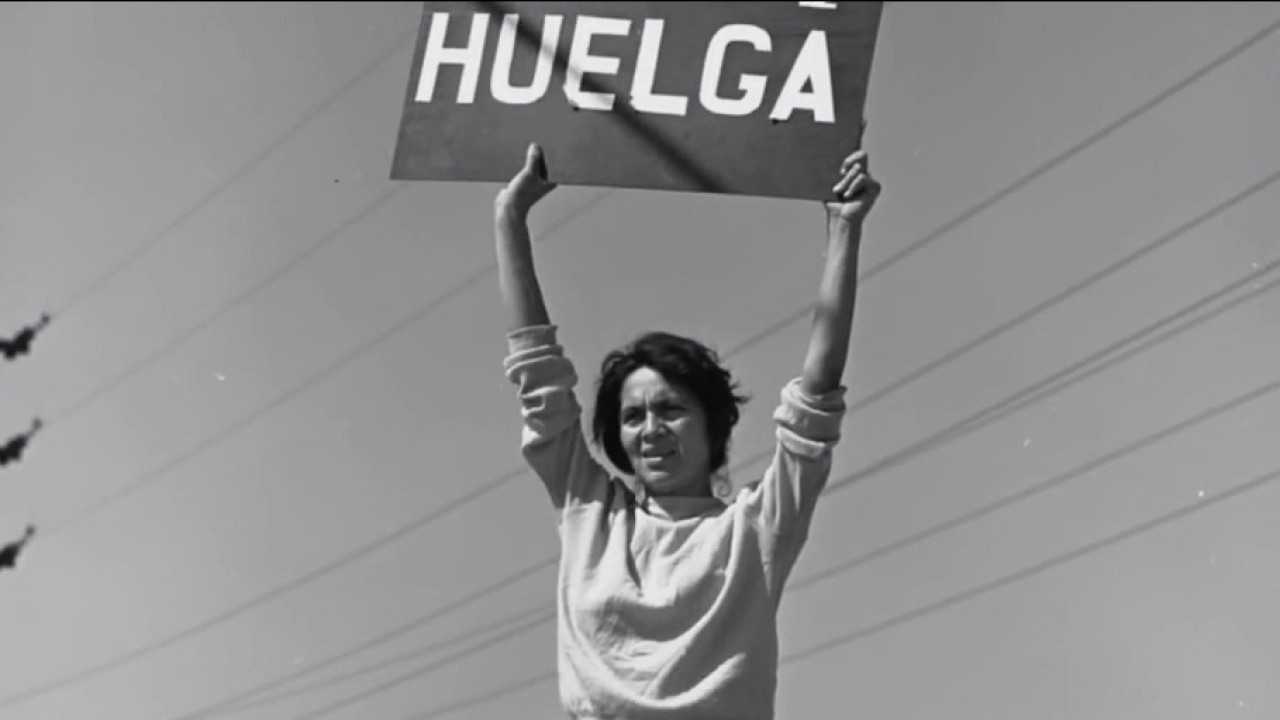
South Bay communities have been paying tribute to Dolores Huerta after the pioneering labour leader and civil rights activist died at her home in Bakersfield at the age of 96.
Flowers were placed beside a mural honouring Huerta at San José State University, where she had appeared several times over the years. During a visit in 2017, she led students and supporters in the chant that became her international rallying cry: “Sí, se puede” – “Yes, we can.”
Huerta’s death on Wednesday, October 28, was announced by her foundation, which said she was surrounded by close family. She co-founded the United Farm Workers with César Chávez and spent decades campaigning for farm workers, immigrants, women and other marginalised groups.
For many in the South Bay, her influence was personal as well as political. San Mateo County Supervisor Lisa Gauthier recalled meeting Huerta and celebrating her 95th birthday with her in East Palo Alto last year, in what was among the activist’s final public appearances in the Bay Area.
“She made sure that there was space to tell our story, to be visible and to participate,” Gauthier said, describing Huerta as an inspiration to generations of people across ethnicities and communities.
Huerta also visited Half Moon Bay last November to support efforts to provide housing for older farm workers. Belinda Hernandez Arriaga, founder of the community organisation ALAS, said Huerta arrived with her trademark energy and urged campaigners to continue the work.
“She brought her smile. She brought her chanting. She brought her energy of you don’t stop,” Hernandez Arriaga said.
South Bay communities remember Dolores Huerta
At San José State, Dr Cheyla Samuelson, from the university’s Department of World Languages and Literatures, said Huerta’s work remained particularly significant for students whose families were connected to agriculture.
“Her work is very meaningful to us and we just celebrate her and honour her,” Samuelson said.
Darlene Tenes, executive director of Farmworker Caravan in San Jose, said Huerta consistently stood up for people working in the fields who were often overlooked by powerful industries.
“She was always fighting for the workers that were on the ground, that were doing the picking,” Tenes said.
Her legacy is also being remembered in schools. Staff and pupils at Dolores Huerta Elementary School in San Francisco created an altar in her memory, with school coordinator Alejandro Cuevas urging children to continue supporting others in the spirit of the woman whose name their school bears.
California Attorney General Rob Bonta, who said Huerta had been a mentor and lifelong hero, described her as a force for justice whose influence would continue through future generations.
Huerta’s foundation said her rallying cry had become a message for workers, women, immigrants and people seeking equality around the world. Supporters in the Bay Area said the responsibility now fell to them to continue the causes she championed.
