


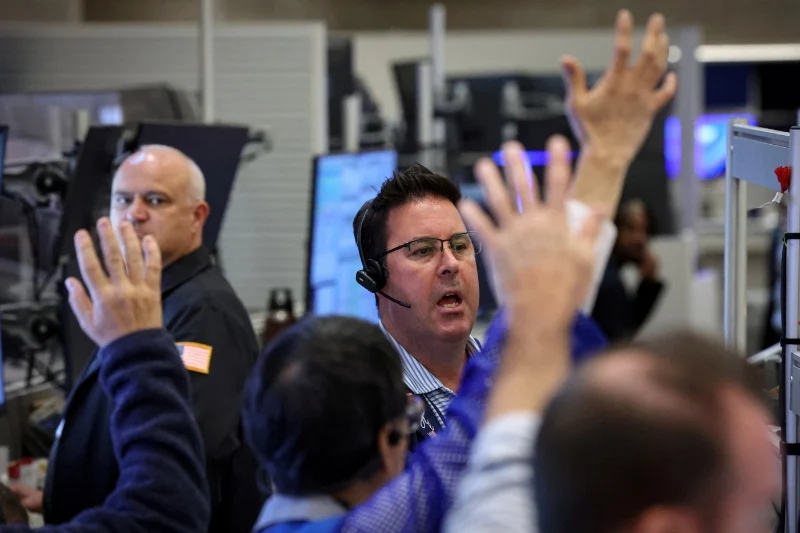
Wall Street shares fell on Thursday as stronger-than-expected producer price data, rising Treasury yields and a sharp jump in oil prices revived fears that inflation could keep interest rates higher for longer.
The S&P 500 dropped 0.59 per cent to 7,591.55, while the Nasdaq Composite slipped by the same margin to 26,098.40. Nine of the benchmark’s 11 sectors ended lower, led by falls in materials and technology stocks.
US producer prices rose 5.4 per cent in the year to August, ahead of economists’ expectations for a 5.3 per cent increase, according to data from the Labor Department. Prices increased by 0.4 per cent over the month, in line with forecasts.
The figures added to concerns that the Federal Reserve may be reluctant to ease monetary policy. Traders put the chance of at least a 0.25 percentage-point interest-rate increase next week at about 70 per cent, up from roughly 64 per cent before the release.
Higher borrowing costs weighed on equities as the yield on the 10-year US Treasury note climbed to its highest level in almost three years. The 30-year yield reached its highest in more than 19 years, while the two-year yield touched a level not seen for more than two years.
Brent crude rose about 6 per cent to above 107 US dollars a barrel as disruption to oil supply routes through the Strait of Hormuz and the Red Sea intensified inflation concerns. Energy costs have become a key focus for investors because a prolonged rise in fuel prices could feed through to consumer prices.
“Higher yields are a negative for the equity market,” said Ross Mayfield, an investment strategy analyst at Baird. He said they reduced company valuations while making it more expensive for businesses to operate and consumers to spend.
Chipmakers were among the biggest fallers, with Nvidia down 2.1 per cent and Micron Technology off 4.5 per cent. Apple rose about 3 per cent after unveiling a new iPhone priced at 1,999 US dollars.
Investors will now turn to the consumer price index for August, due on Friday, for further evidence about the direction of inflation ahead of the Federal Reserve’s policy meeting.
