


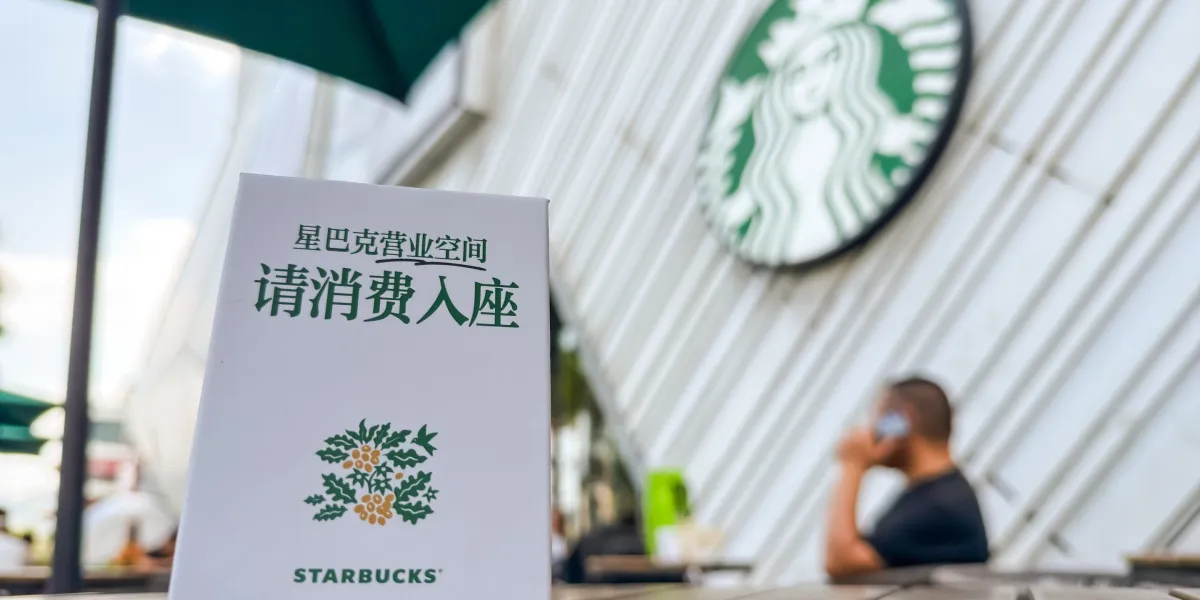
Starbucks China has introduced a rule requiring customers to make a purchase before using seats in its cafés, covering roughly 8,000 stores across mainland China.
The policy, announced on October 21, still provides “priority support” for some customers, including pregnant women and people with mobility issues.
The change has received largely positive reaction on Weibo, with one user arguing that Starbucks “is in the business of selling beverages, not operating as a free study room”. The user added: “Seats are resources provided to customers, not something that can be occupied without any conditions.”
Starbucks China said it would invest more than 300 million yuan (£44.9 million) in upgrading the café experience through a wider “Third Place Initiative”. The plans include increasing staffing at stores during peak periods.
Starbucks China faces intensifying competition
The move comes as Starbucks contends with growing competition from domestic coffee chains. Luckin Coffee overtook Starbucks in store numbers in 2022 and became the first coffee brand to reach 10,000 outlets in China.
Founded in 2017 and based in Xiamen, Luckin built its business around lower-priced coffee and mobile ordering, attracting younger consumers.
Starbucks generated $3.6 billion in revenue from China in its 2021 financial year. That figure fell to $3.2 billion in the 2025 financial year amid Covid disruptions and stronger competition.
In November 2025, Starbucks announced the sale of a 60% stake in its China operations to Boyu Capital, a Hong Kong-based private equity firm. The transaction completed in April 2026, after which Starbucks stopped disclosing China-specific figures in its earnings.
Starbucks outlets in other markets have also been seeking to limit the use of seating by people who have not bought anything. In early 2025, the company revised an open-door policy that had allowed people to use its stores without making a purchase, saying it would prioritise paying customers.
Starbucks Korea later restricted customers from bringing bulky equipment such as desktop computers and printers, while continuing to allow laptops and smaller personal devices.
