


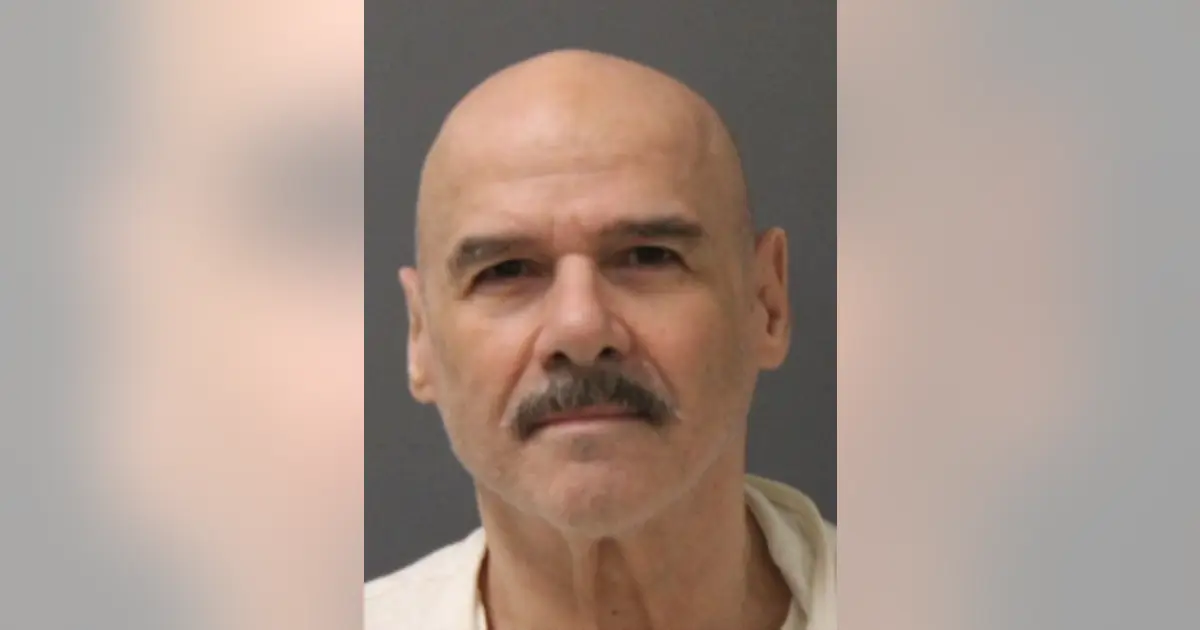
A Texas death-row inmate’s execution has been described as “botched” by a reverend who witnessed it, after Reinaldo Dennes reportedly screamed that his leg was on fire and appeared to remain conscious for several minutes. State officials have denied the claim, saying the procedure followed established protocols.
Dennes was executed in Huntsville on Thursday evening for his role in a 1996 Houston jewellery heist that culminated in the murder of jeweller Janos Szucs.
Rev Jeff Hood, who was acting as Dennes’s spiritual adviser, said at a news conference the following morning that he had witnessed about a dozen lethal injections and immediately noticed that something was unusual.
“There was a line in his neck,” Hood said. “That is not normal. They don’t usually have to put a line in the neck.”
He said there was also a line in Dennes’s foot, while several attempts appeared to have been made to insert lines into his arms.
Hood said Dennes began complaining of severe pain when the lethal drugs were administered. “Immediately, Reinaldo began to scream, ‘My leg! My leg! My leg is on fire!’” he said.
According to Hood, Dennes writhed in distress and strained against the leather restraints. He said the inmate repeatedly indicated that the procedure was not working as expected.
“He was clearly, clearly in tremendous distress,” Hood said. “Twice he said, ‘It’s not working. It’s not working. It’s not going how it’s supposed to go.’ Those types of words kept coming.”
Hood said a person undergoing lethal injection would typically lose consciousness within less than a minute, but that Dennes took at least five minutes to do so.
Texas officials deny botched execution claim
Michael Graczyk, an Associated Press reporter who witnessed the execution, said it differed from nearly 500 lethal injections he had observed.
He said Dennes’s demeanour changed almost immediately after the procedure began and that the inmate moaned and shouted about pain in his right leg, broadly corroborating Hood’s account.
The Texas Department of Criminal Justice rejected the suggestion that the execution had been botched. Its spokeswoman, Amanda Hernandez, said the agency had followed its protocols and that the overall process, which lasted about an hour, was not unusual.
Hernandez said officials had taken time to ensure the intravenous lines were placed in viable veins, with lines inserted into Dennes’s left foot and the left side of his neck. She added that his complaints of pain began before any drugs were administered and concerned his right leg, where no intravenous line had been established.
The lethal dose began at 6.52pm, according to the department, and Dennes was pronounced dead at 7.08pm.
The 1996 Houston jewellery heist
Dennes planned the robbery from the Richmond Avenue building where Szucs worked. He involved his brother and paid a cleaning employee, Estrella Martinez, $5,000 to give them access after hours.
On January 24, 1996, Martinez opened a loading dock door after receiving a call from Dennes. She was also instructed to create distractions for the security guard, David Copeland.
During one such attempt, Dennes ambushed Copeland in the lobby, shooting him with a 9mm handgun fitted with a homemade silencer. Copeland survived by pretending to be dead and later gave police a description of Dennes.
Officers found Szucs dead inside his locked office. He had been shot five times, while diamonds valued at $3.6 million, a five-carat pink diamond ring and $200,000 in cash were taken from his safe.
